


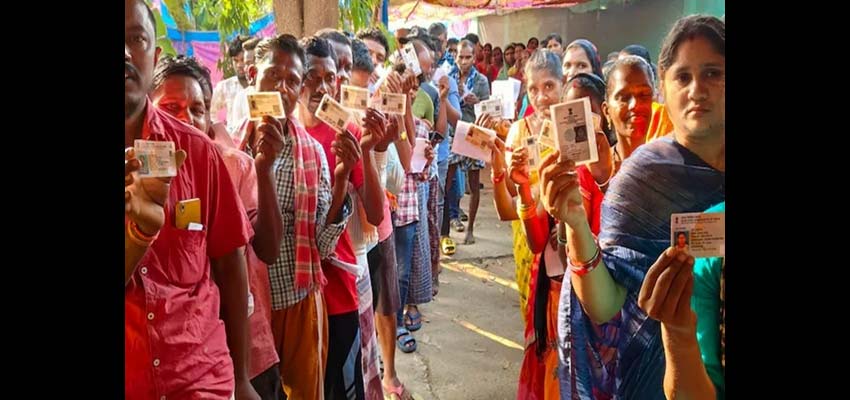
With the end of the first round of polling today (November 06), the political battleground of Bihar has been readied for a contest that will define its destiny. The 2025 Assembly Election is shaping up to be more than a routine political exercise; it is a fundamental referendum on the future direction of governance in the state. At its core, the election presents a stark choice: will Bihar fall once again for the familiar comfort of populist sloganeering, or will it chart a new path toward accountable progress? The campaign narratives are crystallising into a clear dichotomy. The Bharatiya Janata Party (BJP), leading the National Democratic Alliance (NDA), has framed its message around a binary of development over deception. Its campaign champions employment through empowerment, focusing on infrastructure, job creation, and aligning the state’s trajectory with the Centre’s vision of a ‘Viksit Bharat’. This pitch is strategically positioned as a forward-looking, performance-based appeal, asking for a mandate to break from what it terms the "jungle raj" of the past. In opposition, the Rashtriya Janata Dal (RJD), spearheading the Mahagathbandhan, is deploying a campaign that critics argue hinges on emotional manipulation. Its rhetoric heavily leverages caste census data and social justice plank, often framed as a fight for the rights of the ‘M-Y’ (Muslim-Yadav) combination and the economically backward. While this narrative resonates with its core base, opponents accuse it of offering temporary satisfaction through doles and divisive politics, rather than a concrete blueprint for sustainable growth. Amidst this clash of the two titans, a potential disruptor has emerged. Prashant Kishor’s Jan Suraaj Party (JSP) is attempting to inject a third axis of new ideas into the political discourse. With its extensive padyatras and focus on grassroots issues, the JSP aims to challenge the very nature of political conversation in Bihar. However, while it may influence the narrative at the margins, the larger battle in 2025 will still overwhelmingly revolve around the established poles of truth versus falsehood, as defined by the major alliances. The JSP’s success will depend on its ability to translate its grassroots connection into tangible electoral influence.
Against this backdrop, it cannot be gainsaid that ultimately, the power to decide rests with the people of Bihar—a populace seasoned by decades of political turmoil, economic stagnation, and broken promises. The voter in Bihar is astute, capable of distinguishing rhetoric from reality. The decision they make in the polling booth will answer a profound question: Is the allure of identity-based assurances and short-term relief stronger than the promise of long-term, sustainable change? This choice carries a weight that extends far beyond Bihar's borders. As a bellwether state with a significant share of India’s population, Bihar’s political verdict is often seen as a reflection of the national mood. The credibility of Indian democracy itself is, in many ways, on trial. A vote for transparent, accountable governance would reinforce the democratic ideal that performance is paramount. Conversely, a regression to purely populist politics would raise questions about the electorate’s prioritisation of immediate gratification over enduring progress. In 2025, Bihar stands at a crossroads. One path leads back to the known, familiar terrain of emotive politics. The other points toward an aspirational future of empowered development. The fate of millions and the soul of Indian democracy await the verdict.

By Deepak Kumar Rath




















Leave Your Comment