


Technological advancements are rapidly transforming Indian agriculture by improving productivity, reducing cultivation costs, enhancing resource-use efficiency and easing the physical burden on farmers. The growing adoption of modern machinery, precision agriculture, drones, Artificial Intelligence (AI), Internet of Things (IoT), robotics, sensors, remote sensing, Geographic Information Systems (GIS), satellite-based applications and automation is helping farmers adopt more efficient and climate-resilient agricultural practices.
The Department of Agriculture & Farmers Welfare is promoting agricultural mechanisation through the Sub-Mission on Agricultural Mechanization (SMAM), implemented as a component of the Centrally Sponsored Scheme Rashtriya Krishi Vikas Yojana (RKVY). Under the initiative, financial assistance is provided for the purchase of agricultural machinery and equipment, as well as for establishing Custom Hiring Centres, High-Tech Hubs and Farm Machinery Banks. Support is also extended for demonstrations, training, testing and capacity building related to farm mechanisation.
These interventions are particularly important for small and marginal farmers, who often find it difficult to purchase expensive machinery individually. Custom Hiring Centres and Farm Machinery Banks allow farmers to access modern equipment at affordable rates, enabling them to mechanise operations while reducing dependence on manual labour.
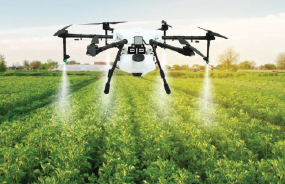
Drone technology is another emerging area in Indian agriculture. Under SMAM, financial assistance is being provided for procurement and demonstration of agricultural drones. Drones can be used for the application of pesticides and nutrients and for generating digital agricultural data. Their use can improve the precision of farm operations, reduce wastage of inputs and lower cultivation costs.
Digital technology is also playing an increasingly important role in agricultural planning and service delivery. The Digital Agriculture Mission seeks to establish digital public infrastructure, technology-based farmer-centric services and data-driven decision-support systems. A key component is the Farmer Registry under AgriStack, which is intended to provide a foundational database for transparent, efficient and targeted delivery of agricultural schemes and services.
As of August 6, 2026, more than 10.33 crore Farmer IDs had been generated. The registry is expected to facilitate integration with farmer-oriented schemes and platforms, including PM-KISAN, the Jan Samarth platform for Kisan Credit Card loans and systems related to Minimum Support Price-based crop procurement.
The Digital Crop Survey is another major technological intervention. It digitally captures information on crops grown on farmland, along with photographs and geo-tags, providing plot-level visibility of agricultural activity. This can improve estimates of cultivated areas and support evidence-based decisions relating to production, procurement, input supplies and logistics. During Kharif 2025, the Digital Crop Survey was conducted in 604 districts and covered more than 28.5 crore plots.
Artificial Intelligence is also emerging as a tool for delivering timely agricultural advice. BharatVistaar, a multilingual, AI-powered Digital Public Infrastructure for Agriculture, provides farmers with real-time and location-specific agricultural advisories and access to government schemes and support services. The platform has so far served more than 5.9 lakh farmers and addressed over 93 lakh farmer queries.
Research and innovation remain central to the development of suitable agricultural machinery. The Indian Council of Agricultural Research (ICAR), State Agricultural Universities and other research institutions are engaged in designing, developing, testing and refining machinery suited to different crops, farm sizes and agro-climatic conditions. Such location-specific technologies can help ensure that mechanisation is practical and affordable across India's diverse agricultural landscape.
Technology is also being extended to horticulture, particularly harvesting operations. Under the Mission for Integrated Development of Horticulture (MIDH), financial assistance is provided to States and Union Territories for adopting improved horticultural tools, implements and machinery. ICAR institutes are also developing and evaluating crop-specific harvesting technologies that take into account plant architecture, fruit maturity, farm size and the need to minimise mechanical damage while maintaining produce quality.
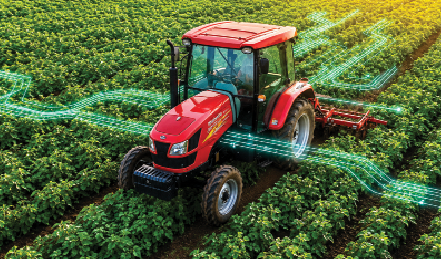
The evolution of agriculture into a technology-driven sector has brought together experts from agriculture, mechanical engineering, electronics, automation, instrumentation, computer science and data science. The integration of robotics, Machine Learning, AI, IoT, Global Navigation Satellite Systems (GNSS), GIS, remote sensing and data analytics is contributing to the development of intelligent farm machinery, autonomous equipment, precision farming systems, protected cultivation and smart farm management.
As India seeks to modernise its agricultural sector, the integration of technology with traditional farming knowledge is becoming increasingly important. Government initiatives focusing on mechanisation, digital infrastructure, research, innovation, skill development and entrepreneurship can help farmers produce more with fewer resources. Wider adoption of these technologies could strengthen farm incomes, improve sustainability, reduce labour-intensive opera-tions and make Indian agriculture more resilient to climate change while enhancing its competitiveness.




















Leave Your Comment