


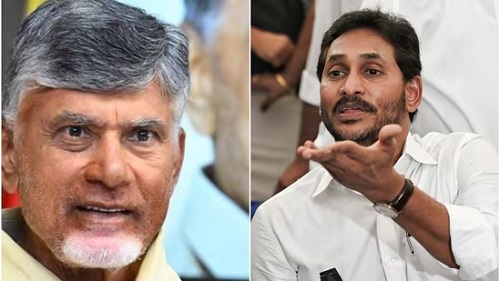
Andhra Pradesh’s ruling Telugu Desam Party (TDP)-led NDA alliance has registered a sweeping victory in the municipal elections, establishing its dominance across urban local bodies and delivering a major political setback to the Opposition YSR Congress Party (YSRCP). The results were particularly damaging for YSRCP chief Y S Jagan Mohan Reddy, as his party suffered a humiliating defeat even in its traditional stronghold of YSR Kadapa district.
The TDP-led NDA alliance secured seven of the state's 13 municipal corporations and was leading in five others in the early counting trends on Wednesday. It also captured 75 of the 86 municipalities and nagar panchayats, with a lead in six more. The alliance's candidates were elected unopposed to chairperson positions in 17 municipalities and nagar panchayats, further underlining its electoral advantage. The results represent a dramatic reversal of the political situation in 2021, when the YSRCP had swept all 13 municipal corporations and won 86 of the 87 municipalities.
The biggest setback for the YSRCP came from YSR Kadapa district, considered the party's political fortress and the home district of Jagan Mohan Reddy. Out of 279 municipal wards in the district, the party managed to secure only seven, while the ruling alliance won six municipalities uncontested. In Pulivendula, Reddy's home constituency, TDP chairperson candidate Tugutla Geetha Kumari registered a decisive victory with a margin of 13,875 votes. The ruling alliance also won 17 of the 20 wards that went to the polls in the constituency, leaving the YSRCP with just three. It subsequently emerged victorious in seven other municipalities across the district.
At the state level, the YSRCP appeared poised to retain only Anantapur municipal corporation, despite having won all 13 corporations in the previous municipal elections. It secured Nandikotkur municipality and was leading in Naidupeta and Bethamcherla. The contest reflected the considerable political shift since 2021, when the party had enjoyed overwhelming control over urban local bodies. Among the alliance partners, the TDP fielded 13 mayoral candidates, the Jana Sena Party two and the BJP one, while the YSRCP contested all 13 mayoral positions. For the 70 chairperson posts that went to a contest, the TDP fielded 49 candidates, Jana Sena 17 and the BJP four, against the YSRCP's candidates across all 70 positions.
The municipal elections were held on November 1, with counting beginning on Tuesday. However, counting for Chirala municipal corporation was postponed until Friday because of heavy rainfall associated with Cyclone Murasu. The ruling alliance attributed its strong performance to public confidence in its governance and leadership. TDP state president Palla Srinivasa Rao said the results reflected the people's faith in Chief Minister N Chandrababu Naidu, Deputy Chief Minister Pawan Kalyan, Minister Nara Lokesh and the state BJP leadership. Lokesh, in a message on X, described the outcome as a mandate to serve rather than an occasion for celebration, adding that the alliance accepted the people's verdict with humility as recognition of its two-and-a-half years of governance.
The YSRCP, however, rejected the results and raised allegations of widespread electoral irregularities. Jagan Mohan Reddy accused the ruling alliance, police authorities and the State Election Commission of manipulating the election process at various stages, including nominations, scrutiny, withdrawal of candidates, polling and counting. He alleged that polling agents had been obstructed or pressured into withdrawing, voting percentages had been manipulated and the counting process had been compromised. Describing the exercise as a selection rather than a genuine election, he called for comprehensive electoral reforms. While these allegations remain contested, the political significance of the results is unmistakable. The ruling alliance has strengthened its position at the grassroots level, while the YSRCP faces the challenge of rebuilding its organisation and reconnecting with voters, particularly in regions it once considered politically secure.




















Leave Your Comment