


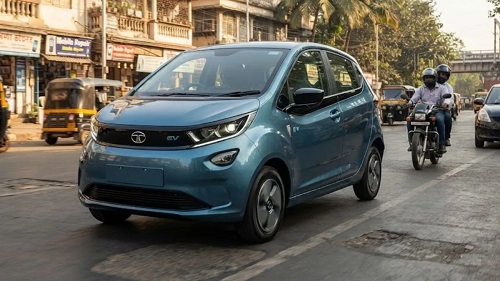
The Tata Nano, once billed as India’s most affordable four-wheeler, could be heading for an unexpected comeback. While Tata Motors has not officially confirmed plans to revive the nameplate, reports and speculation about a new-generation Nano have generated fresh interest, particularly around the possibility of an electric version.
If Tata Motors does bring back the Nano, an EV could be a far more suitable proposition for today’s Indian market than the original petrol-powered car was in 2009.
When Tata Motors introduced the Nano in 2009, it was built around a bold idea: make car ownership accessible to a much larger section of Indian families. Its compact dimensions, low running costs and affordability immediately attracted attention.
However, the Nano's positioning as an ultra-budget car eventually became one of its biggest challenges. Instead of being viewed as an aspirational upgrade, it was often associated with being the cheapest car available. At the same time, buyers increasingly preferred larger hatchbacks that offered more features, space and status.
Despite its commercial struggles, however, the Nano developed a loyal following. Its tiny footprint, easy manoeuvrability and distinctive design made it particularly well suited to crowded Indian cities.
India's automobile market has changed dramatically since the Nano was launched. Electric vehicles have moved beyond being a niche product and are increasingly becoming part of mainstream urban mobility.
This could create an ideal opportunity for a small electric car. India's cities face congested roads, limited parking space and rising ownership costs. A compact EV could provide an efficient option for daily commuting while being easier to park and cheaper to operate than conventional cars.
A modern Nano EV could particularly appeal to first-time car buyers, urban commuters and families looking for a second vehicle. It could also serve as an attractive upgrade for two-wheeler users seeking the additional safety and convenience of a four-wheeler.
Tata Motors is already an established player in India's electric-car market, with models such as the Tiago EV, Punch EV and Nexon EV, alongside larger electric SUVs.
That experience gives the company a significant advantage compared with the situation in 2009. Battery technology, electric powertrains, charging infrastructure and consumer awareness have all progressed considerably.
If revived, the Nano EV could potentially sit below the Tiago EV and target customers seeking an even more compact and affordable electric vehicle.
A new Nano would have to be much more than a smaller car with an electric motor. Today's buyers expect safety, technology, comfort and a modern design even in affordable vehicles.
A contemporary Nano EV could therefore be expected to focus on:
Advances in battery technology could also allow Tata to provide a useful city-driving range without making the vehicle excessively heavy or expensive.
The original Nano demonstrated an important lesson for the Indian automobile industry: affordability is important, but it cannot be the only selling point.
If Tata Motors revives the Nano, the company would need to reposition it. Instead of presenting it simply as a cheap car, the Nano EV could be marketed as a smart, compact and environmentally friendly urban mobility solution.
Design, safety, features and brand positioning would be crucial in making the vehicle aspirational for younger buyers.
For now, Tata Motors has not officially announced a new Nano or a Nano EV. Therefore, reports about its return should be treated as speculation until the company makes a formal announcement.
Nevertheless, the idea of an electric Nano is intriguing. The original car arrived at a time when India's automobile market was still dominated by conventional petrol and diesel vehicles. Today, the rise of EVs and the growing need for affordable urban mobility could provide the Nano with a second chance.
If Tata Motors can combine the Nano's legendary compactness with modern safety, technology, useful range and an aspirational identity, the iconic small car could potentially find a much more receptive audience in India's evolving electric-vehicle market.




















Leave Your Comment