


Tensions once again flared in the Tamil Nadu Assembly on Tuesday morning as long-simmering differences between Governor RN Ravi and the ruling Dravida Munnetra Kazhagam (DMK) erupted on the very first day of the legislature’s opening session. What was expected to be a routine start to the House proceedings instead unfolded into a political showdown, underlining the deep institutional friction between Raj Bhavan and the elected state government.
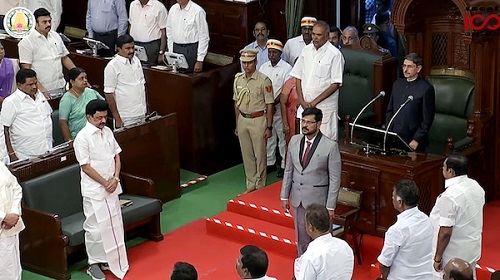
The flashpoint came moments after the session began at 9.30 am, when the Tamil Nadu state anthem was played, as per established practice. Governor Ravi, who was scheduled to deliver the customary opening address, objected to the sequence and declared that the national anthem had been “insulted”. After offering a brief greeting in Tamil, he abruptly walked out of the House, skipping his address altogether. The episode mirrored similar scenes from the opening of the past two Assembly sessions, highlighting a recurring pattern of confrontation.
Soon after the walkout, the Governor’s office issued a strongly worded statement accusing the state government of repeatedly switching off his microphone and presenting a speech that, it claimed, contained “numerous unsubstantiated claims and misleading statements”. The statement alleged that crucial issues affecting the public had been ignored, specifically pointing to references in the speech on Rs 12 lakh crore worth of investments and women’s safety.
The ruling DMK responded swiftly and sharply. Chief Minister MK Stalin accused the Governor of violating “100-year-old traditions of the House” and said his actions amounted to a serious institutional impropriety. Quoting party founder and former Chief Minister CN Annadurai, Stalin invoked a famous line to underline the DMK’s ideological opposition to the office of the Governor, remarking, “Why does a goat need a beard… and why does a state need a Governor?”
Stalin rejected allegations of disrespect, asserting that neither the Assembly nor his government had shown any disregard for the Governor or his office. Instead, he claimed it was Governor Ravi who had failed to respect the sentiments and democratic mandate of the Tamil people. Speaker M Appavu informed the House that the Governor had been formally apprised of the protocol in advance. Undeterred by the walkout, the Chief Minister moved a resolution to place the Governor’s address—prepared, as is customary, by the elected government—on record, which the House approved.
While the speech was formally adopted, the episode once again spotlighted the ongoing and acrimonious relationship between the Governor and the DMK government. Governor Ravi and the Stalin-led administration have clashed repeatedly on a range of issues, most notably over delays in granting assent to state legislation, a dispute that has already reached the Supreme Court.
The timing of the confrontation adds political weight to the drama. With a crucial Assembly election just three months away, the standoff between a Governor appointed by the BJP-led Centre and a DMK government firmly opposed to the BJP has sharpened. Law and order, governance, and the role of constitutional authorities have all emerged as key points of contention between the two sides.
Tuesday’s walkout, therefore, was more than a procedural disagreement—it was a vivid reminder of the strained federal equations in Tamil Nadu and a signal that the political temperature is only set to rise in the months leading up to the polls.




















Leave Your Comment