


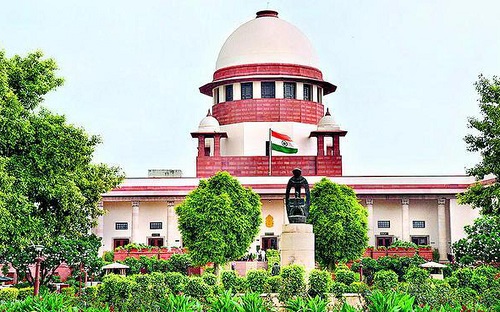
In a stern rebuke to the West Bengal administration, the Supreme Court of India on Friday took serious note of the violence and intimidation faced by judicial officers in Malda district, terming the episode a “brazen and deliberate attempt” to obstruct the administration of justice.
A bench led by Chief Justice of India Surya Kant expressed deep concern over the incident, where seven judicial officers—including three women—were allegedly gheraoed and held without basic necessities such as food and water for several hours while performing duties related to the Special Intensive Revision (SIR) process overseen by the Election Commission of India.
The Court described the episode as “preplanned, calculated, and motivated,” warning that such acts strike at the very foundation of the rule of law. It further remarked that the situation reflected the deeply polarised environment in the state and raised alarm over the apparent breakdown of law and order.
“This was not a spontaneous act but a well-orchestrated attempt to demoralise judicial officers and obstruct the adjudication process,” the bench observed, adding that such conduct amounted to criminal contempt of court and a direct challenge to its authority.
Taking strong exception to what it termed an “abdication of duty,” the apex court issued show-cause notices to senior state officials, including the Chief Secretary, Home Secretary, Director General of Police, District Collector, and Superintendent of Police.
The Court questioned why timely and effective measures were not taken despite prior intimation of possible unrest, leaving judicial officers vulnerable in a volatile situation.
In a decisive move, the Court directed the Election Commission to requisition central security forces from across the country to ensure the safety of judicial officers and the uninterrupted continuation of the SIR adjudication process.
It also mandated strict security arrangements at all venues, including restricted public access, immediate threat assessments for officers and their families, and regular compliance reports. Senior officials have been directed to remain virtually present at the next hearing.
According to court observations and official accounts, the incident unfolded on Wednesday afternoon in Malda district. Protesters, reportedly agitated over the deletion of names from electoral rolls, initially sought a meeting with the judicial officers.
When denied entry, the situation escalated into a demonstration that began around 4 pm and soon turned into a gherao of the premises. The officers remained trapped inside for hours, prompting the Chief Justice himself to monitor the situation late into the night.
The Court noted that the incident was not merely an act of local unrest but an attempt to “browbeat judicial officers” and undermine the authority of the judiciary.
Reiterating its commitment to protecting the independence of the judiciary, the Supreme Court made it clear that it would not tolerate any attempt to intimidate officers engaged in judicial or election-related duties.
“We will not permit any individual or group to take the law into their own hands or create psychological fear in the minds of judicial officers,” the bench asserted.
The Court also emphasized that it would ensure the protection of the lives, property, and families of all judicial officers involved in the process.
The developments have raised serious concerns about the security of judicial officers and the integrity of electoral processes in sensitive regions. By stepping in decisively, the Supreme Court has sent a strong message about accountability and the non-negotiable nature of judicial independence.
The matter is expected to come up for further hearing, where the response of state authorities and compliance with the Court’s directives will be closely scrutinised.

















Leave Your Comment