


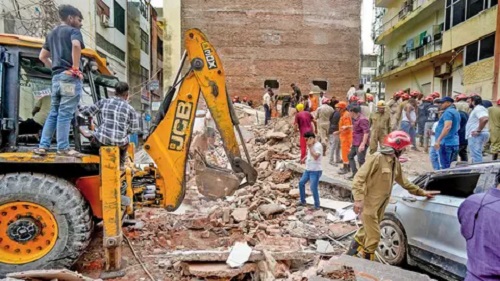
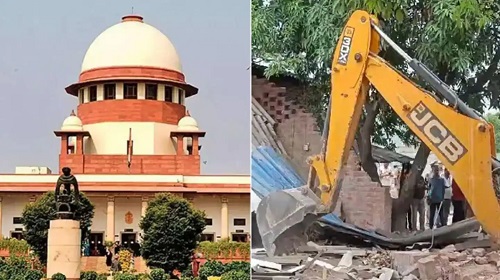
The Supreme Court of India has issued a scathing rebuke to the Uttar Pradesh government and the Prayagraj development authority over what it termed as 'inhuman and illegal' demolition of residential houses. In a stern reminder emphasizing the 'rule of law in the country', the apex court condemned the manner in which residential structures were demolished, stating that such actions cannot be justified under any circumstances.
A bench comprising Justices Abhay S Oka and Ujjal Bhuyan expressed deep concern, asserting that the demolition in Prayagraj "shocks" the conscience of the court. The justices highlighted the fundamental right to shelter and stressed the importance of due process of law in such matters. This comes in response to a plea by advocate Zulfiqar Haider, professor Ali Ahmed, and others whose houses were razed by the authorities.
Earlier, on March 24, the Supreme Court had already criticized the Uttar Pradesh government for what it described as 'high-handed' actions in Prayagraj. The court's strong words underscored its disapproval of the state's failure to follow proper legal procedures, despite objections raised by affected citizens and subsequent dismissal of their plea by the Allahabad High Court.
The apex court's stance has been unwavering, emphasizing that such demolitions without due process send a "shocking and wrong signal". Attorney General R Venkataramani, defending the state's actions, assured the court during the hearings that due legal procedures would be followed in issuing notices and dealing with unauthorized occupations.
In a significant directive, the Supreme Court has ordered the authorities to compensate each affected house owner with ₹10 lakh within six weeks, underscoring the severity of the violations and the need for accountability. The judgment serves as a crucial reminder of the judiciary's role in upholding citizens' rights and ensuring adherence to legal norms, particularly in cases impacting the right to shelter.
This development marks a pivotal moment in the ongoing legal battle between the state authorities and affected residents, highlighting broader issues of governance, legality, and fundamental rights in the realm of urban development and housing policies in India.




















Leave Your Comment