


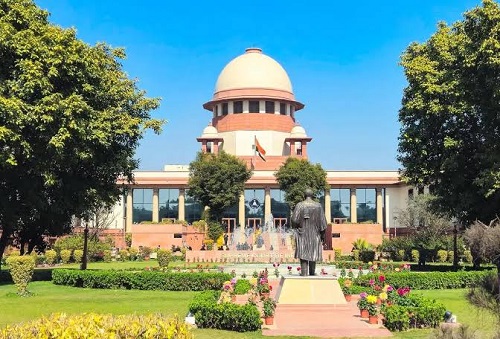
The Supreme Court has asked the Centre to reconsider sweeping restrictions on Delhi Metro and railway services ahead of the October 10 protest called by the Cockroach Janata Party (CJP) at Jantar Mantar, observing that public convenience cannot be sacrificed entirely in the name of security. Emphasising that millions of commuters depend on public transport for their daily livelihoods, the court urged authorities to explore regulated arrangements that would maintain essential services while addressing potential security risks.
The Supreme Court's intervention has brought into focus a fundamental challenge confronting the administration of India's capital: how to safeguard public order during political demonstrations without disrupting the everyday lives of ordinary citizens. With restrictions reportedly affecting 57 Metro stations and train services from major railway stations, the court has called for a proportionate approach that balances security preparedness with the public's right to mobility.
A bench headed by Chief Justice of India Surya Kant, also comprising Justice Joymalya Bagchi, expressed concern over the potential consequences of the restrictions for people travelling to workplaces, courts and other essential destinations. The bench made it clear that public transport should not be brought to a complete halt when alternative arrangements could allow services to continue under appropriate safeguards.
The court's observations underline the importance of public transport in a metropolitan region such as Delhi, where thousands of employees, students, daily-wage workers and other commuters depend on the Metro and railway network. Any extensive disruption can affect not only the immediate neighbourhood surrounding a protest site but also distant parts of the National Capital Region.
During the hearing, the bench noted that while some people might have access to private vehicles, a large section of the population relies on public transport. The closure of Metro stations, therefore, risks imposing a disproportionate burden on those with limited alternatives.
The Centre has defended the restrictions on the grounds of public safety and the possibility of demonstrations escalating beyond their permitted limits.
During the hearing, Mehta told the court that permission for an earlier protest on June 20 had been granted for one day, but demonstrators allegedly continued their sit-in for 17 days. He further alleged that protesters attempted to march towards Parliament and that more than 200 police personnel were injured while preventing them from entering the premises.
The Solicitor General also raised allegations concerning the treatment of women police personnel, arguing that the authorities had legitimate reasons to remain cautious.
The Supreme Court also questioned whether Jantar Mantar was an appropriate venue for a large demonstration, given its geographical location and limited available space.
Chief Justice Surya Kant suggested that the authorities consider an alternative location capable of accommodating protesters more effectively. The bench observed that inadequate space could create difficulties involving food, sanitation and emergency access, including the movement of ambulances.
The observation highlights a broader issue in the management of public demonstrations. The choice of a protest venue affects not only the protesters' ability to assemble but also the administration's capacity to maintain public order and protect the surrounding population.
A designated location with sufficient space, clearly defined entry and exit points, medical facilities and emergency access could reduce the pressure on nearby roads and transport services. Proper advance coordination between organisers, police and civic authorities could also help limit disruption.



















Leave Your Comment