


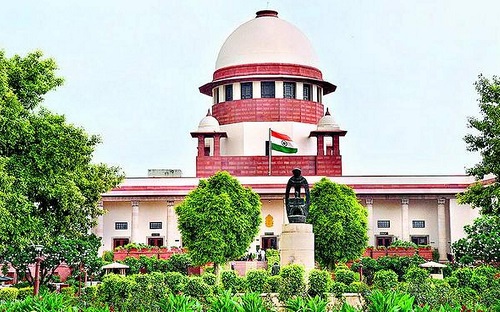
Today, the Supreme Court of India deferred its interim order on the contentious new Waqf law following a plea from the Centre for additional time to prepare its arguments on critical points raised by the apex court. The bench comprising Chief Justice Sanjiv Khanna and Justices Sanjay Kumar and K.V. Viswanathan engaged Solicitor General Tushar Mehta, representing the Centre, probing into the legality of disallowing "waqf by user" without proper documentation, a concern resonating with many stakeholders who may lack necessary paperwork for such registrations.
The three-judge bench meticulously considered pivotal aspects amid petitions challenging the recent Waqf Amendment Act of 2025. Notably, the bench deliberated on three significant points:
Firstly, it emphasized that properties previously declared as Waqf by courts should not be de-notified, irrespective of their classification as "waqf-by-user" or "waqf by deed," while the legal challenges to the Amendment Act are under judicial review.
Secondly, the bench addressed concerns regarding a provision in the Amendment Act stating that a property under Waqf status would cease to be considered as such during a collector's inquiry into its potential classification as government-owned land. The court indicated its intention to restrain the enforcement of this provision.
Thirdly, the bench proposed that all members of the Waqf Boards and the Central Waqf Council must adhere to Muslim faith, except ex-officio members, reinforcing the religious affiliation requirement within these governing bodies.
However, despite the bench's contemplation of issuing an interim order today, it ultimately opted to postpone the decision, scheduling further arguments for tomorrow. Chief Justice Sanjiv Khanna, concluding today's session, expressed apprehension over the recent outbreak of violence in West Bengal linked to amendments in the Waqf Act, highlighting the sensitive nature of the ongoing legal discourse surrounding religious property management in India.
The Supreme Court's deferral of the interim order signifies a cautious approach in addressing the complex legal and socio-political implications of the amended Waqf legislation, underscoring the judiciary's role in balancing legal clarity with societal harmony. As arguments resume tomorrow, stakeholders await further developments that could shape the future trajectory of Waqf administration and religious governance in India.
















Leave Your Comment