


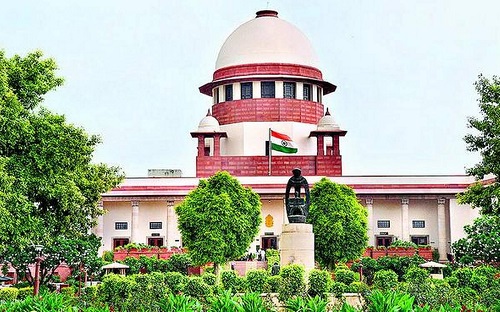
The Supreme Court's latest order in the Bilkis Bano case has reopened a deeply sensitive chapter of India's criminal justice history. By suspending the life sentences of two convicts and granting them bail after more than 17 years of incarceration, the apex court has brought the delicate balance between individual liberty, judicial procedure and accountability for heinous crimes into focus.
The Supreme Court's decision to suspend the life sentences of two convicts in the Bilkis Bano case has brought one of the most disturbing chapters of the 2002 Gujarat riots back into the national discourse. The relief granted to Vipinchandra Kanhaiyalal Joshi and Pradeep Ramanlal Modhiya comes after more than 17 years of incarceration, with the court also taking note of the severe disability of one of the appellants. However, the order is not an acquittal or a declaration of innocence. It is an interim judicial relief granted while their appeals against conviction remain pending. The development once again highlights the complex relationship between individual liberty, judicial procedure and accountability in cases involving exceptionally grave crimes.
A Bench comprising Justices MM Sundresh and Prasanna B Varale passed the order on October 28 while hearing petitions challenging the Bombay High Court's 2017 judgment, which had upheld their convictions and life sentences. The Supreme Court observed that the appeals involved questions of fact and law requiring detailed examination. Taking note of the period already spent in prison and the disability of one of the appellants, the Bench decided to suspend their sentences and grant them bail. The conditions governing their release will be determined by the concerned trial court, while the appeals will be listed for hearing in due course.
Senior Advocate Siddharth Luthra, appearing for the two convicts, argued that both had remained behind bars for more than 17 years. He also submitted that one of the appellants had not been named in the original FIR and was implicated nearly three years after the incident. The defence further highlighted the severe disability suffered by one of the men. These submissions formed an important part of the consideration before the Bench, which noted that the issues raised in the appeals deserved judicial examination.
The Gujarat government, however, strongly opposed the bail applications. Additional Solicitor General Raja Thakre, representing the state, argued that the trial court and the Bombay High Court had already examined the evidence and relevant circumstances before arriving at their conclusions. He also emphasised the seriousness of the offences for which the appellants had been convicted. Nevertheless, the Supreme Court considered the period of incarceration and the circumstances presented before it sufficient to grant interim relief pending the final adjudication of their appeals.
Both men were convicted under Sections 143, 147, 302 and 376 of the Indian Penal Code, relating to unlawful assembly, rioting, murder and rape. The trial court had awarded them rigorous imprisonment for life along with fines, and the Bombay High Court subsequently upheld the verdict in 2017. Their present relief does not invalidate these convictions. Rather, it allows them to remain outside prison subject to judicially prescribed conditions until their appeals are decided.




















Leave Your Comment