


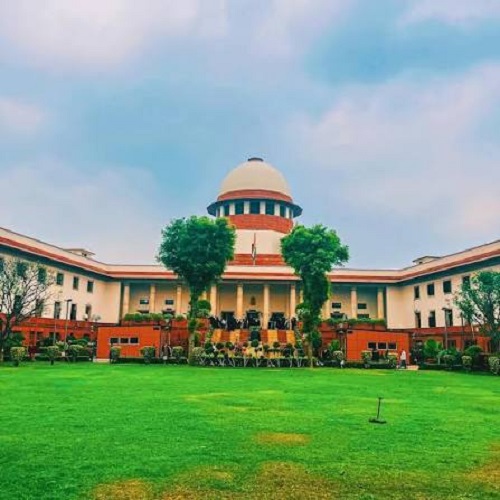
In a significant step aimed at assisting families of Indians affected by the Russia-Ukraine conflict, the Supreme Court on Friday directed the Central government to appoint a nodal officer in the Ministry of External Affairs (MEA) to coordinate with the families of those who died, went missing, or suffered injuries after being recruited to fight in the war. The Court also instructed the MEA to communicate all relevant information to the affected families in vernacular languages to ensure they fully understand the procedures and updates related to their cases.
The directions were issued by a Bench comprising Chief Justice Surya Kant and Justices Joymalya Bagchi and V. Mohana while hearing a petition filed by the family members of Indian nationals who allegedly died or went missing after being recruited into the ongoing Russia-Ukraine conflict. The Bench emphasized the need for a coordinated humanitarian response and directed the MEA to facilitate DNA matching between the mortal remains and the families of the deceased to enable their identification and repatriation.
Recognising the difficulties faced by grieving families, the apex court instructed the MEA to assist them in filing compensation claims before the Russian Embassy. It also directed the Ministry to prepare a comprehensive docket explaining the procedure for seeking compensation from the Russian authorities. The Court said all such information should be made available in regional languages so that families across the country can access it without linguistic barriers.
The Supreme Court further clarified that while compensation claims would be routed through the MEA, the processing of these claims should not delay the return of mortal remains or the conduct of last rites. The Bench stressed that humanitarian considerations must take precedence over procedural formalities.
To provide legal support, the Court directed the National Legal Services Authority (NALSA) and the State Legal Services Authorities (SLSAs) to extend free legal assistance to the affected families. The legal services bodies have been tasked with helping families secure the mortal remains of their relatives, facilitate DNA testing where required, and pursue compensation claims before the appropriate authorities.
The Court also instructed the Member Secretaries of the State Legal Services Authorities to actively assist the families in navigating legal and administrative procedures. Additionally, the MEA was asked to provide translated copies of all documents received from the Russian authorities relating to the repatriation of mortal remains and compensation claims, ensuring that affected families are fully informed throughout the process.
In its order, the Supreme Court observed that during 2024 and 2025, several Indian youths travelled to Russia on various visa categories after allegedly being promised employment in sectors such as construction, hospitality, and services. However, upon reaching Russia, their passports and identity documents were reportedly confiscated, following which they were recruited into the Russian armed forces and deployed to the frontlines of the Russia-Ukraine conflict.
The Court's directions seek to establish a structured mechanism for communication, legal assistance, DNA identification, repatriation, and compensation, addressing the hardships faced by families whose relatives became victims of alleged recruitment into the conflict under false promises of employment. The order underscores the judiciary's emphasis on ensuring that affected families receive timely support, transparent information, and access to justice while dealing with the humanitarian consequences of the war.




















Leave Your Comment