


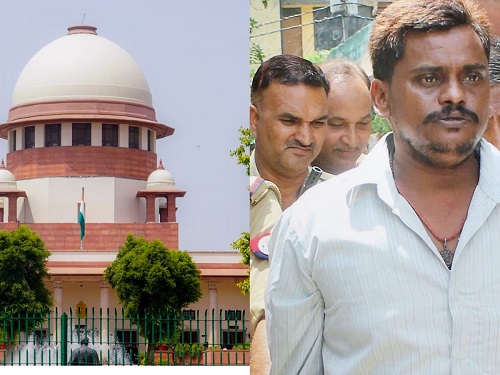
In a stunning and definitive conclusion to one of India's most gruesome criminal cases, the Supreme Court on Tuesday acquitted Surendra Koli, setting aside his last remaining conviction in the 2006 Nithari serial killings. The ruling marks the end of a 19-year legal ordeal for Koli, who had faced the death penalty multiple times.
A bench comprising Chief Justice B.R. Gavai and Justices Surya Kant and Vikram Nath directed that Koli be "released forthwith" if he is not required in any other case. While pronouncing the order, Justice Vikram Nath explicitly stated, "The curative petition is allowed. The petitioner is acquitted of the charges."
Curative Petition Leads to Final Acquittal
The apex court's decision came on a curative petition filed by Koli, challenging a 2011 Supreme Court judgment that had upheld his conviction in one of the Nithari cases. A curative petition is the final legal recourse available to a person after a review petition is dismissed.
Koli's appeal hinged on a critical argument: the same set of evidence and the foundation of the prosecution's case that had been used to convict him in this final case had subsequently been deemed unreliable and insufficient by higher courts in 12 other connected cases. The Supreme Court agreed, effectively nullifying the last conviction standing against him.
This ruling follows a significant development from July of this year, when the Supreme Court dismissed appeals filed by the Central Bureau of Investigation (CBI), the Uttar Pradesh government, and victims' families against Koli's earlier acquittals by the Allahabad High Court.
A Recap of the Nithari Horror
The Nithari killings sent shockwaves across the nation when they came to light in December 2006. The horrifying discovery of human skeletons and remains from a drain behind a house in Noida's Nithari village unveiled a series of brutal crimes. The house belonged to businessman Moninder Singh Pandher, and Surendra Koli was his domestic help.
The investigation revealed a pattern of kidnapping, rape, and murder of several children and young women from the area between 2005 and 2006. The CBI eventually registered 16 separate cases related to the atrocities.
The Unraveling of the Convictions
The case took a dramatic turn in October 2023 when the Allahabad High Court acquitted both Koli and Pandher in multiple cases, overturning the death sentences handed down by the trial court in 2010. The High Court pointed to profound and irredeemable lapses in the investigation, citing a lack of credible and conclusive evidence to link the accused to the crimes. It acquitted Koli in 12 cases and Pandher in two.
The Supreme Court's subsequent upholding of these acquittals in July, followed by Tuesday's curative petition ruling, has now officially closed the legal chapter for Surendra Koli.
A Case That Shocked a Nation's Conscience
The Nithari case remains a dark episode in India's criminal history, sparking national outrage and intense debate over the safety of children, the vulnerability of marginalized communities, and the glaring inadequacies of police investigation. For years, Koli had been convicted in over a dozen cases and was on the verge of execution.
With the Supreme Court's final order, Surendra Koli now walks free, nearly two decades after the gruesome discoveries first horrified the nation, his acquittals serving as a stark reminder of the critical importance of robust and unimpeachable evidence in the delivery of justice.


















Leave Your Comment