


India’s transition towards clean energy is beginning to deliver tangible financial benefits to households, with more than 21 lakh homes benefiting from zero electricity bills under the PM Surya Ghar: Muft Bijli Yojana. Union Minister for New and Renewable Energy Pralhad Joshi has highlighted this achievement as evidence of the country’s growing solar power potential, supported by falling generation costs and an unprecedented expansion of installed capacity. As India prepares to host the Bharat Renewable Energy Summit and Expo 2026, the government is seeking to strengthen the country’s position as a global leader in renewable energy while advancing energy security, economic self-reliance and sustainable development.
In an article published in a daily newspaper, Joshi underlined how the economics of solar energy in India have changed dramatically over the past decade. The cost of solar electricity, which stood at around ₹8 per unit in 2014-15, has fallen to as low as ₹2.15 per unit. This sharp reduction has made solar power increasingly competitive with conventional sources of electricity and strengthened the case for accelerating its adoption across residential, commercial and industrial sectors.
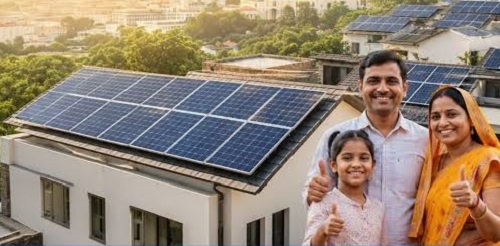
One of the most visible examples of this transformation is the PM Surya Ghar: Muft Bijli Yojana, the government's flagship initiative to promote rooftop solar installations in residential households. According to the minister, more than 21 lakh of the 65 lakh homes covered by the programme have received zero electricity bills. The achievement highlights the scheme's potential to reduce household expenditure while encouraging citizens to participate directly in India's clean energy transition.
Rooftop solar systems allow households to generate electricity from sunlight, reducing their dependence on conventional power supplies. Depending on consumption, system capacity, sunlight availability and applicable billing arrangements, households can substantially lower their electricity expenses. The programme also creates opportunities for employment in solar installation, maintenance and related services, supporting the development of a wider domestic renewable energy ecosystem.
India's Solar Expansion Reflects Speed and Scale
Joshi attributed India's rapid progress in renewable energy to the leadership of Prime Minister Narendra Modi, emphasising the importance of expanding clean energy infrastructure at both speed and scale. India's installed solar capacity has increased by around 6,000 per cent over the past 12 years, reflecting a fundamental shift in the country's energy development strategy.
The expansion of solar power has become increasingly important as India seeks to meet rising electricity demand while balancing economic growth with environmental responsibilities. Solar energy offers the country an opportunity to utilise its abundant sunlight, diversify its electricity mix and reduce exposure to fluctuations in international fossil fuel markets.
The minister also highlighted India's achievement in meeting its 2030 target of 50 per cent non-fossil electricity capacity five years ahead of schedule. India has positioned this accomplishment as evidence that economic development and climate commitments can advance together.
However, installed capacity is only one measure of the energy transition. The next stage will require sustained investment in transmission infrastructure, energy storage, grid modernisation and flexible power systems to manage the intermittent nature of solar and wind generation. Expanding domestic manufacturing, improving project execution and ensuring affordable access to clean electricity will also be essential to maintaining the momentum.
Renewable Energy Summit to Strengthen Global Cooperation
The Bharat Renewable Energy Summit and Expo 2026 is expected to provide an important platform for advancing international cooperation on clean energy. Prime Minister Narendra Modi will inaugurate the event at Bharat Mandapam in New Delhi on November 2.
According to Joshi, the summit will, for the first time, bring together the ninth Assembly of the International Solar Alliance and the fourth International Conference on Green Hydrogen. The combination of these major gatherings is intended to encourage dialogue on renewable energy deployment, emerging technologies and the development of sustainable energy systems.
The discussions will extend beyond electricity generation to address some of the most pressing challenges facing countries worldwide. Reliable power supplies, reduced dependence on imported fuels and improved food security through solar-powered irrigation are among the key themes highlighted by the minister.
These priorities underline the wider significance of renewable energy. For countries dependent on imported fossil fuels, domestic clean energy can help reduce vulnerability to international price shocks and supply disruptions. For agricultural economies, solar irrigation can improve access to electricity for farming, although its long-term benefits will depend on sustainable groundwater management and appropriate implementation.
Green hydrogen is another emerging area of interest, particularly for industries where direct electrification is difficult. Its commercial expansion will depend on lower production costs, adequate renewable electricity, infrastructure development and the creation of reliable demand.
A Global Vision Rooted in Shared Prosperity
Joshi said the summit would promote cooperation in the spirit of Vasudhaiva Kutumbakam—the world is one family. The principle reflects the view that energy security, climate action and sustainable development are shared global responsibilities rather than challenges that individual countries can address in isolation.
For India, the renewable energy transition has implications extending well beyond environmental protection. It can support domestic manufacturing, generate employment, improve energy access and strengthen the country's strategic autonomy. At the international level, cooperation on solar technology, green hydrogen, financing and infrastructure can help developing economies accelerate their own transitions.
The government's challenge will be to translate expanding capacity and ambitious targets into reliable, affordable and accessible energy for citizens and businesses. This will require consistent policies, investment in supporting infrastructure and solutions that address the practical needs of households, farmers and industry.
The growing number of households benefiting from rooftop solar demonstrates the potential of clean energy to deliver direct economic gains. At the same time, the rapid decline in solar electricity costs and the expansion of installed capacity indicate how technological progress and policy support can reshape a country's energy landscape.
As the Bharat Renewable Energy Summit and Expo 2026 brings together policymakers and international stakeholders, India's experience offers an opportunity to demonstrate how renewable energy can contribute to economic resilience and sustainable development. The ultimate measure of success will be the country's ability to turn its growing clean energy capacity into lasting benefits for citizens while contributing to a more secure and sustainable global energy future.



















Leave Your Comment