


PROTECTION OF ENVIRONMENT OF LAKE CHILIKA ALONG WITH MASS LIVELIHOOD GENERATION IN A SUSTANABLE DEVELOPMENT MODEL
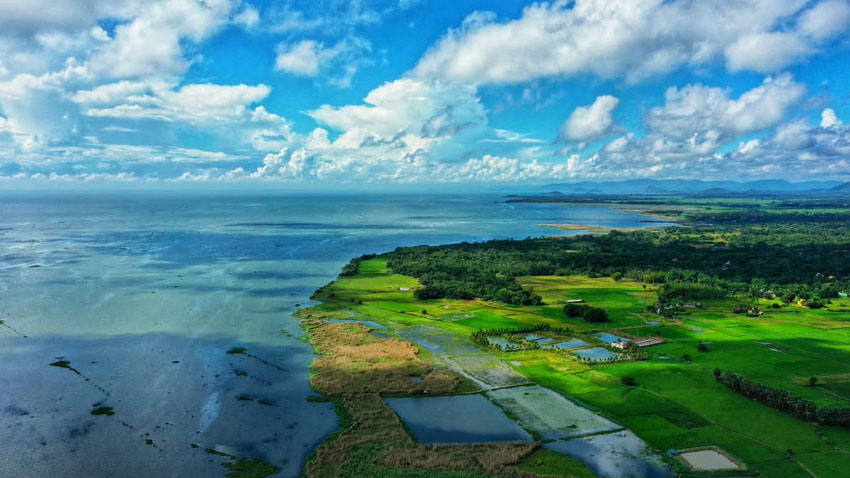
Lake Chilika is the biggest Brackish water Lagoon of Asia. This Estuary is a symphony of nature, a colorful canvas of vibrant birds. A hot spot of Bio-Diversity. It is the Home of 225 species of Fishes (Dean & Saaltink, 1991) , 28 types of Prawns, 30 types of crabs,37 types of Amphibians & Reptiles , 205 species of Birds, 22 types of Moss, 711 species of Aquatic weeds, 350 species of Non Aquatic plants(Panda & Pattnaik, 1988) etc.. It is also the largest wintering ground of Migratory Birds come from Central Asia, Kaspian and Mongolia. It is spread upon three districts like Puri, Khordha & Ganjam and it is located from Latitude 19*28’ to 19*54’ and Longitude 85*05’ to 85*38’. The length of the lake is 64.03 Kms and Breadth ranges between 18 to 5 Kms.(Das & Samal, 1988). Seasonally area of lake Chilika varies. In rainy season the area of the lake remains 1165 Sq.Km and during summer it reduces to 790 Sq.Km. .
Day by day the area of lake Chilika is reducing drastically. According to the survey conducted during summer in the year 1972-73 the water area of lake Chilika was 824 Sq.Kms, where as in the survey conducted in summer in the year 1986 the area reduced to 790 Sq.Km.. Only within 13 years the area reduced by 34 Sq.Km. .From 1986 to till date 38 years passed. If a fresh survey will be conducted, then it is expected that the area of Chilika may remain within 700 Sq.Km., as the environment of the lake is degrading rapidly. Since long no action has not yet been taken to protect the lake and to protect the livelihood of the people who, residing in and around Chilika.
Now time has come to protect the environment of lake Chilika and to protect its rich source of bio diversity. Approximately 2 Lakhs of Fishermen depend upon this lake for their livelihood. But day by day the production of lake Chilika is reducing. Several Governmental agencies publishing fabricated & false survey reports that fish production is increasing. Actual fact is that fish catch from the lake is drastically reduced. The fish landing at Balugon whole sale market is high due to the cultured vennamei prawn and fresh water fishes from Andhra Pradesh. Salt water fishes from Podampeta of Odisha and Machhilipattanum and Visakhapatnum of Andhra Pradesh. Fishermen are migrating outside the state as migrant labourers in search work leaving their family. No alternative livelihood option is also available here as the Tourism development at Chilika in a minor stage. Due to acute poverty day by day the dispute among fishers belong to SC category and OBC /General category is increasing. Now time came Government should come forward to formulate New Chilika policy to protect the environment of the lake and to protect the livelihood of the people residing in and around Chilika.
DESCRIPTION OF PROBLEMS AND IT’S MITIGATION:
1. Interest of Fish and Coconut farmers at peripheral Chilika must be protected:
The lands of peripheral Chilika are saline affected, unfit for cultivation of Paddy or vegetables. As these lands are marshy in nature, those are fit for aquaculture only. Some Farmers are not encroaching any Eco-sensitive government lands of Lake Chilika, they are doing extensive aquaculture in their registered land. Majority of such types of lands are the ancestral property of fish farmers, provided livelihood from generation to generation. The ponds were constructed when there was no concept of Developmental zone, High Tide Line-HTL etc.. Those lands were used exclusively for culture of fresh water fish. In some cases extensive integrated fish farming is done along with stocking of very small amount of shrimps. As the environment of Chilika is degraded and the water quality is unfit for shrimp culture, so mainly fresh water fish or fresh water prawn (M.rosenbergii) is stocked in these farms, where the salinity of lake Chilika is low. But it is matter of pity that, previous Govt. of Odisha demolished all the ponds in the year 2022 present at the periphery of the Lake. Even the ponds constructed by the Govt. in the year 1975 by the then Minister and former Governor A.P. and Chhatishgarh Sj. Biswa Bhusan Harichandan and distributed among the land less fish farmers were also demolished, forcing lakhs of people of Chilika area to migrate outside the state as migrants in search of livelihood. The soil of pond dikes became soft and exposed. The rain water flow washed the total exposed soil of the dike to Chilika. There remained no barrier to check the speed of the flowing water to the lake. Thousands of plants, coconut trees were also destroyed. It had devastating impact on the environment of the lake and on the livelihood of the village people living in and around Chilika. It was a greatest drive of Govt. to destroy the environment of the lake and to destroy the livelihood of the people of Chilika.
What Govt. should do: Huge marshy lands are present around the lake. Marshy lands connected with the lake is around 4,300 Sq.Km. (Das & Samal, 1988). If fresh survey will be done then this area may be more. These saline affected marshy lands are only fit for aquaculture and Coconut plantation. Government should construct ponds for land less farmers at the bank of lake Chilika.
The farmers who are doing their culture practices in their own Registered Land, planting coconut and other trees on the dike and present at a safe distance from the Lake, should be safe guarded by the govt.. Govt.
2. Extensive or Modified Extensive aquaculture never does any harm, rather increases fish production at peripheral Chilika:
Extensive or modified extensive culture and fresh water aquaculture in the ponds present adjacent to the lake never cause any harm to the lake ecosystem. Prawn or Shrimp is a detritus eater along with its carnivorous nature. Weed is a great problem for lake Chilika. The putrefied weed, debris, small mollusks, its larvae, small insects, natural plankton etc are accepted as food by prawns and those are abundantly available in the silt of Lake Chilika. The Larvae of Mollusks becomes attached in the gills and very fatal to fish life. So Prawn have very beneficial effect in culture ponds. Modified extensive culture is a zero emission culture technology as Food conversion Ratio (FCR) remains 1:1. As in this type of culture, density remains low and no aerators, no chemicals, no antibiotics etc. are used, so it never creates any hazard to the lake eco system . In modified extensive culture slight feeds are given. As density remains low so FCR remains 1: 1 , so almost the total part of the feed is converted into flesh. Very scanty fecal matter is naturally neutralized by natural bacterial and pro biotic action.
What Govt. should do: Govt. should come out with new policy to legalize aquaculture at peripheral Chilika and should declare subsidies for the aquaculture farmers who are doing aquaculture at peripheral Chilika. The private Aquaculture farms should only be allowed for Extensive and modified extensive culture and should be registered under Govt. This will generate huge revenue and employment.
3. Opening of Sea mouth is needed for improvement of fish protection in lake Chilika and for protection of the environment of the Lake:
Due to choking of sea mouth fish and prawn seeds can’t enter in to the lake. Many economically important species of fish, Shrimp and crab are migratory in nature. During breeding season they travel towards sea through sea mouth. Mating takes place there and the spawn again return back to the lake. This natural system has a vital role for improvement of the productivity of the lake Chilika. The tidal effect of the sea also flushes and drags silt, weed and debris from the lake through the sea mouth area, preventing the siltation in the lake and protects it.
Since the sea mouth is chocked so the breeding of aquatic creatures adversely affected. As a result day by day fish population in lake Chilika is declining rapidly. A channel at sea mouth area was constructed by Govt. to enhance the inflow of Sea water to the lake on 23rd September, 2000. Now it is almost destroyed by Tidal effect and Cyclonic devastations.
What Govt. should do: Opening of Sea Mouth area is needed through Drazing. Continuously removal of sand and silt should be done at sea mouth area and the new Channel should be reopened to boost fish production in the lake. Fishing in lake Chilika should be banned for a month, from 15th of January to 15th of February because juvenile prawns and fish fingerlings enter into the lake from sea during this time. It will enhance fish production.
4. Grass carp culture will boost economy and can clean up lake Chilika :-
Though grass carp & cat fishes are fresh water fish, but they can survive in low salinity i.e.4-5 PPT. If Grass carp will be cultured, the villagers will feed them by uprooting the weed from Chilika. The problem creator of Chilika is weed. This problem creator weed can be converted in to high value fish protein. Grass carp is a voracious eater. It can feed on both aquatic and terrestrial saline grasses of Chilika. So it is called as watch man of pond. It also emits large amount of fecal matter. As a result natural plankton is created in pond. The fecal matter and plankton is further consumed by other fishes, cat fishes and also by prawns and shrimps. So those ponds present adjacent to the lake never creates harm to ecosystem if mixed culture of Grass carp, other fishes and Prawn/shrimp done simultaneously, as it is a zero emission technology. The problem creator weed will be converted into delicious fish flesh, which will fetch good market value and demand.
So this type of culture should be replicated in the fresh water ponds present at the periphery of the lake. Due to this rare innovation in aquaculture the author got Innovative farmer award from CIFA, Kausalyaganga in the year 2012 and also got National award from IARI(CSIR), Govt. of India, New Delhi in the year 2013.
What Govt. should do: Govt. should initiate this type of Grass carp culture and should give training to the fish farmers of this area.
5. Coconut Plantation at periphery of Lake Chilika will check siltation & Soil erosion:- If mass Coconut plantation will be done on the dikes of ponds, present at periphery of Lake Chilika will be eco friendly and will check soil erosion, siltation and reduction of nutrient load in the lake. It will give bumper harvest, as Chilika soil and climate is very suitable to Coconut plant (tested by the author). The cluster root of Coconut binds the soil and prevents erosion. So along with aquaculture Coconut plantation at peripheral Chilika should be allowed.
Mass coconut plantation at the side of coastal ring road around Chilika will check soil erosion from the road side and will enhance the aesthetic and heavenly beauty of the lake and will attract tourists.

*Environmental Advantages of Coconut Plant in Chilika context:
a) Cluster root prevent soil erosion and prevents wash out of silt to the lake Chilika, as siltation is most dangerous for the life of the lake.
b) It absorbs high level of nutrient from soil, which is a boon to Chilika, as high nutrition load in Chilika is the main cause of Eutrophication in the lake . Eutrophication(Proliferation of weed) destroys the lake eco system. Coconut plant is the solution to check Eutrophication.
c) It is the best and safe shelter for aquatic birds. It provides birds a safe place for rearing and nursing of their chicks.
d) Coconut tree is among those plants which release very high level of oxygen to the environment.
e) Mass Coconut plantation will reduce lightening death cases.
f) Coconut tree retains soil moisture.
Economic Benefit of Coconut Plantation:
1. Directly Tender coconut and Coconut can be sold.
2. Beauty of Coconut tree will attract Tourists and demand of Tender Coconut will be enhanced.
3. Coir and mattress factories will be opened.
4. Cottage industries for manufacturing of brooms will be flourished.
5. Coconut oil factory will be established.
6. Coconut powder can be used by Biscuit and sweet manufacturers.
7. After oil extraction the Coconut oil cake may be used for cattle and fish feed as it contains high protein, approximately 20%. And high fibre. .
What Govt. should do: Govt. should start Coconut Mission in and around Chilika. Special initiatives should be taken for mass plantation of Coconut on the dikes of the ponds.. This plantation drive should be done by involving village people with the help of NGOs and CBOs.
6. Doubt about High Tide Line should be solved:-
Day by day due to siltation the depth of peripheral Chilika is drastically declined. The water area is gradually decreased and the marshy lands gradually becoming grassy lands. Day by day the land area is increased. The High Tide Line-HTL is practically present much interior to the present boarder line of lake Chilika. Presently High tide line is shifted to approximately 200-300 meters far from the bank of the lake, but government agencies assuming that the shore line of Chilika is the High Tide Line. Actually the shore line is the Low Tide Line(LTL). The HTL identification survey was done 40 years back. Within 40 years the Ecological situation of lake Chilika is changed drastically. HTL is that place where tidal effect will remain high and it can push a person. A lay man can describe HTL like this. But previous government forcefully presumed the LTL as HTL and demolished the aquaculture farms saying the area the Developmental zone.
What Govt. should do: Govt. should go for fresh survey to demarcate actual High Tide Line and to place concrete poles inside the water area in every 500 meters distance to identify HTL and Developmental Zone. After fresh survey new HTL and Developmental zone should be identified and aquaculture at the bank of the lake should be allowed by the Govt..
7. Arfificial stocking of prawn/shrimp seed in Chilika :
Due to choking of sea mouth fish and prawn seeds can’t enter in to the lake. So Govt. should start stocking artificially multi millions of prawn seeds in the lake during the month when the capture fishery stopped in the lake due to Govt. restriction, which will grow naturally in the lake and will provide huge income to the fishermen.
What Govt. should do: Stocking of shrimp seed in Chilika by govt. is needed for improvement of capture fishery. For sustenance of this service, government should collect a production cess of Rs.2.00 per Kg of fish/Prawn, captured by the fishers from Chilika. This amount will be spent for artificial stocking of prawn seed in the lake. This process will enhance the per capita income drastically.
8. Construction of Minor irrigation check dams in 52 rivers joining Chilika :
To prevent siltation in lake Chilika and for irrigation purpose small and minor irrigation check dams are needed in 52 rivers, joining Chilika. As the lands of peripheral Chilika are saline affected, so for good production and to reduce salinity stress sufficient irrigation is deeply needed, which will be only possible by construction of check dams. Large ponds should be constructed at the joining point of the river with Chilika , which can be used as settling pit. These ponds and dams will reduce siltation in the lake and will also help in irrigation and aquaculture.
What Govt. should do: Govt. should construct at least one to two check dams in each river, joining Chilika and should construct settling pits.
9. Destructive capture fishery must be stopped:
Due to deep sea fishing through “Alline” net by Trawlers at the outer part of the sea mouth area and traditional fishing in the inner part of the sea mouth, restricts free movement of Brood and Juvenile fishes. Mass killing of Brood and Juvenile fish at Sea mouth area is also a major cause of declining of fish population in lake Chilika. Use of zero net in Chilika destroys spawn and fingerlings of fishes. It is estimated that every year 151.04 metric tons of Juvenile fishes are killed in Chilika ,which is equivalent to an estimated loss of approximately 8.35 Crores, due to destructive fishery.
What Govt. should do: Fishing at sea mouth area of Chilika should be banned. Use of Zero net in lake Chilika for fishing must be banned.. Movement of motor operated Tourist boats should also be restricted at sea mouth area as it is an eco sensitive area and disturbs fishes. Only traditional non motorized manual boats should only be allowed for tourism purpose in this eco sensitive area. Awareness generation among the Fishers is needed to stop destructive capture fishery. NGOs and Govt. should come forward for this purpose.
8. Silt & Aquatic amphibious weeds should be removed from the Periphery of the Lake : The depth of the water body present adjacent to the coast line of Chilika is reduced, due to siltation and proliferation of Bamboo Grass(An amphibious weed). Bamboo Grass covered almost 60% of coastal water body of the lake. As a result fishing area reduced drastically. Bamboo grass restricts movement of fishing boat also. Bamboo grass is the shelter of mosquitoes, poisonous snakes etc.. But the area where it grows, that place becomes unfit for the fishes due to eutrophication(A process of Ecology in which very rapidly one aquatic body turns into a Grassy land.). If no action will be taken then within 10 years 60% of peripheral Chilika will turn into Grassy land.
What Govt. should do: Govt. should start drazing at at shore line towards inner side at a breadth of 200 meters. Silt, sediment and sand should be removed .Uprooting of the Bamboo Grass, which covers most of the area at coastal line should be done. It will clean up the environment of the lake. Many of the native fishes of Chilika, breed at the shore line. So cleaning of the shore line will increase the fishing area and fish catch will be enhanced.
9. Racial conflict must be stopped by a well planned Chilika Policy: Since long it is heard that Fisher men and Non Fishers. This term is created by the fishermen belong to SC community. Actually majority of the people resides in and around Chilika are fishermen by profession, as they solely dependent upon lake Chilika for their livelihood. They depend upon Capture fishery. Some of the people they depend upon aquaculture by constructing ponds at the periphery of the lake, both on own registered or non registered Govt. lands. Actually the paddy fields present adjacent to the lake are saline affected. As the agricultural crop productivity is absolutely low in these lands present at peripheral Chilika, so village people are forced to depend upon capture fishery. So two types of Fishers are there at peripheral Chilika i.e. (a) SC Fishermen (b) Fishers belong to Non SC community, may be OBC or General caste. But it is matter of pity that SC Fishermen clames that they are the real Fishermen and owner of entire Chilika. The other caste fishermen are non fishers and they have no right upon Chilika. The SC Fishers are also opposing Tourism development. Actually it is not possible to give entire ownership of the Lake to a certain community. It is a public property, not at all a ancestral property of any community.
What Govt. should do: A well defined Chilika policy should come up mentioning clearly the ownership of the lake, which should be kept with the entire villagers who reside in and around Chilika. The water area of the lake should be used for capture fishery by the fishermen belong to SC, OBC and General caste. The marshy land present around the lake should be used for aquaculture and Coconut plantation through Government initiatives.
12. Farming of Chilika Buffalo and Duck can protect Chilika and can provide livelihood in low investment: Fishermen and farmers can go for Chilika Buffalo and Duck farming, because it need very low cost to establish. The input investment is also very low.
Chilika Buffalo is a rare species which have adapted itself with the climate of Lake Chilika. They can comfortably live under open sky in all seasons at any place. They need no shed. They are disease registrant. They feed upon Chilika weed and saline Grasses choking the periphery of the lake and a great problem for Chilika. They even enter in to the water to feed on aquatic weeds and grasses. To clean up the environment of Chilika this particular species of Buffalo is deeply needed. They produce very high quality milk without any investment. The milk of this Chilika Buffalo is rarest of all and with a very high quality protein with high level of milk solid and milk fat along with many vitamins and having medicinal value, according to a recent research. This buffalo is a boon to the lake and to the poor fishers.
The duck farm also need very low investment. Duck naturally collect food from the weeds of lake Chilika and from the silt and sediment of the lake. Naturally available Malluskans and Chilika weed are the free feed for the ducks also.
What Govt. should do: Govt. should establish Chilika Buffalo & Duck Breeding unit. From those units healthy Chilika Buffalo calves & Ducklings should be produced and should be distributed among the interested farmers in subsidized rate. To establish farms govt. should provide subsidies and should train up and should make aware to the farmers or Fishermen to go for Chilika Buffalo and Duck farming.

SOME SUGGESTIONS TO GOVERNMENT:
1. Construction of Coastal Ring Road for Tourism development: A Coastal ring road should be constructed around the Lake Chilika. That road will protect Chilika from siltation. That road can be used for transportation purposes. Fish business and Tourism will be boosted due to this road. Tourists will enjoy the scenic beauty of the lake and one can easily reach from Rambha to Satpada by road within a very short period. Coconut plants should be planted in both side of the road for livelihood generation and to enhance beauty of that road to attract tourists. The plant will prevent soil erosion and siltation in the lake. Restaurants, Bars, Fish fast food centers, soft drink and Hot drink cafes should be constructed by the Govt. through PPP mode at the periphery of the road.
2. Construction of Floating Bars and Restaurants for Tourism development : Floating Resorts, Bars and Dance clubs in Cruises should be introduced in Lake Chilika like Goa. In dance cruises tourists can enjoy sea food also. It will increase the business of value added fish.
3. Promotion of Livelihood through sustainable Aquaculture: Extensive and modified extensive fish and shrimp culture in ponds present at peripheral Chilika should be legalized by the state Govt..
4. Creation of Mangroove forest at the bank of Lake Chilika for protection from cyclone: Some marshy land of lake Chilika may be used for creation of Mangroove forest, to enhance beauty of the lake and to check siltation and soil erosion. Chilika is a cyclone prone area. So during cyclone the mangrove plantation will save the nearby coastal villages as natural barrier. Nursery to develop Mangroove seed lings should be established by Govt..
5. Development of Under Water Tourism to enjoy Irrawaddy Dolphin: Glass Tunnels should be constructed inside lake Chilika near the Dolphin habitats present at Satapada and Rambha for tourists to enjoy Dolphin inside the water. Dolphins will be trained by giving food regularly at a certain time from a boat just near to the underwater glass tunnel. Tourists will book ticket for under water tunnel to enjoy fish and Dolphin habitat. It will attract foreign tourists. It may be constructed and managed through PPP mode.
6. Arrangement of Water sports spots like Barkul: Water sports, paddle operated boats etc. attract tourists. Huge ponds at peripheral Chilika having one channel connecting the lake, around 20 feet wide should be constructed with water sports facility like Barkul at several points of the lake.
7. Development of unused islands for Eco-tourism: There are many unused islands present inside Chilika, except some islands like Kalijai, Kankadasikhari etc.. .Those unused islands are Bhasera mundia, Somolo, Dumkudi, Birds island, Breakfast Island or Sanakuda island, Honeymoon island or Badakuda island etc.. A survey should be done to identify such potential islands which can be developed for tourism purpose. Plantation of coconuts and other plants along with mangrove plants should be done there for beautification with a planned way. Cottages/guest houses, Bars, Restaurants, fast food centre, Parks , museums, Mini zoo, water sports point etc. should be constructed in those islands. If any traditional old and small temples present on it, then that should be developed and publicity should be done. Aquariums to display live fishes of lake Chilika along with some colored fishes, some small enclosures with natural habitat to display live birds of lake Chilika along with complete information about fish and birds of Chilika should present on the islands to attract tourists.
8. Boat Parking places for Fishermen: Huge Ponds with a 20ft. opening towards the lake should be constructed for boat parking at fishermen villages present adjacent to the lake . These should be constructed to protect fishing boats, motors and fishing nets from natural calamities and from pirates.
9. Development of Coconut and Allied agro industries at the bank of Chilika: After 6 years of plantation of Coconut plant, allied agro industries will be developed at peripheral Chilika. Coconut oil industry, coir industry, mattress industry and cattle feed industry are the allied industries of matured Coconut.
10. Cleaning of Sea mouth area and construction of mini dams, settling pit to protect environment of the lake: Sea mouth area should remain clean due to continuous drazing throughout the year which will boost the fish population and will protect the environment of the lake.
Small and mini check dams & settling pit should be constructed in the small rivers, joins Chilika for irrigation and to prevent siltation in lake Chilika.
11. Research to be undertaken for economic use of weeds and Bamboo Grass: (a) When Bamboo Grass is burnt it emits high temperature. It may be used as fuel in mini Thermal power plant. (b) This Bamboo grasses are rich in fiber. So it may be used to prepare handmade paper. Its Fiber may be extracted and can be used to prepare disposable eco-friendly carry bags, plates rtc. and it may replace poly bags. (c) Chilika weeds may be used to prepare vermicompost (d) Chilika weeds may be used in preparation of cattle, poultry and fish feed, as it is highly nutritious. But it needs more research. Fresh research wing should be attached with Banka Bihari Wet Land Institute by the Govt. to work on it . Industrial use of aquatic weed will control the weed and can protect Chilika.
12. Capsule courses and Trainning institute for Tourism, Hotel management etc.: A Government owned training centre may be started at Banka Bihari Wet Land Institute, which will train up local low educated fisher youths and provide capsule courses on Tourism, photography, Hotel management, Catering, fish processing etc. for self employment and to create job opportunity for them in tourism industry.
13. Awareness generation: A mass awareness generation programme to protect the environment of the lake is deeply needed. Also awareness is needed not to use polythene in the lake, not to kill brood fishes and juvenile fishes, not to use zero net and how to do sustainable and integrated aquaculture in a non polluting mode, how to use aquatic weeds for economic benefit, govt. facilities available for the fish farmers present in and around Chilika etc. .
14. Empowerment of Women SHGs: Dry fish or Coconut product based cluster or Producer company should be formed by taking female SHGs. Hygienic drying of fishes in Solar or electric dryers should be done to produce export quality dry fish. Through the cluster modernized machineries should be installed. Training should be provided to the Fisher women belong to the villages present in and around Chilika and marketing support should be provided both domestic and export market. This will empower fisher women.
15. Need of Cold Store: Cold stores should be established at periphery of the lake by the Govt. for preservation of Fish and Prawn, which will be very helpful to boost the economy of fishermen and small fish business men.
CONCLUSION:
The fish productivity of the lake is gradually declining. Former Govt. demolished aquaculture ponds. Tourism development at Chilika Lake is still at a juvenile stage. The environment of Chilika is degrading rapidly. Migration problem is acute at Chilika area. Environment of the lake must be protected. Alternative livelihood support should be provided to the fishers. Fish production should be enhanced through capture fishery. Aquaculture should be legalized at periphery of the lake. The dilemma about HTL , LTL & developmental zone identification must be removed by a fresh survey. Tourism must be developed. Govt. should come forward with a New Chilika Policy to protect the environment , livelihood and to stop the conflict between Kaibarta and Non Kaibarta Fishermen. The above mentioned suggestions and model will transform Chilika and will make Chilika an economic hub, which will generate approximately 4000 crores of revenue per year and will give employment to approximately 5lakhs of people directly and indirectly.
By Dr. Nilalohit Harichandan
(The content of this article reflects the views of writers and contributors, not necessarily those of the publisher and editor. All disputes are subject to the exclusive jurisdiction of competent courts and forums in Delhi/New Delhi only)




















Leave Your Comment