


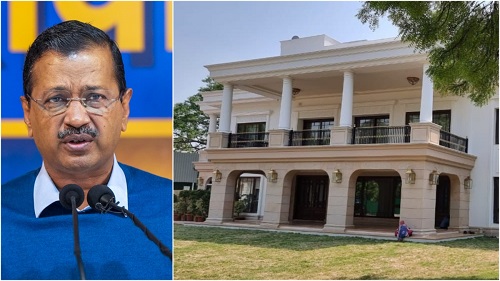
The Central Vigilance Commission (CVC) has ordered a probe into the alleged irregularities in the renovations of former Delhi Chief Minister Arvind Kejriwal's official residence, the 6, Flagstaff Road bungalow. The investigation was initiated based on a factual report submitted by the Central Public Works Department (CPWD), which highlighted potential violations of building norms during the renovation process. The probe, ordered on February 13, comes amid allegations that the bungalow was transformed into a "lavish mansion" by flouting regulations.
The CPWD conducted a thorough investigation into the renovations of the bungalow, which served as the official residence of the Aam Aadmi Party (AAP) national convenor during his tenure as Delhi's chief minister from 2015 to October 2024. The allegations center around the claim that building norms were violated to construct a sprawling mansion covering 40,000 square yards (approximately 8 acres). The CPWD's factual report, submitted to the CVC, has prompted the vigilance body to take action.
The renovated bungalow, which Kejriwal vacated after resigning from the post of chief minister, has been at the center of a political storm. The Bharatiya Janata Party (BJP) has repeatedly targeted Kejriwal and the AAP over the issue, dubbing the residence a "Sheesh Mahal" (palace of mirrors) and accusing the former chief minister of misusing government resources for personal luxury.
The probe comes just days after the BJP urged Delhi Lieutenant Governor VK Saxena to cancel the merger of four government properties with the 6, Flagstaff Road bungalow. BJP leaders, including newly elected MLA Vijender Gupta, have alleged that Kejriwal "illegally annexed" neighboring government properties to expand the bungalow and transform it into an "ultra-luxurious" residence.
In a letter to the Lieutenant Governor, Gupta claimed that the bungalow was expanded by merging four government properties, a move he described as illegal. He demanded that the merger be canceled and action be taken against those responsible for the alleged violations. The BJP has used the issue as a key political weapon against the AAP, particularly during the campaign for the recently held Delhi Assembly elections.
The "Sheesh Mahal" allegations have been a recurring theme in the BJP's criticism of the AAP and its leadership. Prime Minister Narendra Modi and other senior BJP leaders have frequently referenced the issue to accuse Kejriwal and his party of corruption and misuse of public resources. The timing of the CVC probe, coming on the heels of the BJP's demands, has added fuel to the political fire.
The AAP, on the other hand, has dismissed the allegations as politically motivated. Party leaders have accused the BJP of using the issue to divert attention from more pressing matters and to tarnish Kejriwal's image. They have also questioned the timing of the probe, suggesting that it is part of a larger strategy to undermine the AAP ahead of future elections.
The CVC probe will now examine the CPWD's report in detail to determine whether building norms were indeed flouted during the renovations of the 6, Flagstaff Road bungalow. The findings of the investigation could have significant implications, not just for Kejriwal and the AAP, but also for the broader political landscape in Delhi.
As the probe unfolds, the issue is likely to remain a flashpoint in the ongoing political tussle between the BJP and the AAP. Both parties are expected to use the developments to bolster their respective narratives, with the BJP continuing to push its anti-corruption agenda and the AAP defending its record and accusing the BJP of vendetta politics.
In the meantime, the focus will remain on the CVC's findings and whether they validate the allegations of irregularities in the renovations of Kejriwal's former residence. The outcome of the probe could have far-reaching consequences, shaping public perception and influencing the political discourse in the national capital.




















Leave Your Comment