


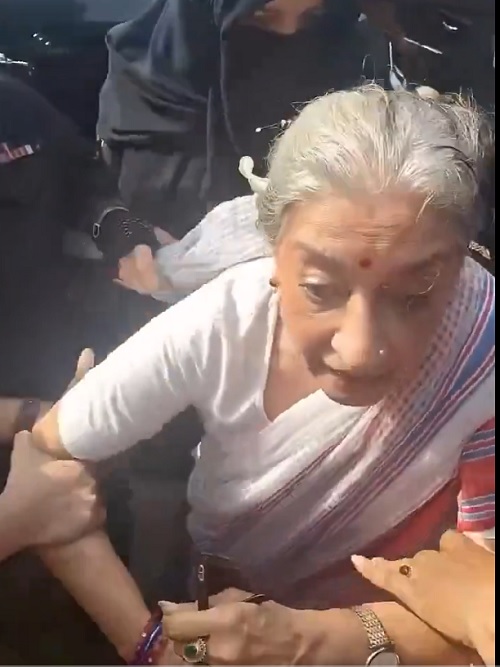
The arrest of 71-year-old Pakistani Hindu classical dancer Seema Kermani has once again sparked debate over freedom of expression, women’s rights, and the shrinking cultural space in Pakistan. A renowned practitioner of Odissi, Bharatanatyam, Kathak, and Kathakali, Kermani has spent decades promoting classical arts and progressive social values in Sindh and across Pakistan. Her detention in Karachi has drawn sharp reactions from civil society groups, artists, and minority rights activists.
According to reports circulating on social media and local activist networks, Kermani was detained while on her way to address a gathering at the Karachi Press Club. Radical Islamist groups had accused her of “spreading shirk” through classical dance performances and of promoting ideas related to women’s freedom and gender equality that they claimed were “against Islamic values.” Critics alleged that she was influencing young women and encouraging them to challenge conservative social norms.
For decades, Seema Kermani has been one of Pakistan’s most recognizable cultural figures. Through her organization Tehrik-e-Niswan, she has used dance, theatre, and literature as tools to speak about women’s empowerment, minority rights, and social justice. In a country where conservative religious forces often oppose artistic expression, her work has consistently faced resistance. Yet she remained a symbol of resilience for many Pakistani women and artists.
Her arrest has reignited concerns about the treatment of minorities in Pakistan, especially Hindus, Christians, Sikhs, and Ahmadis, who frequently complain of discrimination and intimidation. Observers argue that the targeting of a senior artist for promoting classical Indian dance traditions reflects a deeper intolerance toward cultural diversity and liberal thought. Many activists believe that the incident sends a chilling message to women who speak openly about rights, freedom, and equality.
The controversy has also triggered comparisons between democratic freedoms in India and Pakistan. Supporters of India’s pluralistic framework argue that despite political tensions and heated rhetoric, freedom of speech and political participation remain significantly broader in India. They point to instances where controversial Muslim politicians and public figures openly criticize or attack the government yet continue to participate in democratic institutions without being jailed for ideological differences.
One frequently cited example is Imran Masood, whose controversial remarks against Indian Prime Minister Narendra Modi in the past generated widespread outrage but did not prevent him from continuing his political career. Critics of Pakistan’s establishment argue that such examples demonstrate the relative openness of India’s democratic system when compared to the restrictions faced by dissidents, artists, and minorities in Pakistan.
At the same time, human rights advocates caution against turning the issue solely into a political comparison between the two nations. They emphasize that the real concern is the growing intolerance toward artists and women’s voices in parts of South Asia. The arrest of Seema Kermani, they argue, is not merely about one dancer — it reflects a larger struggle over culture, identity, and freedom in contemporary Pakistan.
As international attention grows, many are now calling for Kermani’s immediate release and for stronger protections for artists, minorities, and women who continue to challenge extremism through culture and peaceful expression.



















Leave Your Comment