


The movie Chhava has played a pivotal role in sensitizing the conscience of the nation. It has highlighted the valiant legacy of Sambhaji Maharaj with well researched facts. By depicting his courage, sacrifice, and leadership, the film has awakened a sense of pride and admiration for a hero whose contributions were often overshadowed by the history written to please the winner. Sambhaji Maharaj’s unwavering commitment to the Maratha Empire, his resistance against foreign invaders, and his resilience in the face of adversity are now being recognized and appreciated by a wider audience. Through Chhava, the nation has gained a deeper understanding of his importance in shaping India’s history, and the film has inspired a renewed sense of patriotism and respect for his undying legacy. The most important point to appreciate is, the Hindi film industry is making an effort to come out of the strong control of the underworld.
Kashmir file, Kerala story, Bahubali and chhava are the movies which could have never been made if the public had not stood in unison to boycott films which demeaned Indian culture.1970 onwards the underworld started investing in the film industry which led to glorifying the horrible goons and smugglers, mocking Indian values. It took an author of the calibre of Shivaji Sawant to ignite the minds of crores of Indians to see the valour, the strategies and the sacrifices of the great hero Sambhaji who turned the wheel full circle to energize the dream of Hindavi empire. The dream “Cuttack se attock” was realised later.
It was not only the wins which inspired the nation but the treacherous capture, brutal torture and death, defying the might of Aurangzeb, Sambhaji helped Indians to shed the fear and annihilation of Mughals empire from the Indian soil. Bhagat singh trial at the British court is the only other example where execution of a freedom fighter did more damage then the battle.
The saddest thing about betrayal is that it never comes from enemies. Chankya said, “ trust only leads to betrayal” meaning that until you trust someone you can not be betrayed. Therefore diplomacy becomes very difficult.
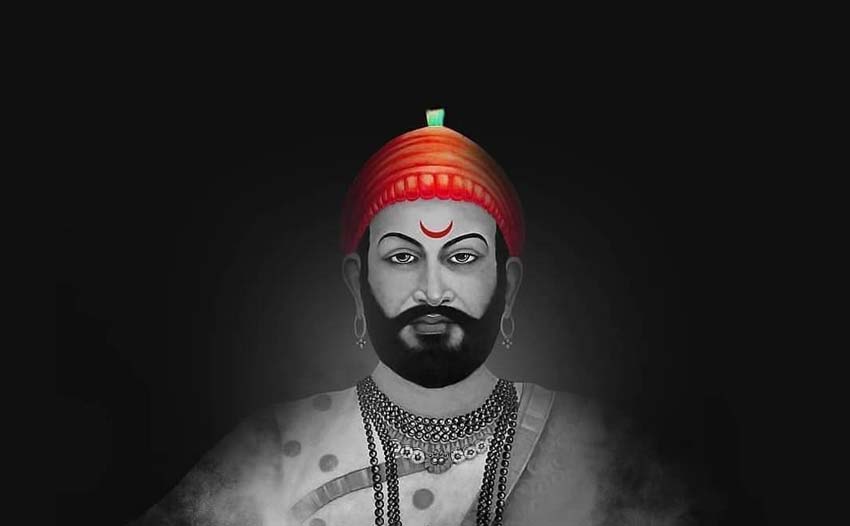
However Sambhaji Maharaj (Sambha ji), the son of Chhatrapati Shivaji Maharaj, fierce warrior, sharp strategist, and a man who endured unimaginable torture for refusing to bow to Aurangzeb created a new chapter in the art of war where Winner in the battle lost the war miserably. His ultimate sacrifice united the Marathas.
Yet, one is surprised to see the harsh truth — his legacy doesn’t get the same spotlight as some others. Let’s examine why heroes like Sambhaji Sahu tend to be forgotten or overshadowed in mainstream narratives:
● Glorification of Defeat, ignoring Resistance and treaties. Contrary to popular perception Britishers did not take control from Mughals but fought more battles with Marathas, Sikhs and other Hindu kings. As a result treaties were signed empowering Hindu kings to manage their states despite having British residents. Public has been made to believe that congress movement achieved everything while the true fact is India got the league of nation membership and that of UNO due tho valiant effort of hundreds of Hindu kings who retained the right to decide whether to join India or Pakistan in 1947.
“Colonial India had broadly two components, viz. the territories governed by the British administration and the 562 Princely States”
(India meant British India according to Section 18(5) of the Interpretation Act, 1889. Section 18(5) of the Interpretation Act of 1889 defines India as follows:“British India, together with any territories of any native prince or chief under the suzerainty of His Majesty”.)
Now the reader can understand that Indian history, as written and taught in schools, often focuses on victimhood rather than resistance. Mughals, British, and other invaders are given more attention than the warriors who stood up to fight with them. Sambhaji’s brutal death gets mentioned briefly, but his bold defiance, his refusal to convert, and his military brilliance — all that gets sidelined. It is a pity that our history jumps from Mughal to Britishers.
● Britishers filtered history to suit their agenda: despite having Baroda house, Jaipur house, Dholpur house, Jaisalmer house, Jodhpur estate, Mandi House, Kapurthala house and so many other Hindu establishment in the viceroy enclave none of the road was named on Hindu kings. Roads were named after Babar and Humayun along with the Todar Mal and Mansingh ignoring the glory of defying Hindu kings.
It does not require a genius to conclude that Indian history was rewritten in a way that served the colonizers. They highlighted the ‘glory’ of empires that aligned with their narrative of power, and downplayed local resistances like the Marathas, especially leaders like Sambhaji who symbolized fierce independence and defiance.
Had the folklore not carried the true history through generations Indians history would have been lost as happened in North and South America.
● Lack of suitable Culture Representation: Stories live on when these are told and retold — in books, plays, films and TV shows. Sambhaji’s story has only recently started gaining attention in regional cinema and literature, but for decades, he was largely ignored outside Maharashtra.
How Sambhaji’s story survived the onslaught of fake narrative ?
It may seem surprising but here’s the thing — History isn’t written only by historians. It’s written by the people who choose to follow scriptures like Geeta and who choose to remember their heroes in the form of folklore.
India has a culture to remember scriptures through listening. Knowledge of vedas and other scriptures and Nitis were saved by remembering these mentally. As a result, despite being destroyed, TakShila, Nalanda and other major centres of learning in the Indian knowledge system were not lost. As a result, young boys or the big leaders like Hakikat Rai, four sons of the guru Gobind Singh and Banda Bairagi could endure torture and could sacrifice their life without an iota of grudge.
Why is Sambhaji Maharaj different ?
During the war of mahabharat, Bhagwan Krishna told Arjun,
hato vā prāpsyasi swargaṁ jitvā vā bhokṣhyase mahīm
tasmād uttiṣhṭha kaunteya yuddhāya kṛita-niśhchayaḥ ll 2.37ll
If you fight, you will either be slain on the battlefield and go to the celestial abodes, or you will gain victory and enjoy the kingdom on earth. Therefore arise with determination, O son of Kunti, and be prepared to fight. Luckily Arjun won the war and enjoyed ruling the kingdom, but what happened to the slain leader was not exemplified. Sambhaji Maharaj lived the life of a slain leader to prove that a leader sacrificing his life is more deadly than the one who is killing him. Let’s examine:
sukha-duḥkhe same kṛitvā lābhālābhau jayājayau
tato yuddhāya yujyasva naivaṁ pāpam avāpsyasi || 2.38||
Fight for the sake of duty, treating alike happiness and distress, loss and gain, victory and defeat. Fulfilling your responsibility in this way, you will never incur sin.
Sambhaji Maharaj won many battles and finally treachery led to his arrest. Yet he did not cry either in joy or pain , he demonstrated the true meaning by practising it. It is recorded that Sambhaji was educated in warfare and scripture at an early stage. He understood and practised these principles.His undergoing torture with total defiance make the author believe that he understood completely that,
avāchya-vādānśh cha bahūn vadiṣhyanti tavāhitāḥ
nindantastava sāmarthyaṁ tato duḥkhataraṁ nu kim||2. 36||
Your enemies will defame and humiliate you with unkind words, disparaging your might. Alas, what could be more painful than that?
Sambhaji was apprehended on 1 February 1689 along with twenty-five other officers.Muqarrab Khan transported them to Akluj, where Aurangzeb was.
Kulkarni, G. T. (1983). The Mughal-Maratha Relations: Twenty Five Fateful Years, 1682-1707. Department of History, Deccan College Post-Graduate Research Institute. p. 74.
He and his ministers were humiliated by being dressed as jesters,long fool's caps with bells attached, mounted on a camel, and paraded through the Mughal camps amidst the beating of drums and the peeling of trumpets. According to the Mughal chronicler, khafi khan and Ishwar Das Nagar, that very night, Sambhaji and Kavi Kalash were blinded with red-hot irons. Aurangzeb spat on his face yet all these humiliations could not break his will to remain a sanatani refusing to convert. Who can bear these atrocities without having the knowledge and understanding of bhagwat Geeta.
swa-dharma api chāvekṣhya na vikampitum arhasi
dharmyāddhi yuddhāch chhreyo ’nyat kṣhatriyasya na vidyate||2. 31||
Besides, considering your duty as a warrior, you should not waver. Indeed, for a warrior, there is no better engagement than fighting for upholding righteousness.
Sambhaji demonstrated how to live a life of sacrifice as mentioned in the scriptures. His valour motivated the downtrodden to take a stand and defy the mighty Mughals .
nainaṁ chhindanti śhastrāṇi nainaṁ dahati pāvakaḥ
na chainaṁ kledayantyāpo na śhoṣhayati mārutaḥ || 2.23||
Weapons cannot shred the soul, nor can fire burn it. Water cannot wet it, nor can the wind dry it.
When Eyes are blinded, body is wounded and salt is being rubbed on the open wounds! Who can have the courage to smile and stand firm except the one who has realised immortality of the soul. Sambhaji and his friend poet Kalash made mockery of torture rendered by Aurangzeb making him a dwarf in braking the spirit of a Maratha king.
vāsānsi jīrṇāni yathā vihāya, navāni gṛihṇāti naro ’parāṇi
tathā śharīrāṇi vihāya jīrṇānya, nyāni sanyāti navāni dehī ||2. 22||
As a person sheds worn-out garments and wears new ones, likewise, at the time of death, the soul casts off its worn-out body and enters a new one.
True to this shloka Sambhaji along with his friend and fighter poet Kalash remained firm till the last breath. It so happened that When the torture did not led to breaking the will of Sambhaji and the poet Kalash, they were beheaded and Their severed heads were displayed across cities as a deterrent to convey the message that anybody defying Mughal supremacy will meet the similar fate. Instead of getting scared the Dalit community defied the orders of Aurangzeb and completed the cremation. The Mughal empire didn't last long.
Chhava the movie.
Similarly Sambhaji’s courage, his refusal to surrender even in the face of death, and his vision for a strong, self-reliant India — all of that survived to deserve a bigger stage. The viewer's response indicates that Indians are taking interest in their real heroes and the fake narrative will have a tough time henceforth. It's up to people like us to rewrite these stories correctly with evidence and logic in a language which is easy to understand. It will empower the future generation to talk about these heroes, to write about them. We have to make sure that future generations must know that India’s freedom struggle didn’t start in 1857 — actually it never stopped fighting despite defeats, and heroes like Sambhaji, Balwant Fadke, Lakshmi bai, Kunwar singh, Birsa Munda, Udham singh, bhagat singh, Chandra Shekhar Azad and thousands of other kept fighting with leaders, and without leaders.
Conclusion.
This article can only be concluded with the shloka from Bhagwat Geeta which says
yadṛichchhayā chopapannaṁ swarga-dvāram apāvṛitam
sukhinaḥ kṣhatriyāḥ pārtha labhante yuddham īdṛiśham
O Parth, happy are the warriors to whom such opportunities to defend righteousness come unsought, opening for them the stairway to the celestial abodes.
Time to follow Sambhaji’s examples in letter and spirit.
P.S ( all shloka of Bhagwat Geeta are taken from holy-Bhagwat-Geeta.org)

By Rakesh kumar
(The content of this article reflects the views of writers and contributors, not necessarily those of the publisher and editor. All disputes are subject to the exclusive jurisdiction of competent courts and forums in Delhi/New Delhi only)




















Leave Your Comment