


The World Economic Forum (WEF) is putatively known for its annual meeting at the end of January in Davos, a mountain resort in the eastern Alps region of Switzerland. Apparently, it is Davos which has inspired multiple investor summits across geographies, including India.
The Davos meeting brings together some 3,000 paying members and selected participants – among whom are investors, business leaders, political leaders, economists, celebrities and journalists – for up to five days to discuss global issues across 500 sessions.
Now, all these investors’ summits know how to make themselves a big draw, with a series of reports, conferences, roundtables, events, and a host of sector-specific initiatives, thus providing a platform for investors from diverse backgrounds to collaborate on projects and initiatives.
The World Economic Forum and its annual meeting in Davos have received criticism over the years, including the organization's corporate capture of global and democratic institutions, its institutional whitewashing initiatives, the public cost of security, the organization's tax-exempt status, unclear decision processes and membership criteria, a lack of financial transparency, and the environmental footprint of its annual meetings. All these regional summits certainly would not like to share these berating reprovals and upbraiding chastisements.
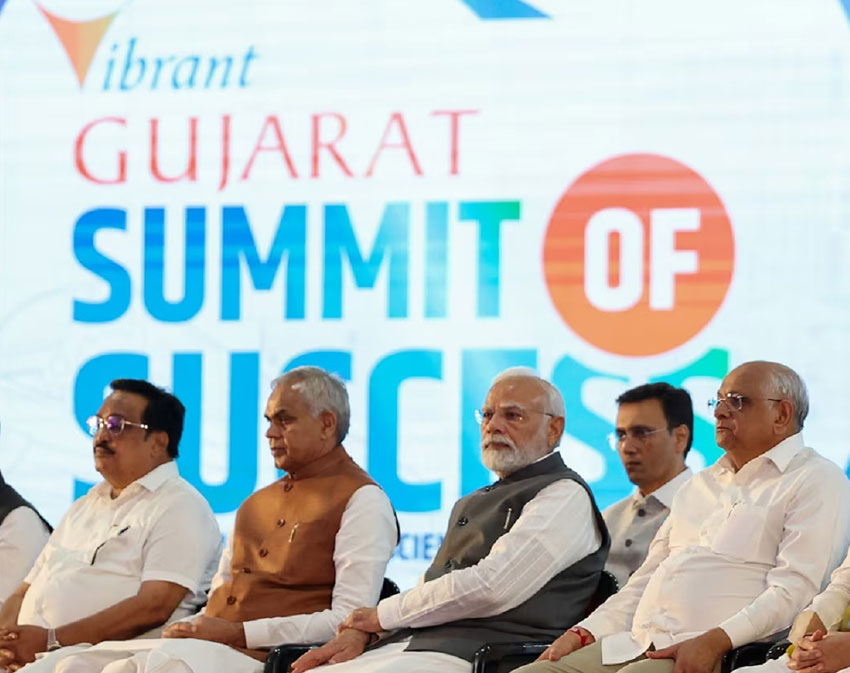
This is how the Vibrant Gujarat, also referred to as Vibrant Gujarat Global Summit, has learnt to position itself above all competitors. It is a biennial investors' global business event that is held in the state of Gujarat, India. The event is aimed at bringing together business leaders, investors, corporations, thought leaders, policy and opinion makers; the summit is advertised as a platform to understand and explore business opportunities in Gujarat. The summit's primary objective is to promote Gujarat as an attractive investment destination and to facilitate partnerships and collaborations across different sectors. Summit began in 2003 and is now held every two years.

The 10th Vibrant Gujarat Global Summit (VGGS) was recently concluded at Mahatma Mandir Convention and Exhibition Centre in Gandhinagar, Gujarat. The summit, organized by the Government of Gujarat in partnership with the Confederation of Indian Industry (CII) and iNDEXTb, focused on the theme "Gateway to the Future," bringing together global leaders, policymakers, and industry experts to discuss and explore opportunities for sustainable development, economic growth, and international cooperation. The main focus of the Vibrant Gujarat Summit was on semiconductor, green hydrogen, space technology manufacturing, electric mobility, sustainable manufacturing, renewable energy, and Industry 4.0, said Gujarat chief minister Bhupendra Patel. The journey of Vibrant Gujarat summit began in 2003 and is now held every two years. In preparation for the summit, the Gujarat government conducted roadshows across India and the globe to promote the state's investment potential and attract global investors. These summits have been held in major cities such as Mumbai, Delhi, Bangalore, Lucknow, Chennai, Kolkata, and Chandigarh, as well as in international cities like New Jersey, Dubai, Singapore, Tokyo, Frankfurt, Milan, Copenhagen, Paris, Ho Chi Minh City, and Seoul.
In the UK if you’ve hired Hampton Court Palace for your Global Investment Summit, and have King Charles lined up to serve drinks afterwards at Buckingham Palace, it is obligatory to publish a large number to demonstrate that the show was a complete triumph and the UK must be “one of the best places in the world to do business”. Here it is: £29.5 billion of new foreign investment, a figure the incumbent Rishi Sunak’s UK government reminded us is three times the sum Boris Johnson was able to champion at his equivalent summit in 2021. One can also admire the precision: £29.5bn invites less suspicion of smoke and mirrors than a round number such as £30bn.
''But what is this money that has been “committed” and “pledged” at the summit, or “galvanised” by it? That is the point at which the arithmetic starts to feel a little loose,'' says Nils Pratley, a commentator on economics and finance.
‘’ Take the largest element – the £10bn over four years from Australian pension fund IFM Investors. This is in the form of a memorandum of understanding with the business department to “identify commercially viable opportunities” in the UK, primarily in renewable energy infrastructure. IFM won’t have signed anything on a whim, but an MoU is early-stage, exploratory planning. Maybe every last penny will arrive, but it’s not as if one can point to an actual project at the moment.’’
A series of investor summits held by different State Governments across India has offered lucrative trade and investment opportunities to entities from India and abroad, thus upping India’s quotient as a successful business destination. But these summits need to safeguard themselves from the pitfalls other investors’ summits such as the UK is facing at the moment.
‘’ Look at the £7bn for 2024-28 from Spanish group Iberdrola, the owner of Scottish Power. One can be confident this cash will be spent, but mostly because Scottish Power has invested at roughly that pace for a long time; it cites £30bn in the UK over the last 15 years,’’ says Pratley.
‘’The firm is one of the big players in UK wind farms and transmission lines, so it’s hardly a revelation that it will continue to invest in areas where the government is upping incentives to meet net zero targets. Any news, though, from Vattenfall of Sweden or Ørsted of Denmark, the more likely wind farm waverers? Unfortunately, neither Scandinavian firm was on Rishi Sunak’s roll-call of pledgees.’’
None of which is to deny that £29.5bn-worth of investments and investment intentions is welcome. Nor is it to suggest that the summit shouldn’t happen. There is competition for foreign capital and Emmanuel Macron has his “Choose France” summit at Versailles, so these feelgood events are now part of the calendar for what the UK government called “the world’s A-list CEOs and investors”. There is certainly no harm in getting the prime minister to tell such an audience about permanent “full expensing” of capital costs, a serious investment-friendly measure in last week’s autumn statement and one the Office for Budget Responsibility said would raise annual investment by £3bn a year compared with the previous temporary policy.
Some of the biggest and most prominent states across India recently concluded their respective investor summits that offered lucrative trade and investment opportunities to the government as well as private entities from India and abroad. The initiatives backed by India’s Central Government have helped in upping the country’s quotient as a successful business destination. The events led to the signing of agreements related to certain path-breaking and innovative projects that would contribute to increasing the national gross domestic product, besides adding thousands of new jobs. Over the first two months of 2018, at least five Indian states – Maharashtra, UP, West Bengal, Assam and Andhra Pradesh – held investor summits that led to commitment worth billions of dollars into projects such as seaplane service and hyperloop transportation to defence manufacturing and infrastructure development.
The global investors’ summit of Maharashtra attracted investment commitments worth well over US$184 billion from more than 4,100 agreements that are touted to create over 3.6 million jobs. The Uttar Pradesh Investors’ Summit attracted a preliminary investment commitment of well over US$66 billion through over 1,000 deals, including a US$3 billion defense industrial corridor. The largest-ever investment promotion initiative by Assam attracted 200 MoUs with estimated investment of US$15.6 billion; Projects include cancer research centres and seaplane service. The West Bengal Summit attracted proposed investment of US$33.7 billion with job creation of 2 million; Andhra Pradesh Summit drew investment of US$67.5 billion with around 1.1 million jobs.
The global investors’ summit of the western state of Maharashtra, Magnetic Maharashtra, attracted investment commitments worth well over US$184 billion. The conference was inaugurated by Prime Minister Narendra Modi on February 18, 2018. The three-day conference, organised by the State Government of Maharashtra, saw the signing of more than 4,100 memorandums of understanding (MoUs) that are expected to generate over 3.6 million new jobs in the state. The investments were primarily related to the defence, manufacturing, housing, transportation, infrastructure, energy, textiles, electric vehicles sectors as well as the ambitious hyperloop project. The conference was attended by CEOs of nearly 50 foreign companies and around 165 CEOs of Indian entities. The biggest investment committers at the summit included Indian Railways and Reliance Industries. The state also received confirmed investment of around US$60 billion through over 100 MoUs that were enforced in association with the Union Government. These projects will generate more than 200,000 jobs. The latest summit comes two years after Maharashtra held the week-long “Make in India” week which saw the signing of nearly 3,000 MoUs. PM Modi said that the Maharashtra Government’s initiatives to strengthen the investment climate have contributed to upgrading the state’s World Bank’s Ease of Doing Business ranking.
The Vibrant Gujarat Global Summit was first launched in 2003, and over the years, it has evolved into one of Gujarat's most important economic forums. It is organized by the Government of Gujarat and supported by various industry associations, both at the national and international levels. The summit's primary objective is to promote Gujarat as an attractive investment destination and to facilitate partnerships and collaborations across different sectors. The primary objective of the summit is to create a platform where business leaders, policymakers, and investors can explore opportunities for investment, collaboration, and partnership in various sectors of the economy. The event is structured to facilitate discussions, negotiations, and agreements in sectors such as energy, manufacturing, infrastructure, information technology, agriculture, healthcare, and more. During the Vibrant Summit series, thousands of MOUs were signed and billions of dollars were spent in Gujarat (2003–76 MOUs worth USD 14 billion, 2005–226 MOUs worth USD 20 billion, 2007–675 MOUs worth USD 152 billion, 2009–8662 MOUs worth USD 243 billion, 2011–7936 MOUs worth USD 462 billions).
The Uttar Pradesh Investors’ Summit 2018 revealed lucrative investment opportunities in one of the largest Indian states. The two-day event, organised by the State Government of UP, was inaugurated by Prime Minister Narendra Modi on February 21st. The two-day event attracted a preliminary investment commitment of well over US$66 billion through over 1,000 deals, just on the first day of the event. The summit focussed on the sectors of civil aviation, IT services, dairy, electronics manufacturing, tourism, micro small and medium enterprises, renewable energy, textile and food processing. The summit was attended by more than 6,000 delegates and featured over 150 speakers, and seven nations – Finland, Netherlands, Japan, Czech Republic, Thailand, Slovakia and Mauritius – participated as partners at the investors’ event. The investor summit comes in the backdrop of the Central Government’s call to the states to display their strengths as business and investment destinations to the world. PM Modi also announced plans to set up a defense industrial corridor in the Bundelkhand region of Uttar Pradesh. The project involved investment of around US$3 billion and was expected to create around 250,000 jobs. The PM also announced plans to set up two new international airports in the state at Jewar, near Noida, and at Kushinagar – an important centre for Buddhist pilgrimage.
Global Investors Summit, officially the Invest Madhya Pradesh Global Investors Summit or GIS is a biennial business summit organized by Government of Madhya Pradesh in Indore, the commercial capital of central India to attract domestic and foreign investment for development of the state. Based on the theme– India's Growth Centre and aimed at bringing together business leaders, investors, corporations, thought leaders, policy and opinion makers; the summit serves as a perfect platform to understand and explore business opportunities in the State of Madhya Pradesh. GIS 2014 was organized from 8–10 October 2014 in Brilliant Convention Centre, Indore and was inaugurated by the prime minister of India, Narendra Modi. Top names in Indian business who participated in the event were Mukesh Ambani, Anil Ambani, Cyrus Mistry, YC Deveshwar and Gautam Adani etc. Six countries including Canada, Australia, and South Africa were partner-nations at the event. Ambassadors from 21 countries attended the summit. GIS 2012 was held in Indore from 28 to 30 October 2012 and many projects and MoUs were signed in the three days of the summit.
Assam Global Investors' Summit or Advantage Assam Global Investors' Summit on 3–4 February 2018 was an economic summit organised by the Government of Assam. This largest ever investment promotion initiative by the State Government of Assam attracted a number of high-profile trade and investment commitments. The event over February 3-4 saw around 200 MoUs being signed with an estimated investment of around US$15.6 billion. The main aim of the summit is to increase trade and other relations with Southeast Asia. Members and Delegates from ASEAN and BBIN countries along with industrialists and business leaders of India and around the world are invited to this summit. Further, the Summit aimed at highlighting the geo-strategic advantages offered to investors by Assam. The summit also focused on India's Act East Policy which will help in achieving balanced and fast-paced growth of the north-eastern region and development of the MSME sector.
The Global Investors Summit highlighted the geo-strategic advantages of Assam and showcased the manufacturing prowess and the opportunities offered by the state in export-oriented manufacturing and services to economies in Southeast Asia. The summit highlighted investment opportunities in the state, focusing on: Power, Agriculture & Food Processing, IT & ITeS, Pharmaceuticals & Medical Equipment, Textiles, Tourism, Hospitality & Wellness, Civil Aviation and Petroleum and Natural Gas. Some of the deals signed at the event were: Reliance Industries plans to invest US$390 million in Assam across energy, retail, telecom and tourism, generating around 80,000 jobs over the coming three years; Indian Oil aims to invest US$530.7 million in Assam over the coming five years to set up new operation units and upgrade its existing infrastructure; Tata Group and the Assam Government will jointly launch 17 advanced cancer care facilities across 15 state districts. SpiceJet is looking at opportunities to launch seaplace service on the Brahmaputra river in Assam, potentially connecting neighbouring countries.
Tamil Nadu Global Investors Meet (TNGIM) is a business summit organized by the Government of Tamil Nadu to facilitate domestic and foreign investments in the state. The first of these summits took place in 2015 and later in 2019.
The State Government of Andhra Pradesh had organised the Sunrise Andhra Pradesh Investment Meet over February 24-26. The event, held in partnership with the Confederation of Indian Industry (CII), was held alongside CII Partnership Summit 2018. The event drew an investment commitment of around US$67.5 billion from more than 730 memorandums of understanding. The investments, including those from global conglomerates such as Reliance Industries, Adani Group, Lulu Group and Google, are expected to create more than 1.1 million jobs. The agreements covered the sectors of energy, IT & Electronics, hospitality, infrastructure and transportation, aerospace, defense, food processing, textile, health and manufacturing. Andhra Pradesh is strategically located in the southeastern coast of India and is a natural gateway to East and Southeast Asia. The State has abundant natural resources such as limestone, bauxite, and a number of minor minerals, conducive agro-climatic conditions and India’s second-longest coastline of 974 kilometers.
Ultimately, it doesn’t matter whether the investment comes from home or abroad. But one must be cautious reading much into the big figures that includes things that would have happened anyway. Calling these summits “historic” is a piece of hype: wait until the trend of underinvestment reverses. But certainly some fanfare and razzmatazz is needed to bring in the foreign capital. No one can question the immense potential India has as a destination for investors. Till date, this is undersold.

By Sarat C. Das
(The content of this article reflects the views of writers and contributors, not necessarily those of the publisher and editor. All disputes are subject to the exclusive jurisdiction of competent courts and forums in Delhi/New Delhi only)




















Leave Your Comment