


In a bold move that signals a potential turning point in Iran’s ongoing anti-government uprising, exiled Crown Prince Reza Pahlavi issued a fresh call for nationwide agitation this weekend, urging Iranians to flood the streets and workers in critical economic sectors to launch strikes aimed at bringing the Islamic Republic “to its knees.”
In a Persian-language post on X (formerly Twitter) on Saturday, Pahlavi called for citizens to gather at 6 p.m. local time on January 10 and 11, emphasizing that the goal has evolved beyond mere demonstration.
“Our goal is no longer merely to come to the streets; the goal is to prepare for seizing the centers of cities and holding them,” he wrote, encouraging protesters to bring flags, images, and national symbols to claim public spaces.
Significantly, Pahlavi also announced preparations for his return to Iran after more than four decades in exile. “I too am preparing to return to the homeland so that at the time of our national revolution's victory, I can be beside you, the great nation of Iran. I believe that day is very near,” he stated.
What began last month as localized protests in Tehran markets over economic hardships has snowballed into a nationwide movement. According to the U.S.-based Human Rights Activists News Agency (HRANA), unrest has now spread to 512 locations across 180 cities in all 31 of Iran’s provinces.
The protests have taken on an increasingly political character, with chants of “Death to the dictator” echoing through Tehran, Mashhad, and other major cities. Some demonstrators have expressed support for the return of the monarchy under Pahlavi, whose family fled Iran months before the 1979 Islamic Revolution that ousted his father, Mohammad Reza Pahlavi, the country’s last monarch.
The escalating situation has drawn international attention and prompted severe measures from Iranian authorities. Following previous calls from Pahlavi that resulted in massive crowds pouring onto streets Thursday, authorities snapped internet and telephone lines—a familiar tactic during periods of unrest aimed at disrupting organizing efforts and obscuring events from the outside world.
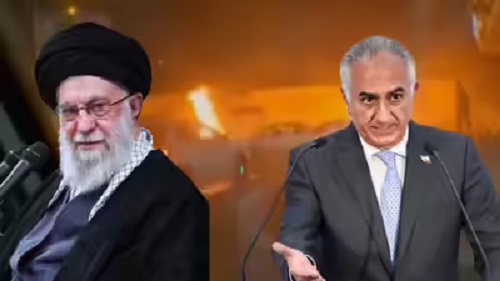
Pahlavi has actively sought international support, reaching out directly to U.S. President Donald Trump on Friday with an “urgent and immediate call” for intervention. In his appeal, he accused Supreme Leader Ayatollah Ali Khamenei of using communication blackouts to enable a violent crackdown.
“Ali Khamenei, fearing the end of his criminal regime at the hands of the people and with the help of your powerful promise to support the protesters, has threatened the people on the streets with a brutal crackdown,” Pahlavi wrote.
The exchange has fueled a war of words between Trump and Khamenei, with Iran’s Supreme Leader recently accusing the U.S. president of having “the blood of Iranians on his hands” following a brief conflict in June that he claimed killed over a thousand Iranians.
The human toll continues to rise. Rights groups report at least 65 people killed and more than 2,300 detained since the agitation began on December 28. The true figures are believed to be higher, with difficulties in verification due to communication restrictions.
The convergence of economic discontent, political repression, royalist nostalgia, and international tensions has created a volatile situation with unpredictable outcomes. Pahlavi’s latest call represents a significant escalation in rhetoric and ambition, shifting focus from protest to potential seizure of urban centers.
As Iran braces for another weekend of potential confrontation, the world watches to see whether this movement represents a genuine threat to the 41-year-old Islamic Republic or another chapter in the country’s long history of suppressed uprisings. What remains clear is that the social contract between Iran’s clerical leadership and its citizens faces one of its most serious challenges in decades.















Leave Your Comment