



Deepak Kumar Rath
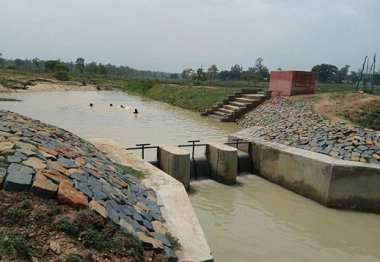
Climate change has emerged as one of the most serious challenges of the twenty-first century, with its impact on freshwater resources becoming increasingly severe. Rising temperatures have disrupted rainfall patterns, leading to prolonged droughts, flash floods and declining groundwater levels. India, where nearly half of the cultivated land depends on monsoon rains, is particularly vulnerable to these changes. Excessive dependence on tube wells and borewells has caused alarming groundwater depletion, while rapid urbanisation has reduced natural recharge zones. At the same time, intense rainfall over short periods leads to heavy runoff instead of groundwater replenishment, creating the paradox of floods during the monsoon and acute water shortages in summer. This situation demands decentralized and climate-resilient water conservation measures. Among the most effective solutions is the construction of check-dams—small barriers built across seasonal streams and rivulets to slow water flow, encourage groundwater recharge, and improve local water availability. Unlike large dams, check-dams require comparatively low investment, involve minimal ecological disruption, and can be constructed across diverse geographical regions. They reduce soil erosion, improve soil moisture, and provide reliable water for irrigation, livestock and domestic use. Successful projects in Gujarat, Rajasthan, Maharashtra, Telangana and Karnataka have demonstrated that check-dams can significantly improve groundwater levels, revive dried wells, increase agricultural productivity and strengthen resilience against drought. They also help restore wetlands, support biodiversity and improve local ecosystems. As a nature-based solution, check-dams provide an economical and sustainable means of addressing both water scarcity and environmental degradation while promoting rural development and climate adaptation.
To fully harness these benefits, the Government of India should formulate a comprehensive national policy dedicated to the systematic construction, maintenance and monitoring of check-dams across suitable watersheds. Although several states have implemented successful initiatives, the absence of a coordinated national framework has resulted in uneven planning, fragmented execution and inadequate long-term maintenance. A dedicated policy should integrate scientific watershed mapping, hydrological assessments, remote sensing technology and community participation to identify the most suitable locations based on rainfall, geological conditions and groundwater potential. Financial support should be ensured through the convergence of schemes such as MGNREGA, the Jal Shakti Abhiyan, watershed development programmes and state irrigation initiatives, making water conservation a central pillar of India's climate adaptation strategy. Local Panchayats, water user associations and village communities must be actively involved in planning, construction and maintenance to ensure ownership and sustainability. Regular desilting, structural inspections and GIS-based digital monitoring should be made mandatory to maintain the effectiveness of these structures. Universities and research institutions can contribute by developing region-specific designs, conducting impact assessments and recommending best practices. The government should also encourage industries to support check-dam construction under Corporate Social Responsibility (CSR) initiatives in water-stressed regions. Such a policy would not only address seasonal water shortages but also improve agricultural productivity, strengthen food security, reduce dependence on groundwater extraction, mitigate flood risks and enhance rural livelihoods. As climate uncertainty becomes the new normal, India must shift from reactive water management to proactive water conservation. A nationwide policy promoting check-dams offers an affordable, environmentally sustainable, and socially inclusive pathway towards long-term water security. Investing in decentralized water-harvesting infrastructure today will not only safeguard future generations from the growing threat of water scarcity but also strengthen the nation's resilience against the increasingly unpredictable impacts of climate change.




















Leave Your Comment