


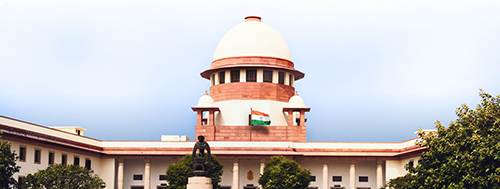
A recent landmark verdict by the Supreme Court of India has once again brought the debate surrounding religion, social justice, and constitutional rights to the center stage of national discourse. The Court clarified that any individual who adopts a religion other than Hinduism, Sikhism, or Buddhism shall no longer be entitled to Scheduled Caste (SC) status, nor will they receive the protections afforded under the Scheduled Castes and Scheduled Tribes (Prevention of Atrocities) Act. This judgment is not merely a legal interpretation; it also sheds light on the complex fabric of Indian society and its historical contexts.
Within the framework of the Indian Constitution, the identification of Scheduled Castes has historically been rooted in the lived experiences of social discrimination and untouchability. This status is intrinsically linked to religious identity, as such discrimination was traditionally observed primarily within the caste hierarchy of Hindu society. Subsequently, Sikhism and Buddhism were also included in this ambit, as social-level discrimination did not entirely cease for individuals even after their conversion to these faiths. However, in its verdict, the Court underscored that the structural nature of caste-based discrimination in other religions—specifically Islam and Christianity—differs from that found within the Hindu social framework; consequently, SC status cannot be extended to them.
This verdict raises a pivotal question: Is social oppression determined solely by religion? Critics argue that, despite religious conversion, an individual's social standing and their experiences of discrimination do not undergo an immediate transformation. Numerous studies indicate that vestiges of caste-based discrimination persist even within Christian and Muslim communities. In such a scenario, is it truly just to deny constitutional protections solely on the basis of religious identity?
Conversely, the Court's perspective is grounded in the fundamental spirit of the Constitution and its historical context. SC status was instituted to redress a specific form of social injustice—one that was predominantly linked to the Hindu caste system. Were this status to be rendered religion-neutral, it risks deviating from its original objective and could have far-reaching implications for the existing framework of reservations and other benefits. Viewed through this lens, the Supreme Court's verdict serves as a reaffirmation of an established legal tradition.
This verdict also possesses distinct political and social dimensions. A deep-seated debate regarding religious conversion is already underway in the country. Some view it as an integral part of individual liberty, while others perceive it through the lens of its social and political ramifications. In this context, the recent ruling serves as a clear signal to all concerned that religious conversion is not merely a spiritual or personal choice, but one that may also entail social and legal consequences.
However, a definitive resolution to this issue cannot be achieved solely through the judiciary. It necessitates a broader societal discourse—one that seeks to determine whether the existing framework is, in fact, delivering justice to those who have historically been marginalized. Furthermore, it calls for a critical examination of whether, amidst the evolving social landscape, a re-evaluation of the definition and scope of the Scheduled Castes (SC) is warranted.
Ultimately, this verdict by the Supreme Court compels us, once again, to reflect upon how the ideals of equality and justice are to be balanced within the fabric of Indian society. In this intricate interplay of religion, caste, and rights, no single ruling can ever be truly definitive; yet, this judgment undoubtedly marks the inception of a new dialogue—a dialogue that could prove pivotal in fostering the further maturation of India's democratic and social architecture.

















Leave Your Comment