


India has renewed its demand for a fundamental restructuring of the United Nations Security Council, challenging a system in which five countries exercise disproportionate influence over decisions affecting global peace and security. New Delhi argues that meaningful reform must go beyond expanding membership to address the deeper question of equality among nations, including the controversial veto power. Its position rests on a compelling principle: an international institution entrusted with safeguarding the world cannot claim universal legitimacy while reserving its most consequential decision-making privilege for a select few.
The United Nations Security Council stands at the centre of global peace and security, yet its decision-making structure remains rooted in the geopolitical realities of a world that existed more than eight decades ago. India’s renewed demand for comprehensive reform, including equal veto rights for all permanent members, challenges the privilege enjoyed by the five established powers and raises a fundamental question about the credibility of multilateralism. New Delhi argues that an institution claiming to represent the international community cannot remain democratic in principle but unequal in practice. The real test of reform lies not merely in expanding membership, but in dismantling structural imbalances that undermine the Council’s legitimacy, accountability and effectiveness.
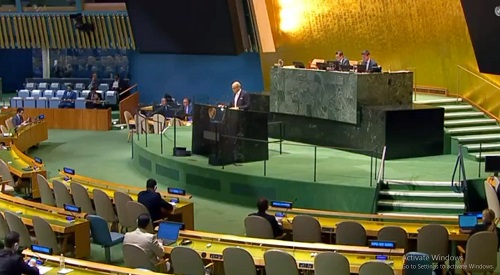
Speaking on the need to overhaul the Council, India’s Permanent Representative to the United Nations, Parvathaneni Harish, stressed that veto reform cannot be considered independently of other structural changes. The categories of membership, regional representation, the Council’s size, its working methods and the veto must be addressed together through a comprehensive process. India has consequently called for negotiations based on concrete textual proposals rather than discussions that repeatedly revisit familiar positions without producing substantive progress.
The debate exposes a fundamental contradiction in the present international order. The Security Council was established to maintain international peace and security, yet its decision-making structure reflects the geopolitical realities of 1945 rather than the distribution of power, population and responsibility in the contemporary world. The United States, the United Kingdom, France, Russia and China enjoy permanent membership and the right to veto substantive resolutions. The remaining ten members serve two-year terms and do not possess the same privilege. This arrangement gives five governments the ability to block decisions supported by the Council’s other members, even when those decisions command broad international backing.
India believes this imbalance requires more than cosmetic adjustment. Harish argued that the veto carries an exceptional responsibility and must be exercised with restraint, particularly when international peace and security are at stake. It should not become an instrument of narrow political expediency. In principle, the veto is a mechanism intended to accommodate the interests of major powers within a collective security framework. In practice, its use has frequently exposed the difficulty of reconciling national interests with the international community’s broader objectives.
The historical record strengthens India’s argument. According to Harish, the veto has been exercised 331 times against approximately 200 resolutions during the United Nations’ existence. He also pointed to the concentration of veto use among a small number of permanent members, noting that two of the five had not exercised the power for more than three and a half decades. Such disparities raise questions about whether the veto remains an exceptional safeguard or has become an instrument through which particular governments can shape the Council’s response to international crises.
Ultimately, Security Council reform must reconcile representation with responsibility and power with accountability. India’s call for a comprehensive approach recognises that these questions are inseparable. The objective should not be to replace one privileged group with another, but to build an institution that commands greater legitimacy through fairer representation and more accountable decision-making. Whether the international community can achieve that transformation will be an important test of its commitment to a genuinely representative global order.
















Leave Your Comment