


The National Investigation Agency’s chargesheet into the November 2025 Red Fort car blast has laid out a chilling picture of radicalisation, clandestine recruitment and preparations for terror attacks, identifying Umer Un Nabi as the alleged mastermind of the conspiracy. According to the agency, Nabi had spent years rebuilding a dormant Ansar Ghazwat-ul-Hind module, recruiting and radicalising operatives and arranging the resources needed for attacks. The probe has also linked the blast to a wider conspiracy involving explosives, encrypted communication and plans for further violence.
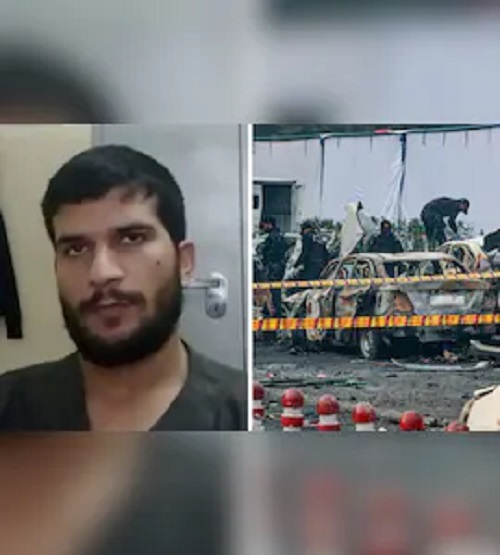
The deadly explosion near Delhi’s Red Fort on November 10, 2025, was not, according to the NIA, an isolated act of violence. The agency’s chargesheet describes it as the culmination of a conspiracy that had allegedly been taking shape over several years. Eleven people were killed and 29 others injured when the vehicle exploded at around 6:50 pm.
At the centre of the investigation is Umer Un Nabi, also known by the aliases Pinda and Rahul Bhat. The NIA has described him as the “operational in-charge” of the Ansar Ghazwat-ul-Hind (AGuH) terror module and alleged that he played a central role in reviving the network after it had remained dormant.
According to investigators, Nabi’s efforts to revive the module began as early as 2022. Rather than simply acting as an individual extremist, he allegedly sought to create a broader network of radicalised recruits who could be used for terrorist activities.
The chargesheet alleges that Nabi arranged secret meetings, radicalised prospective recruits and facilitated their exposure to terrorist training. He was also allegedly responsible for logistical arrangements and encouraged the glorification of “Shahadat”, or martyrdom.
The NIA has further alleged that Nabi’s ideological commitment became so entrenched that he planned to travel to Afghanistan for “Hijrat”. Investigators have presented this as another indication of his alleged links with extremist ideology.
The agency has characterised the revived AGuH module as a manifestation of Al-Qaida in the Indian Sub-continent, suggesting that the conspiracy was connected to a larger extremist ecosystem rather than being confined to a single attack.
The investigation has also focused on the material allegedly circulated among members of the network. The NIA said Nabi and other accused persons shared literature that promoted violent jihad and sought to present armed struggle as a religious obligation.
Among the documents examined by investigators were titles such as “Definition of Jihad”, “The Requirements of Jihad”, “The 21 Aims and Objectives of Jihad”, “39 Ways to Serve and Participate in Jihad” and “44 Ways to Support Jihad”.
According to the agency, the material went beyond ideological propaganda. Investigators said some of the documents contained guidance concerning secrecy, the use of false identities and methods associated with terrorist operations.
Communication within the alleged network was also designed to evade detection. The NIA has cited the use of encrypted platforms, including Signal, as part of the communication methods adopted by members.
The most devastating stage of the alleged conspiracy was the conversion of a second-hand vehicle into a Vehicle-Borne Improvised Explosive Device, or VBIED.
The NIA has alleged that Nabi and his co-accused arranged the vehicle as part of the conspiracy. Forensic examination of material recovered after the blast reportedly detected traces of TATP and ammonium nitrate.
The agency has further alleged that evidence recovered during the investigation pointed towards preparations for manufacturing and storing explosive substances. These findings, according to investigators, indicate that the Red Fort explosion was allegedly connected to preparations for additional attacks.
The chargesheet also states that forensic evidence indicated that the explosive device was initiated from inside the vehicle through a command mechanism.
Nabi himself was killed in the explosion. His presence inside the vehicle became a key element of the investigation, with the NIA stating that his identity was established through DNA examination of biological material recovered from the blast site.
Since the alleged mastermind died in the blast, proceedings against him have been abated. His death, however, has not brought the larger investigation to an end. The agency has used the evidence gathered from the blast site, digital communications, forensic examination and alleged activities of the wider network to build its case against the surviving accused.
The chargesheet therefore presents the Red Fort bombing as the final outcome of a much longer process—one that allegedly involved ideological indoctrination, recruitment, secret meetings, operational planning and the acquisition of materials required for an explosive attack.
At the same time, the allegations contained in the chargesheet remain allegations until established before a court. The evidence and claims made by the investigating agency will ultimately be tested through judicial proceedings.
What the investigation has brought into focus, however, is the alleged evolution of a terror conspiracy from online radicalisation and closed-door recruitment into a deadly physical attack in the heart of the national capital.





















Leave Your Comment