


The Centre has approved three major railway multi-tracking projects involving an investment of ₹10,783 crore, giving a significant push to rail connectivity, freight movement and infrastructure development across five states. Cleared by the Cabinet Committee on Economic Affairs (CCEA), chaired by Prime Minister Narendra Modi, the projects are expected to add around 656 km to the railway network while easing congestion and improving the efficiency and reliability of train operations.
The three projects comprise the Kharagpur–Jharsuguda (Bagdehi) fourth line, Katni–Pendra Road fourth line and Bilaspur (Uslapur)–Pendra Road third line. Together, they will strengthen important railway corridors passing through West Bengal, Jharkhand, Odisha, Madhya Pradesh and Chhattisgarh.
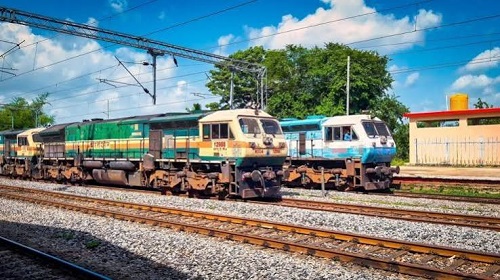
The expansion is aimed at addressing capacity constraints on some of the country's strategically important rail routes. Additional tracks will allow trains to move more smoothly, reduce bottlenecks and improve punctuality while creating greater capacity for both passenger and freight services.
The projects will cover 14 districts across the five states and are expected to improve connectivity for nearly 4,790 villages, collectively serving a population of around 56 lakh people. By strengthening rail infrastructure in these regions, the projects are also expected to support economic activity, generate employment and expand opportunities for self-employment.
The government has aligned the projects with Prime Minister Modi's vision of a New India, with infrastructure development positioned as a key driver of regional growth and greater self-reliance.
The projects have been planned under the PM Gati Shakti National Master Plan, which focuses on integrated infrastructure planning and improved multimodal connectivity. The expanded railway network is expected to facilitate the seamless movement of people, goods and services while improving logistics efficiency.
The railway expansion is also expected to make several important tourist and religious destinations more accessible. Among the locations that stand to benefit are Taratarini Temple, Shri Khetra Jagannath Temple near Jharsuguda, Bandhavgarh Tiger Reserve, Virateshwar Temple, Amarkantak Temple, Jwaleshwar Dham, Achanakmar Tiger Reserve, Khutaghat Dam, Malhar Archaeological Site and Ratanpur Mahamaya Temple.
Better rail connectivity to such destinations could encourage tourism, support local businesses and provide new opportunities for communities dependent on the tourism economy.
The railway corridors covered by the projects are particularly important for the transportation of key commodities, including coal, cement, iron and steel. Capacity augmentation is expected to facilitate an additional 27 million tonnes per annum (MTPA) of freight traffic.
This increase in freight-handling capacity could also help lower the country's overall logistics costs by allowing a greater share of goods to move through an energy-efficient railway network.
The environmental benefits are another major component of the projects. According to the government, shifting additional freight to rail could help reduce oil consumption by approximately 12 crore litres and cut carbon dioxide emissions by around 62 crore kg. The reduction in emissions is equivalent, in terms of carbon absorption, to the plantation of approximately 2.48 crore trees.
With passenger mobility, freight capacity, tourism and environmental sustainability all forming part of the expansion, the three projects represent a major infrastructure push aimed at strengthening India's railway network while supporting broader economic development.




















Leave Your Comment