


A meeting between Leader of the Opposition Rahul Gandhi and a delegation of farmers at his Parliament office on Friday has ignited a fresh political row, with the Bharatiya Janata Party (BJP) accusing the Congress leader of orchestrating a “stage-managed” event to push a “misleading narrative” against the government.
The discussion, intended to address growing concerns within the agricultural community regarding the proposed interim India-US trade agreement, saw Gandhi hold talks with representatives from 17 major farmer unions across the country. However, what the Congress intended as a show of solidarity with the farming community, the BJP has dismissed as a political gimmick.
According to participants who attended the meeting, the primary agenda was the potential impact of the India-US trade framework on the domestic agricultural sector. The unions expressed deep apprehension that the deal, designed to reduce tariff barriers, could adversely affect the livelihoods of Indian farmers, particularly those cultivating crops like corn, soybean, cotton, and various fruits and nuts.
The farmer representatives argued that greater market access for American agricultural products might undermine farm incomes and weaken existing protections for the sector. During the discussions, the unions stressed the need for a concerted, nationwide movement to oppose any provisions of the agreement that could harm Indian agriculture.
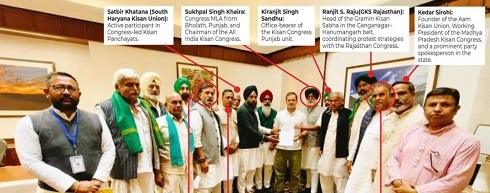
The response from the ruling party was swift and scathing. In a post on X (formerly Twitter), the BJP shared a picture from Gandhi’s meeting, alleging that several individuals in the photograph were not farmers but Congress workers or leaders from allied parties in Haryana and Punjab.
“Another lie of RaGa, exposed before the nation. What was claimed to be a meeting with farmers was actually a gathering of Congress workers,” the party posted. “Rahul Gandhi has politicised and disrespected almost every institution and community of this country, and now he is not even sparing farmers. Stage-managed politics cannot replace real leadership. The country deserves honesty, not scripted narratives and political gimmicks of Congress.”
Echoing the sentiment, Union Minister Piyush Goyal launched a blistering attack, dismissing Gandhi’s claims regarding farmers’ distress as “fake” and “fabricated.” In a video statement posted on X, Goyal alleged that the interaction was a deliberate attempt to create confusion and stir sentiment against the government’s economic policies.
“This meeting was an attempt to build an artificial narrative by presenting party activists as farmer leaders,” Goyal stated. He robustly defended the government’s position, maintaining that the interests of the farming community had been fully safeguarded within the India-US trade framework.
The controversy erupts amid ongoing negotiations for an interim trade agreement between India and the United States. The proposed pact aims to reduce tariff barriers, balancing India’s domestic agricultural sensitivities with the US demand for greater market access.
Under the terms being discussed, the US has reportedly agreed to lower reciprocal tariffs on several Indian goods—from levels as high as 50 per cent to 18 per cent—a move that would significantly benefit Indian sectors like textiles, leather, footwear, and pharmaceuticals.
To allay fears of a farm sector sell-out, the government has repeatedly asserted that 90 to 95 per cent of Indian agricultural products remain excluded from the agreement. Officials maintain that the deal is structured to protect the interests of farmers while simultaneously promoting export growth for Indian industry.
As the political debate intensifies, the meeting has underscored how the fate of the farming community remains a potent and deeply contested issue in the Indian political landscape.


















Leave Your Comment