


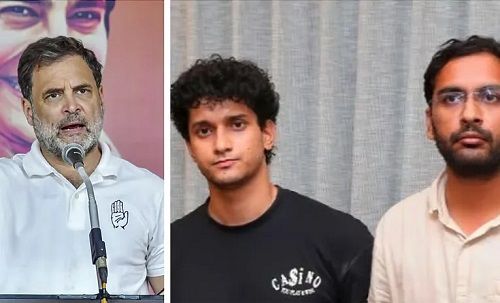
The jailing of Cockroach Janta Party (CJP) leaders Saurav Das and Ashutosh Ranka has brought this issue into sharp political focus. Leader of Opposition Rahul Gandhi has condemned their imprisonment as an “act of cowardice” and vowed to reclaim Jantar Mantar as a designated protest space. His intervention seeks to place the incident within a wider debate over constitutional freedoms, democratic dissent and the limits imposed on public demonstrations. However, the controversy also raises a critical question: how can the state protect the right to protest while ensuring that demonstrators comply with the law?
Leader of Opposition in the Lok Sabha Rahul Gandhi has used the imprisonment of two Cockroach Janta Party (CJP) leaders to sharpen the political debate over the freedom to protest, declaring that the action against them reflects an attempt to discourage democratic dissent. His response also signals an effort to bring together different opposition groups and youth-led movements around a common constitutional argument.
Reacting to the five-day judicial custody of CJP leaders Saurav Das and Ashutosh Ranka, Rahul said that waving the Tricolour during a peaceful demonstration at Jantar Mantar could not be treated as a crime. Describing their jailing as an “act of cowardice”, he asserted that the historic protest site belonged to the people of India and declared, “we will reclaim it”.
Rahul further sought to connect the CJP demonstration with the wider political mobilisation involving students, young people, journalists and parties of the INDIA bloc. Although these groups may operate under different banners and pursue distinct political objectives, he argued that their protests represented a shared demand for constitutional rights.
The statement is significant because it attempts to transform an incident involving two relatively lesser-known political activists into a broader question of democratic accountability. By emphasising the symbolism of the national flag and the right to assemble, Rahul has framed the controversy around the principles of citizenship and constitutional freedom rather than merely the conduct of individual protesters.
The imprisonment of Das and Ranka has thus opened a debate larger than the fate of two CJP leaders. Rahul Gandhi's promise to reclaim Jantar Mantar has given the dispute a political rallying point, but its lasting significance will depend on the legal circumstances of the case and the broader policy governing public demonstrations.






















Leave Your Comment