


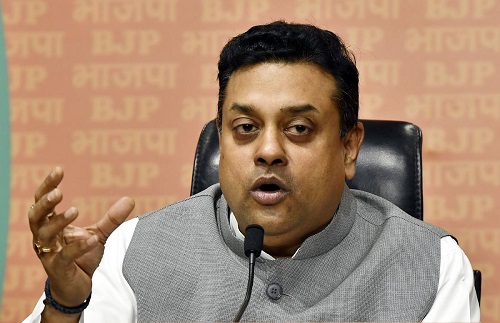
Punjab’s recent spate of killings has once again brought the state’s law-and-order situation under intense scrutiny. Within a span of roughly 48 hours, multiple murder cases have been reported from different parts of the state, including the killing of social media influencer Mad Sandhu in Amritsar and former sarpanch Navtej Singh in Ludhiana. These incidents, along with other reported killings, have created a growing sense of insecurity and raised questions about whether criminals are becoming increasingly willing to use violence in public spaces, said BJP spokesperson Dr Sambit Patra at a press conference in Delhi.
The sequence of recent incidents is significant not merely because of the number of deaths, but because of the different backgrounds of the victims and the locations involved. In Amritsar, Punjabi influencer and makeup artist Mad Sandhu was shot by motorcycle-borne assailants on Loharka Road, said BJP spokesperson Dr Sambit Patra at a press conference in Delhi. Police have said they are investigating the case and have obtained leads, while the motive remains under investigation.
In Ludhiana, former Manewal village sarpanch Navtej Singh was intercepted by motorcycle-borne attackers while travelling home. Police have registered a murder case and are investigating a suspected property dispute as a possible motive. The attack was reportedly captured by a dashcam installed in the victim’s vehicle.
Other killings reported from the Mullanpur and Sahnewal areas have added to the concern. Taken together, these incidents point to a wider challenge: violence is not confined to one locality or one particular section of society.
For ordinary citizens, the most worrying aspect of such incidents is the perception that violence can erupt unexpectedly. When shootings and targeted killings occur in or around public places, they affect more than the immediate victims and their families. They can create an atmosphere in which people begin to question their own safety while travelling, working or conducting routine activities.
However, individual criminal cases should not automatically be treated as evidence that every part of Punjab is unsafe. Each incident has its own circumstances and motive, and investigations are still underway. The Amritsar police, for instance, have specifically cautioned against unverified social-media claims regarding gangster involvement in the influencer’s killing.
That distinction is important. Law and order must be assessed through verified crime data, investigation outcomes and the effectiveness of policing—not simply through political allegations or social-media narratives.
At the same time, the frequency of violent incidents makes it legitimate to ask whether preventive policing, intelligence gathering and rapid investigation are adequate. The real test for any government is not merely how quickly it reacts after a murder, but whether the police machinery can identify threats beforehand, prevent escalation and ensure that perpetrators are brought to justice.
The recent killings have already become a political issue, with the BJP citing four murders within 48 hours while attacking the Aam Aadmi Party government over law and order. Such criticism is part of the political debate, but the larger issue goes beyond party lines.
Punjab needs a policing strategy that combines stronger local intelligence, swift investigation, effective prosecution and visible police presence in vulnerable areas. Equally important is the need to prevent the normalisation of gun violence and targeted killings.
The government and police administration therefore face a dual responsibility: establish the facts behind each killing and ensure justice for the victims, while simultaneously restoring public confidence. Ultimately, the strength of law and order is measured not by statements made after a crime, but by whether citizens believe that the law protects them and that those who violate it will face certain consequences.



















Leave Your Comment