


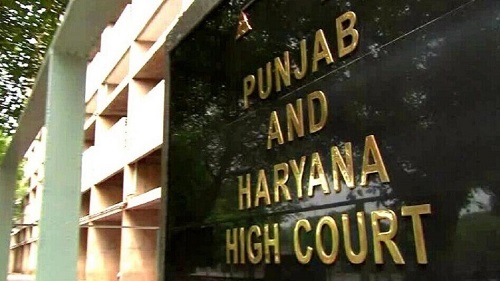
The credibility of a government recruitment process rests on one fundamental principle: merit must prevail over influence, favouritism and political connections. Thousands of young aspirants spend years preparing for competitive examinations, trusting that their hard work will be rewarded through a fair and transparent selection system. However, when allegations of irregularities emerge, the consequences extend beyond the candidates directly involved, raising questions about the integrity of public institutions. Punjab is now witnessing such a controversy, with the Punjab and Haryana High Court staying the selection process of the Punjab State Civil Services (PCS) examination conducted by the Punjab Public Service Commission (PPSC). The court's intervention follows multiple petitions filed by candidates questioning the fairness of the recruitment exercise.
The PPSC had issued its recruitment notification on January 3, 2025, for approximately 322 posts under the Punjab State Civil Services Combined Competitive Examination. The Main examination was conducted between April 1 and 10, 2026. On November 4, the commission announced the results, shortlisting 751 candidates for interviews against 331 vacancies. Soon after the declaration of results, several aspirants approached the High Court, alleging serious procedural irregularities in the selection process. They demanded that the recruitment exercise be cancelled and sought an independent investigation by either the Central Bureau of Investigation (CBI) or a Special Investigation Team (SIT). Following the hearing, the High Court ordered a stay on the selection process. The intervention has brought the recruitment exercise under judicial scrutiny and raised the larger question of whether the prescribed procedures were followed in letter and spirit. However, the allegations are yet to be established, and the court's interim order should not be interpreted as a finding of wrongdoing.
The controversy has also acquired a political dimension, with the Bharatiya Janata Party (BJP) questioning the transparency of the examination and targeting the ruling Aam Aadmi Party (AAP) government in Punjab. BJP national spokesperson and Rajya Sabha MP Sudhanshu Trivedi alleged that several candidates selected for the next stage had family connections with AAP ministers, political leaders and influential government officials. Addressing a press conference on November 19, he categorised the selected candidates into four groups, claiming that some were connected to political families, others to officials considered close to the ruling establishment, and still others to individuals facing corruption-related allegations. He also questioned the selection of candidates whose fathers were allegedly implicated in bribery or money-laundering cases. Citing specific examples, Trivedi claimed that the sons of an Additional Superintending Engineer caught accepting a bribe, a Tehsildar arrested in a bribery case involving Rs 20,000, and a Deputy Inspector General arrested by the Enforcement Directorate in a money-laundering case had also cleared the examination. He questioned how such candidates could emerge successful under a government that repeatedly describes itself as 'kattar imaandar' (staunchly honest).
These allegations have put the AAP government and the PPSC under pressure to explain the selection process. Nevertheless, it is important to distinguish between allegations and established facts. A candidate cannot be declared undeserving merely because a parent or family member has faced corruption charges. Every aspirant has the right to be judged on individual merit, examination performance and eligibility. At the same time, family connections should never become a means of securing preferential treatment. The real test is whether all candidates were evaluated according to identical standards and whether the commission maintained complete transparency throughout the examination and evaluation process.
For thousands of young people in Punjab, the controversy is much bigger than a dispute over a recruitment examination. Government jobs represent years of preparation, financial sacrifice and aspirations for a secure future. Any suspicion that personal influence or political proximity could outweigh merit threatens the confidence of an entire generation in the recruitment system. The government and the commission must therefore address the allegations through facts, records and credible explanations rather than political counterarguments. If irregularities are established, accountability must follow, irrespective of the position or influence of those involved. Equally, deserving candidates must not suffer because of unsubstantiated accusations. The High Court's intervention provides an opportunity to examine the process and restore public confidence. Ultimately, the credibility of Punjab's civil services recruitment will depend not on political claims and counterclaims, but on whether the selection process can withstand independent judicial scrutiny.





















Leave Your Comment