


In an era when technological advancement is increasingly becoming a source of economic strength, geopolitical influence and social transformation, the real measure of progress lies in how widely its benefits are shared. Prime Minister Narendra Modi’s message at the Bloomberg New Economy Forum on Tuesday placed this principle at the centre of India’s development vision. His concept of “Power to Empower” calls for a shift from concentrating technological and economic advantages in the hands of a few towards expanding opportunities for millions. By linking innovation with inclusion, economic growth with sustainability, and governance with citizens’ capabilities, Modi presented India’s development journey as an effort to transform national power into public opportunity.
The global economy is undergoing a profound transformation. Artificial intelligence, digital platforms, data analytics and scientific innovation are redefining how nations produce wealth, compete for investment and influence the international order. Yet this transformation also raises a fundamental question: will technological progress narrow existing inequalities by placing unprecedented capabilities in the hands of a privileged few, or will it create pathways for broader prosperity? Prime Minister Narendra Modi’s emphasis on “Power to Empower” addresses this challenge by placing the social purpose of progress alongside its economic potential.
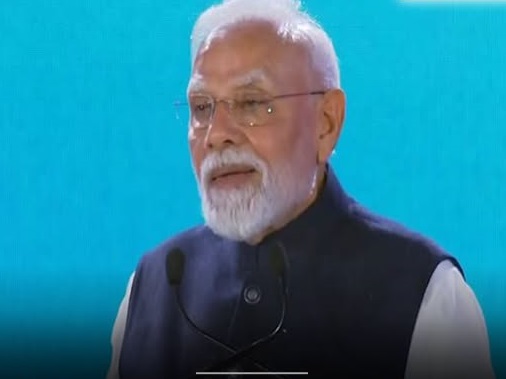
Speaking at the Bloomberg New Economy Forum, Modi argued that technology, data, knowledge and innovation derive their real significance not merely from their possession but from their application. Power, in this framework, should not be understood solely as the ability to control resources, dominate markets or gain a competitive advantage. Its greater value lies in enabling others to improve their lives, expand their capabilities and participate more meaningfully in economic and social development.
This distinction is important at a time when technological leadership is increasingly concentrated among a limited number of countries and corporations. Access to digital infrastructure, advanced computing, capital and specialised knowledge can determine whether individuals and businesses participate in emerging opportunities or remain on the margins. Modi’s argument suggests that development must be judged not only by the scale of innovation but also by the extent to which innovation becomes accessible and useful to ordinary citizens.
His call to move from “power to control” towards “power to enable”, from competition towards collaboration, and from individual success towards helping others succeed provides a broader philosophical foundation for India’s development ambitions. It presents empowerment as a process in which institutions, markets and technology strengthen individual agency rather than create permanent dependence.
The practical challenge, however, is to translate this philosophy into measurable outcomes. Digital access must be accompanied by digital literacy; technological innovation must generate productive employment; and expanding economic opportunities must reach rural communities, small enterprises, women and disadvantaged sections of society. The success of the empowerment model will ultimately depend on whether citizens can convert access to technology and public services into sustainable improvements in income, education and quality of life.
Modi also highlighted India’s economic performance, noting that the country’s gross domestic product expanded by 7.8 per cent in the first quarter of the 2026–27 financial year. The figure reinforces India’s position as a major growth centre at a time when geopolitical tensions, uncertain trade conditions and changing investment patterns are complicating the global economic outlook.
India’s renewable energy expansion formed another important part of the Prime Minister’s argument. According to the figures he cited, the country’s renewable energy capacity has increased from approximately 75 gigawatts in 2014 to around 300 gigawatts, representing nearly a fourfold expansion.
The significance of this transition extends beyond environmental protection. Renewable energy can reduce exposure to fluctuations in international fossil-fuel markets, diversify the country’s energy mix and support the development of new industries. Solar manufacturing, wind power, battery storage, grid modernisation and green hydrogen offer possibilities for investment, technological advancement and employment generation.
Modi’s description of India as the “mother of democracy” connected the country’s political traditions with its contemporary information ecosystem. Referring to India’s linguistic diversity, newspapers and publications, satellite television channels and extensive social-media participation, he presented the breadth of public communication as an important feature of democratic life.
The Prime Minister also argued that the purpose of governmental power should not be to make citizens dependent on the state but to strengthen their capacity to improve their own circumstances. He linked this principle to the government’s claim that approximately 25 crore people have moved out of multidimensional poverty over the past decade.
Modi’s “Power to Empower” formulation brings together several dimensions of India’s development agenda: technological advancement, economic expansion, clean energy, democratic participation and poverty reduction. The common thread is the proposition that national strength should produce wider social benefits.
This approach also has relevance beyond India. Developing economies face the challenge of adopting new technologies without allowing digital and economic inequalities to become entrenched. Cooperation in research, investment, clean energy and digital infrastructure can help countries expand their capabilities while addressing shared challenges.
Ultimately, the promise of “Power to Empower” will be fulfilled when opportunity becomes more widely available, innovation improves everyday life and development enables citizens to shape their own futures. That is the distinction between power as an instrument of dominance and power as a foundation for shared prosperity.




















Leave Your Comment