


French mathematician, physicist, inventor, philosopher, writer and theologian, Blaise Pascal once said, “Men never do evil so completely and cheerfully as when they do it from religious conviction.”
The quote has some commonality with Indian politics which now seems to draw a shot in the arm with the opening on Ram temple in Ayodhya while other two major religious centres Mathura and Varanasi are also on the cards and might find place in the election manifesto. As India prepares for general elections this year, religious sentiments are at its all time high and the populace looks confident that the current political dispensation would significantly increase their seats in the forthcoming elections.
Historically temples have served as iconic landmarks and symbols of a region's cultural and historical identity in Indian context and have also been used by rulers to manoeuvre their acceptability among masses. This is also for one reason that temples boost local economy as tourists are drawn to these sites to admire the architecture, sculptures, and artwork that showcase the craftsmanship and artistic traditions of the past. Temples attract tourists who contribute to the local economy by spending money on accommodation, transportation, souvenirs, tour guides, and handicraft shops, and local cuisine.
The politics surrounding temples is a multifaceted and complex issue, influenced by historical, religious, socio-economic, and political factors. Temples have been integral to Indian society for centuries, serving as centers of religious worship, cultural heritage, and community engagement. Throughout history, temples have often been patronized and administered by ruling dynasties and kings, leading to their entanglement with political power. However, there might not be many such examples where the political parties have used religion to bring them back in power and more strongly.
The job of any political party becomes much easy in such a society such as what we have in India where temples hold immense religious significance for Hindus, who comprise the majority of our population. Political parties and leaders often seek to gain influence and support by patronizing temples and engaging in religious activities. This can include funding temple renovations, organizing religious events, or making donations to temple trusts. Many temples are dedicated to various deities and are considered sacred pilgrimage sites. The management and administration of temples are regulated by state governments through various laws and regulations. Most states have established government bodies or boards responsible for overseeing temple affairs, including finances, rituals, and maintenance.
Ayodhya
An ancient city located in the Indian state of Uttar Pradesh, Ayodhya is revered as the birthplace of Lord Rama. The city has a rich historical and cultural heritage dating back thousands of years. For Hindus, Ayodhya holds immense religious significance and is mentioned in the ancient Hindu epic, the Ramayana, which narrates the life and adventures of Lord Rama.
The Ayodhya dispute refers to the contentious issue surrounding the Babri Masjid, a mosque built in the 16th century by Mughal emperor Babur, which stood on a site believed by Hindus to be the birthplace of Lord Rama. In 1992, the mosque was demolished by Hindu activists, leading to widespread communal riots and tensions. The dispute over the ownership of the land led to legal battles and political controversies that lasted for decades.
The legal battle over the ownership of the Ayodhya land finally saw resolution in November 2019 when the Supreme Court of India ruled in favour of Hindus, allowing the construction of a Hindu temple on the disputed site. The court also directed the government to allocate an alternative piece of land to the Muslim community for the construction of a mosque.
The Ayodhya dispute has had significant political ramifications in India, shaping electoral politics and influencing communal relations. Various political parties have used the issue to mobilize support among their respective constituencies, leading to polarization and tensions in the country.
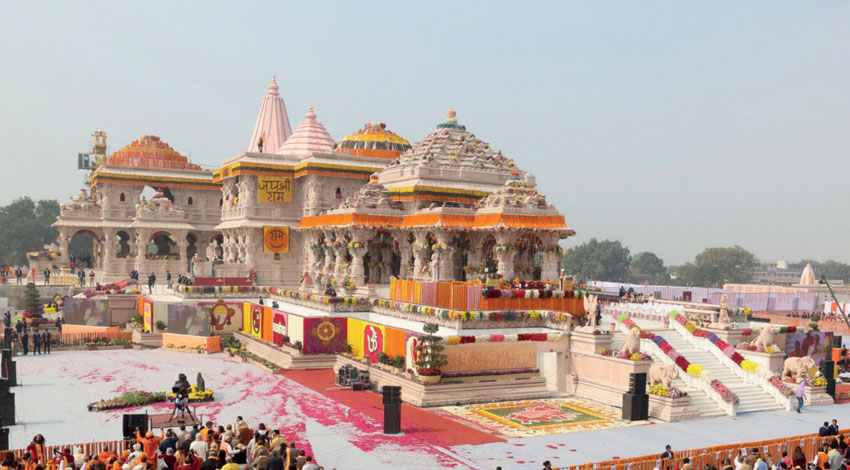
Over 5 lakh people entered the new Ram Mandir on the inaugural day on 22nd January, in Ayodhya that is built on the ruins of a destroyed 16th century mosque. Huge crowds of devotees queued outside the temple in the early hours of the morning carrying saffron flags and religious offerings on the first day the large complex was open to the public. A day earlier Prime Minister Narendra Modi unveiled a statue of Lord Ram in the building’s inner sanctum in a ceremony.
The construction of the Ram Temple in Ayodhya has had several notable political impacts in India. The construction of the Ram Temple fulfills a long-standing demand of Hindu nationalist groups and is seen as a significant victory for the Hindu community. The BJP has historically been at the forefront of the Ram Janmabhoomi movement, advocating for the construction of the temple. The development has led to a shift in political discourse towards issues of cultural identity and religious symbolism, with parties leveraging these sentiments for electoral gains.
The flip side
The construction of the temple and the legal resolution of the Ayodhya dispute have raised concerns among minority communities, particularly Muslims. They fear marginalization and perceive the events as a setback for secularism and religious pluralism in India. The political impact includes further alienation of minority communities from mainstream politics and increased polarization along religious lines.
The construction of the Ram Temple has also drawn international attention and has implications for India's image on the global stage. While some view it as an internal matter related to religious freedom and cultural heritage, others express concerns about communal tensions and the erosion of secular values in India. The political impact includes diplomatic considerations and efforts to manage perceptions abroad.
Mathura
Mathura is a historically significant city in India, primarily known for its association with Hinduism and Buddhism. It is one of the oldest cities in India, with a history dating back over 3,000 years. It is believed to be the birthplace of Lord Krishna, who is said to have spent his early years in Mathura.
The city has been a centre of art, culture, and religion since ancient times. It is dotted with temples dedicated to Lord Krishna and other Hindu deities. The Sri Krishna Janmabhoomi Temple, believed to be built at the site of Lord Krishna's birth, is a major pilgrimage site visited by millions of devotees every year.
In addition to its Hindu significance, Mathura is also important in Buddhism. It is believed to be the place where Lord Buddha delivered several sermons during his lifetime. Mathura was a prominent center of Buddhism during ancient times, and many Buddhist stupas and monasteries have been excavated in and around the city.
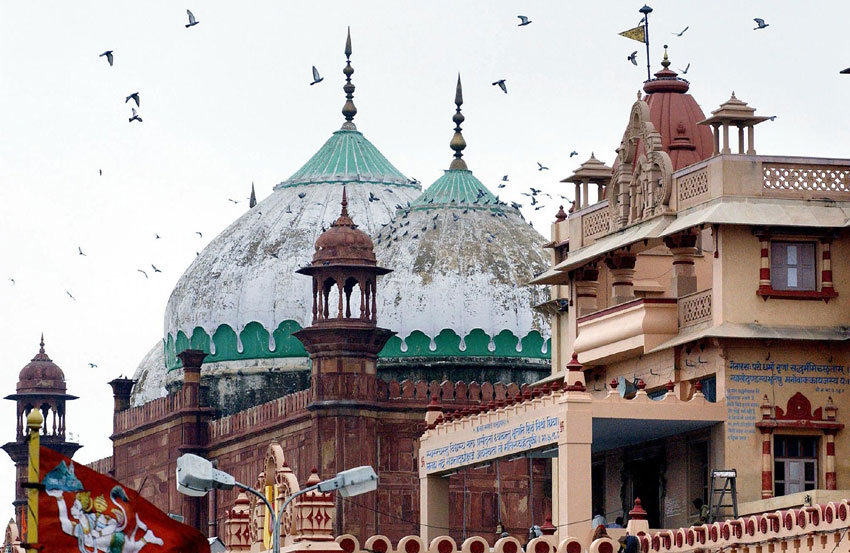
The city is known for its vibrant festivals, traditional art forms, and architectural marvels. The Mathura School of Art, which flourished during the Gupta period, produced exquisite sculptures and artifacts that are admired by art enthusiasts worldwide.
Like many other historical cities in India, Mathura faces challenges such as urbanization, pollution, and encroachment on heritage sites. There have also been occasional controversies related to religious and cultural issues, though the city generally remains a symbol of religious harmony and cultural diversity. The politics surrounding the Krishna Janmabhoomi in Mathura has similarities with the Ayodhya issue but has its own distinct dynamics.
Over the years, Hindu nationalist groups and organizations have advocated for the construction of a grand temple at the Krishna Janmabhoomi site. They argue that the site holds the same importance as Ayodhya and should be developed into a pilgrimage destination with a temple dedicated to Lord Krishna. These legal battles have added complexity to the issue and have been used by various political and religious groups to advance their agendas.

Political parties, particularly those with a Hindu nationalist agenda, have shown interest in the Krishna Janmabhoomi issue. A few political parties have been vocal about its support for the construction of a temple at the site. Other Hindu nationalist organizations and leaders have also championed the cause, using it as a rallying point to mobilize support among Hindus.
Overall, the politics behind the Krishna Janmabhoomi in Mathura are complex and multifaceted, involving a mix of religious beliefs, legal challenges, and political interests.
Varanasi
The Gyanvapi Mosque, is another site that has historical and religious significance and has been subject to controversies and political debates. It is situated near the Kashi Vishwanath Temple, one of the holiest sites in Hinduism. The area has been a center of religious and cultural activity for centuries, with both Hindus and Muslims having historical connections to the site.
The Gyanvapi Mosque was built by Mughal Emperor Aurangzeb in the 17th century. It is said to have been constructed on the site of a previous Hindu temple, which was demolished to make way for the mosque. This historical narrative has been a source of contention between Hindu and Muslim communities.
Similar to the Ayodhya and Mathura disputes, the Gyanvapi Mosque has been a subject of legal battles and controversies. Hindu groups have claimed that the mosque was built after demolishing a Hindu temple dedicated to Lord Shiva, and they have demanded the restoration of the temple at the site. On the other hand, Muslim groups assert that the mosque has been in existence for centuries and should be preserved.
Legal proceedings regarding the Gyanvapi Mosque have been ongoing for years. There have been petitions filed in courts seeking to reopen the issue of the mosque's origins and to determine the rightful ownership of the land. However, the matter remains complex and unresolved due to its historical and religious sensitivities.
The Gyanvapi Mosque issue, like other similar disputes, has significant political implications. Various political parties and groups have used the issue to mobilize support among their respective constituencies. The Bharatiya Janata Party (BJP) and other Hindu nationalist organizations have often raised the Gyanvapi Mosque issue as part of their larger agenda of protecting Hindu religious sites and heritage.
Despite the controversies surrounding the Gyanvapi Mosque, Varanasi has historically been known for its religious harmony and coexistence between Hindus and Muslims. Both communities continue to live side by side, sharing cultural and social ties, despite occasional tensions over religious sites. The truth about the Gyanvapi Mosque in Varanasi is deeply intertwined with its historical, religious, and political dimensions.
Political parties, particularly those with a Hindu nationalist agenda, have used the Gyanvapi Mosque issue to mobilize support among Hindu voters. Political parties have often raised the issue during election campaigns, promising to address the grievances of Hindus and to protect their religious sites. On the other hand, parties representing Muslim interests may advocate for the preservation of the mosque and the status quo.
The Gyanvapi Mosque issue is not limited to Varanasi but has national ramifications. It intersects with broader debates about secularism, religious pluralism, and the rights of religious minorities in India. Any developments or decisions related to the mosque can reverberate across the country, shaping public discourse and political narratives.
From the courts…
The court permitted to reveal the ASI report findings submitted on December 18 for the ongoing dispute over a temple mosque in Varanasi. The report has exposed the historical debate over the origin of the Gyanvapi Mosque near the Kashi Vishwanath temple. This complex legal saga, which dates back to a 1991 petition and has seen recent judicial pauses, reflects deep-rooted complexities.
In the case of Ayodhya, the court recognised the Hindu idol as a legal or "juristic" person based on two premises. Firstly, to acknowledge the pious purpose of the testator as a legal entity capable of holding property in an ideal sense absent the creation of a trust. Secondly, the merging of the pious purpose itself and the idol, which embodies the pious purpose, ensures the fulfilment of the pious purpose. Hence, the Hindu idol is a legal entity, and the property endowed with the pious purpose is owned by the idol as a legal person in an ideal sense. The court created such legal fiction to provide a comprehensible legal framework to protect the properties dedicated to the pious purpose from external threats and internal maladministration. When the pious purpose necessitated a public trust for the benefit of all devotees, conferring legal personality allowed courts to protect the pious purpose.

The Ayodhya verdict of the Supreme Court of India in 2019 settled a long-standing dispute between the Hindu and Muslim communities over the ownership of a site in Ayodhya, Uttar Pradesh. According to the verdict, the disputed site belonged to the Hindu community, and the Court ordered the construction of a temple on the site. The Muslim community was also ordered to be given an alternate site to build a mosque. The verdict has been cited in the Krishna Janmabhoomi at Mathura case, but its applicability is still a matter of legal interpretation.
The Mathura's Shahi Idgah mosque case is a controversial issue in India. It involves a dispute over the Shahi Masjid, a mosque built on the site in the 17th century by the then ruler Aurangzeb. The Hindu community claims that the mosque was built on a pre-existing temple. Recent excavations by the ASI have revealed a temple beneath the Shahi Masjid, supporting the Hindu community's claim. According to the petitions filed by the Hindu side, Raja Veer Singh Bundela of Orchha constructed a temple on 13.37 acres of land in the year 1618. The Shahi Idgah mosque, which stands at the site now, was built in 1670 after the destruction of this temple, on the orders of Mughal emperor Aurangzeb. These claims are supported by the official court bulletin of February 1670. The legal resolution of the dispute will depend on the interpretation of the law and the evidence presented in court.
The Places of Worship (Special Provisions) Act, 1991, is also relevant to the question of whether the temple at the Krishna Janmabhoomi site can be converted into a mosque. The act prohibits the conversion of any place of worship from its original form and provides for maintaining the religious character of a place of worship. The legal resolution of the dispute will depend on the interpretation of the law and the evidence presented in court. In conclusion, whether the temple at the Krishna Janmabhoomi site can be converted to a mosque is a complex and sensitive issue that will likely be the subject of further litigation.
By Alok Sharma
(The content of this article reflects the views of writers and contributors, not necessarily those of the publisher and editor. All disputes are subject to the exclusive jurisdiction of competent courts and forums in Delhi/New Delhi only)




















Leave Your Comment