


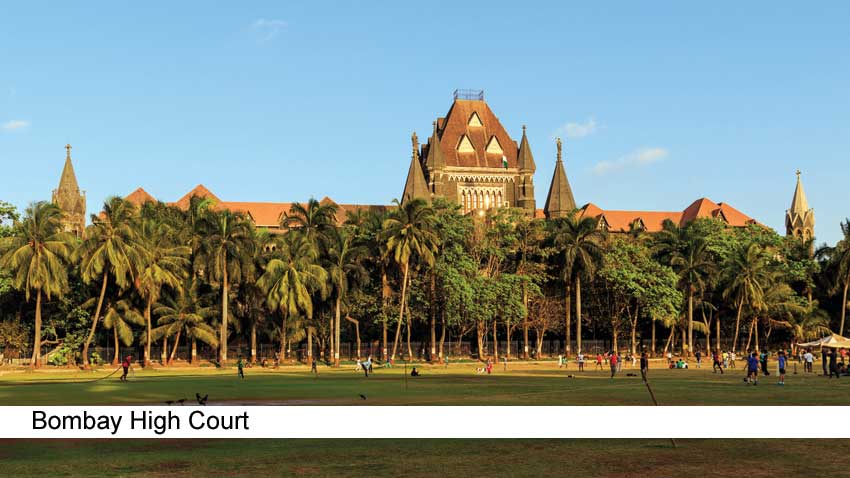
In a very strong disapproval of the growing rampant misuse of lodging criminal case over petty quarrels by resorting to Section 498A of the IPC by the wife on the husband and his relatives, the Bombay High Court has in a most learned, laudable, landmark and latest judgment titled Ramesh Sitaldas Dalal & Anr vs The State of Maharashtra and Ors. in Writ Petition No. 137 of 2021 and cited in Neutral Citation No. : 2023:BHC-AS:34459-DB that was reserved on September 29, 2023 and then finally pronounced on November 9, 2023 in the exercise of its criminal appellate jurisdiction has quashed an FIR that was lodged against an elderly couple accused of harassing the estranged wife of their adopted son held in no uncertain terms that petty quarrels do not amount to cruelty. It must be noted that while coming down heavily on the Mumbai police, a Bench of Hon’ble Smt Justice Anuja Prabhudessai and Hon’ble Mr Justice NR Borkar slammed the investigation holding that the investigation is “biased, malafide and is a gross abuse of the process of law”. We must certainly note that the Bombay High Court in its landmark order laid down precisely that to prove the offence of harassment under Section 498A of the Indian Penal Code, it has to be established that the woman has been subjected to cruelty continuously or persistently or at least in close proximity of time of lodging the complaint.
At the very outset, this brief, brilliant, bold and balanced judgment authored by Hon’ble Smt Justice Anuja Prabhudessai for a Division Bench of the Bombay High Court comprising of Hon’ble Mr Justice NR Borkar and herself sets the ball in motion by first and foremost putting forth in para 2 that, “The petitioners aged 80 and 75 years respectively, who are the parents-in-law of respondent No.2 have filed this petition under Article 226 of the Constitution of India to quash the First Information Report No.152 of 2020 registered with Malabar Hill Police Station, for offences under Sections 498-A, 420, 406, 323, 506(ii) r/w 34 of the Indian Penal Code.”
To put things in perspective, the Division Bench while dwelling on key facts envisages in para 3 that, “The brief facts necessary to decide this petition are as under:-
The respondent No.2 and Deepak, the adopted son of the petitioners were school friends and they continued their friendship beyond schooling days. Deepak pursued his career in Hotel Management and is employed in Dubai, whereas respondent No.2 is a professional dancer. Their friendship eventually turned into love and they decided to enter into matrimonial ties. The father of the respondent no.2 did not approve of the relationship initially but later relented as his wife supported the decision of their daughter. The respondent No.2 has stated that Deepak had told her before the marriage that he was the adopted son of the petitioners. Her parents came to know that the lady working for the petitioners was the biological mother of Deepak, however, it was too late to cancel the wedding since the invitation cards were already distributed and other arrangements were already made.”
As we see, the Division Bench then discloses in para 4 that, “The engagement ceremony of respondent No.2 and the son of the petitioner was held on 17/05/2018. The respondent No.2 claims that petitioner No.2 had gifted to her gold necklace, earrings and bracelets, whereas her father gifted Deepak a gold chain of 100 gms, a family heirloom and cash of Rs.1,00,000/-. The respondent No.2 has alleged that the petitioner No.2 took back the gold ornaments given to her and did not return the same.”
It cannot be lost on us that the Division Bench while citing the most recent, remarkable and relevant case laws observes in para 11 that, “The petition under Article 226 is to quash the FIR No.152 of 2020 registered at Malabar Hill Police Station. The parameters for exercise of inherent powers under Section 482 of the Cr.P.C. or the extraordinary writ jurisdiction under Article 226 of the Constitution of India in the matter of quashing the FIR are well settled by catena of decisions of the Apex Court. In Abhishek v/s. State of Madhya Pradesh 2023 Live Law (SC) 731, a Three Judge Bench of the Hon’ble Supreme Court after referring to various precedents has observed thus :-
“12. The contours of the power to quash criminal proceedings under Section 482 Cr.P.C. are well defined. In V. Ravi Kumar vs. State represented by Inspector of Police, District Crime Branch, Salem, Tamil Nadu and others [(2019) 14 SCC 568], this Court affirmed that where an accused seeks quashing of the FIR, invoking the inherent jurisdiction of the High Court, it is wholly impermissible for the High Court to enter into the factual arena to adjudge the correctness of the allegations in the complaint. In M/s. Neeharika Infrastructure (P). Ltd. vs. State of Maharashtra and others [Criminal Appeal No.330 of 2021, decided on 13.04.2021], a 3-Judge Bench of this Court elaborately considered the scope and extent of the power under Section 482 Cr.P.C. It was observed that the power of quashing should be exercised sparingly, with circumspection and in the rarest of rare cases, such standard not being confused with the norm formulated in the context of the death penalty. It was further observed that while examining the FIR/complaint, quashing of which is sought, the Court cannot embark upon an enquiry as to the reliability or genuineness or otherwise of the allegations made therein, but if the Court thinks fit, regard being had to the parameters of quashing and the self-restraint imposed by law, and more particularly, the parameters laid down by this Court in R.P. Kapur vs. State of Punjab (AIR 1960 SC 866) and State of Haryana and others vs. Bhajan Lal and others [(1992) Supp (1) SCC 335], the Court would have jurisdiction to quash the FIR/complaint.
13. Instances of a husband’s family members filing a petition to quash criminal proceedings launched against them by his wife in the midst of matrimonial disputes are neither a rarity nor of recent origin. Precedents aplenty abound on this score. We may now take note of some decisions of particular relevance. Recently, in Kahkashan Kausar alias Sonam and others vs. State of Bihar and others[(2022) 6 SCC 599], this Court had occasion to deal with a similar situation where the High Court had refused to quash a FIR registered for various offences, including Section 498A IPC. Noting that the foremost issue that required determination was whether allegations made against the in-laws were general omnibus allegations which would be liable to be quashed, this Court referred to earlier decisions wherein concern was expressed over the misuse of Section 498A IPC and the increased tendency to implicate relatives of the husband in matrimonial disputes. This Court observed that false implications by way of general omnibus allegations made in the course of matrimonial disputes, if left unchecked, would result in misuse of the process of law. On the facts of that case, it was found that no specific allegations were made against the in-laws by the wife and it was held that allowing their prosecution in the absence of clear allegations against the in-laws would result in an abuse of the process of law. It was also noted that a criminal trial, leading to an eventual acquittal, would inflict severe scars upon the accused and such an exercise ought to be discouraged.
All told, we thus see that the Bombay High Court Division Bench has made it indubitably clear in this notable judgment that petty quarrels certainly do not amount to cruelty under Section 498A of the IPC. The Court also very rightly quashed the case against the elderly couple that had been registered against them. The Bench also minced just no words to criticize the biased, tainted and mala fide investigation conducted by the Investigating Officer and so also for his high-handedness which cannot be justified somehow or anyhow! There can be no gainsaying that it is high time and Centre must at least now without fail in the penal laws that it is just on the verge of changing to usher in new laws make the necessary amendments in rape laws and dowry laws which are misused many times by women and her relatives by falsely implicating the men and his parents and relatives which should certainly no longer now go unpunished, unaccounted and unhindered any longer and those lodging vexatious and false complaints must be made to pay very huge compensation and should be jailed also for a term of two to three years at least and similarly where the Court finds clearly that the investigating officer intentionally conducts a mala fide and biased investigation to deliberately frame innocents must be punished most strictly! No denying it!
By Sanjeev Sirohi
(The content of this article reflects the views of writers and contributors, not necessarily those of the publisher and editor. All disputes are subject to the exclusive jurisdiction of competent courts and forums in Delhi/New Delhi only)





















Leave Your Comment