


After going through two recent news items, I tend to agree with a recent opinion piece in the highly influential British Weekly, The Economist, which has a global presence but is otherwise distinctly anti-India for what it says about the resurgence of Hindus under Prime Minister Narendra Modi. Titled “India’s VIP culture is out of control”, the piece explains how Indian leaders claim to be servants but act like masters.
Before quoting the important portions of this article, let me talk about the two news items.
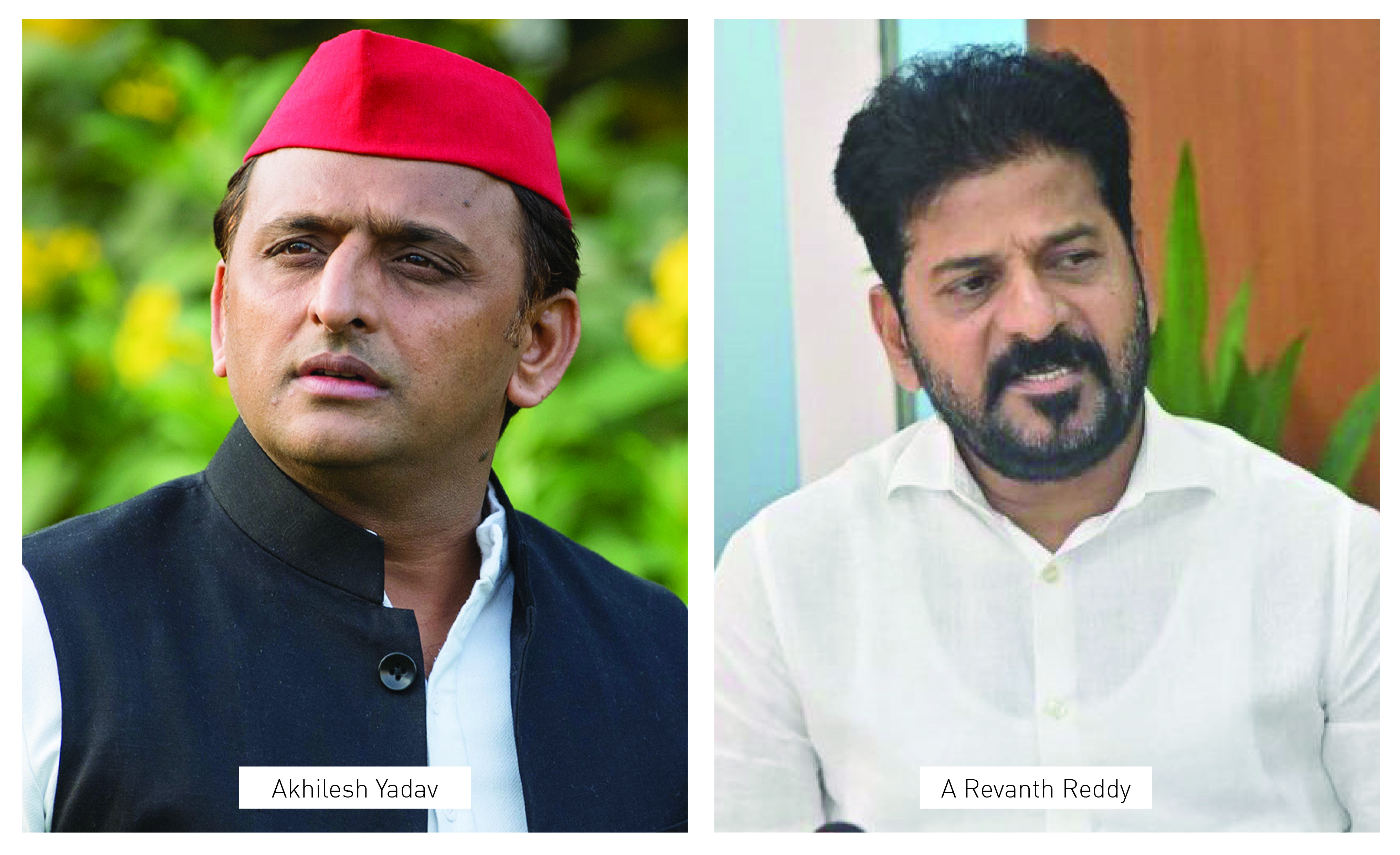
One news item says that former Uttar Pradesh Chief Minister and the Samajwadi Party Chief Akhilesh Yadav is terribly upset that his VIP security, which is provided both by the central government and the government of Uttar Pradesh, has been vastly compromised, with the central government reducing his Z-Plus security to Z security.
The other news item says that though Telangana Chief Minister A Revanth Reddy is publicly admitting that the state does not have even Rs. 500 crore for the capital expenditure, he has not hesitated to assert in a public rally that the state can spend even Rs. 1000 crore to provide for the security and the well-being of the Gandhi family in Delhi, which literally owns the Congress party. This family’s members happen to be Ms Sonia Gandhi, Rahul Gandhi and his sister Priyanka Gandhi.
These two news items have really helped me in understanding the piece in the Economist better. Let me quote some paragraphs:
“ India’s prime minister has always insisted that the government exists to serve. When he rose to national office in 2014, he declared that he was not the country’s prime minister but its “chief servant”. Since then, the Modi government has been synonymous with service, not power, the home minister ( Amit Shah) declared recently. The chief servant, he added, ‘works 24 hours a day, seven days a week for the people’.
“To underline its commitment, the government renamed the street on which Mr Modi lives, from Race Course Road to the Path of Public Welfare. Last year, it changed the names of state governors’ official residences from Raj Bhavan (Government House) to Lok Bhavan, the People’s House. And on February 13th, Mr Modi inaugurated a new prime ministerial office. He has christened it Seva Tirth, or Sacred Place of Service. Mounted on the outside of the building is a legend that translates as “the citizen is akin to God”.
And yet, the piece adds, India’s general public was treated differently from the VIPs in accessing the venue of the recently held global AI summit. Roads were blocked for the VIP movement. “Unimportant Persons were forced to walk over a mile to find cabs and public transport”.
It further says, “ The (VIP) entitlement is both endemic and extravagant. It spans geography, parties, and branches of government. To have any power is to be a VIP. Some state leaders travel in convoys that rival the American president’s. Even minor ministers get police escorts that run traffic lights and bully other motorists. VIP culture is a marker of status. It operates on an ancient principle of India’s highly stratified society: that servant and master must never drink from the same glass, sit at the same table, pass through the same doorway or in any way appear as equals. For centuries, that meant the master was supreme. The genius of India’s public ‘servants’ has been to reverse the hierarchy”. Hundred percent right the Economist is.
Incidentally, I had once written something about the perverse VIP security in India. Take the case of Delhi. Based on available reports and data, a significant portion of the Delhi Police force is dedicated to VIP security, creating a stark contrast with the manpower available for general law and order duties.
As of recent reports (2024), approximately 6,960 to over 7,000+ personnel are assigned to the VIP security wing. Some older reports suggested that with additional armed personnel and special units, this number could exceed 10,000 to 20,000, representing over 25% of the total strength at times.
In fact, roughly 25% to nearly one-third (28.8%) of the total Delhi Police force is earmarked for protecting VVIPs/VIPs, which includes politicians, judges, and bureaucrats. In contrast, only about 30% of the total staff is actually available for general policing (patrolling, law and order, investigation), despite having a sanctioned strength exceeding 80,000-90,000.
Talking in terms of India, approximately 56,944 police personnel are deployed to protect around 20,828 VIPs in India, according to reports citing Bureau of Police Research and Development data. This translates to an average of nearly three cops per VIP, straining resources in a country where the police-to-citizen ratio is low. Security is provided by specialised forces like the SPG, NSG, CRPF, and CISF based on threat levels.
As of early 2023, India had approximately 153 police personnel per 100,000 citizens (actual strength), significantly lower than the United Nations' recommended ratio of 222. Data indicates that on average, one police officer serves over 831 individuals, with some states like Bihar exceeding 1,500 people per one police officer. This is in sharp contrast to the corresponding figure of about 240 in the United States, the United Kingdom and Australia.
All this is because of what is known as the VIP syndrome. The cream of our police personnel is engaged in providing VIP security. But then, there is no transparent method of determining who is a VIP to provide that security. One is reminded of the story of Punjab when the state was terribly short of adequate policing. So much so that the Punjab and Haryana High Court had directed the state government to remove “the ugly security tents that dot over 60 ministers & MLAs, 12 officials and 75 judges’ homes across Chandigarh”.
The court said that compared to ordinary people, the persons concerned did not face any security threats and that they kept the security men “more as a status symbol”. But what was worse was that in March 2012, it was discovered that about 2,800 Punjab policemen—the strength of three battalions- were deployed as cooks, drivers, gardeners and even masseurs in VIP households across Punjab!
This practice is still rampant all over the country. No VIP is prepared to shed his or her security cover, which, over the years, has come to be seen as a status symbol rather than protecting his or her life. One can understand the security cover for the persons holding the constitutional offices, but not for the political class as a whole. In fact, there are thousands of cases where private persons like businessmen even get VIP security on some pretext or another, provided they have the right political connection.
Why should the rich not pay for their security, and that too at a time when there are established private security agencies in the country? And when people getting VIP security are rich enough to pay for that?
Incidentally, VIP security in India is a massive expenditure, with top-tier Z-plus security costing roughly ₹50 lakh per month and Z-category around ₹40 lakh per month. The Special Protection Group (SPG) budget for the Prime Minister's security rose to ₹506 crore in 2024-25. Delhi police alone spend nearly ₹2 crore daily on protecting around 500 VIPs.
While exact pan-India figures are not centrally compiled, estimates suggest that protecting roughly 38,700-50,000 individuals (including MPS, MLAs, and bureaucrats) costs over ₹1,450 crore monthly. The budget for the SPG increased by 12.3% in 2023, reflecting rising protection costs. Z-Plus security to a person costs ₹50 lakh per month, and Z category costs ₹40 lakh per month. Some states spend massive amounts, such as Bihar, which was noted to spend ₹141.95 crore annually on 3,951 VIPs.
Incidentally, under the Z+ Category, there are approximately 55 personnel, including 10+ commandos (often from the CRPF or CISF) and police. Z Category has 22 personnel, including 4–6 commandos. Y+ / Y Categories have 8–11 personnel, including 1–2 commandos. X Category happens to be the basic protection with 2 personnel and no commandos.
In many a case, once people manage to get the security cover, they also get free government mansions to live in and free transport to move around under the pretext of accommodating their huge security personnel!
The unfortunate thing is that VIP security in our country has degenerated into a status symbol. One can cite enough instances of politicians without any semblance of threats to their lives competing with each other to get the security cover of the higher grade, from X to Y to Z. The pliant Police hierarchy has, more often than not, falsified ‘threat perspectives’ of politicians, businessmen and even some select civil servants. The phenomenon has troubled even the judiciary. And all this when India is one of the least policed countries in the world.
What a shame!

By Prakash Nanda
(prakash.nanda@hotmail.com)




















Leave Your Comment