


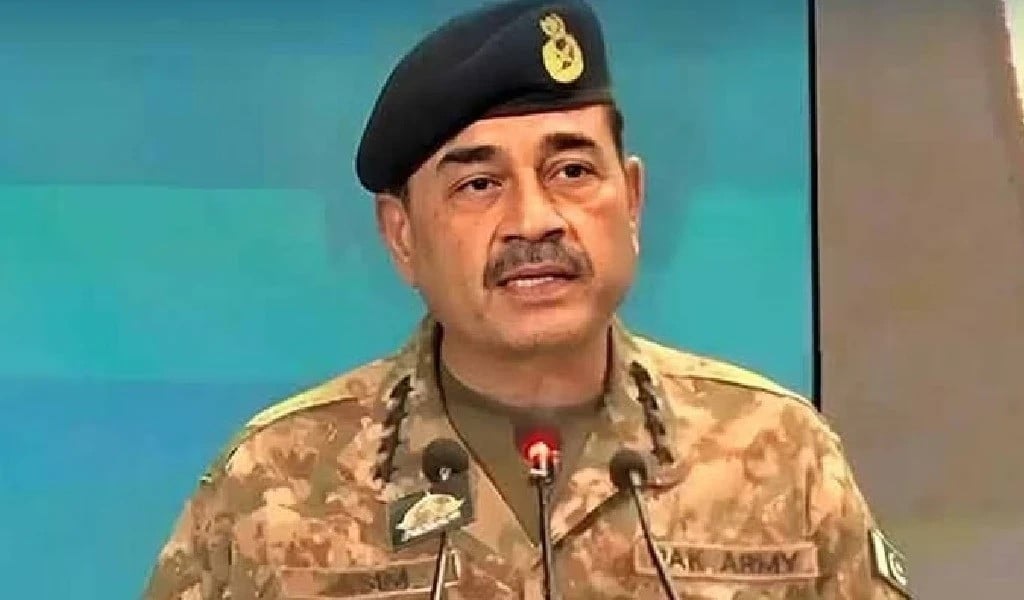
In a speech that stirred fresh controversy, Pakistan's Army Chief General Asim Munir has strongly reiterated the ideological foundations of the Islamic Republic, urging Pakistanis—especially overseas communities—to educate their children on the "stark differences between Hindus and Muslims" as the basis of the country's creation.
Speaking at the Convention for Overseas Pakistan, with Prime Minister Shahbaz Sharif in attendance, General Munir invoked the deeply rooted Two-Nation Theory, which underpinned the partition of British India in 1947 and the subsequent birth of Pakistan.
"Our forefathers believed that we were different from Hindus in every possible aspect of life. Our religion is different. Our customs are different. Our traditions are different. Our thoughts are different. Our ambitions are different... That was the foundation of the Two-Nation Theory," Munir declared.
Calling on the Pakistani diaspora to pass this narrative on to future generations, Munir added, "You must tell this to your children so that they never forget the story of Pakistan. Our forefathers made immense sacrifices, and we too, have sacrificed a lot for the creation of this country."
The Two-Nation Theory, famously championed by Pakistan's founder Muhammad Ali Jinnah, argued that Muslims and Hindus were fundamentally distinct and therefore required separate homelands. This theory served as the ideological justification for the division of British India and the emergence of Pakistan as an Islamic state.
Despite initial promises to safeguard minorities, including Hindus, the demographic presence of non-Muslim communities in Pakistan has declined steadily since independence. Human rights organizations have long raised concerns about the treatment and safety of minority groups in the country.
Munir, who is also a Hafiz-e-Quran (one who has memorized the Quran), reaffirmed the Islamic character of Pakistan, saying that the country's foundation "was laid on the Kalima," the Islamic declaration of faith. His remarks underscore the enduring influence of religious identity in shaping Pakistan's national narrative.
The Army chief’s statements also come amid renewed tensions between India and Pakistan. Just days earlier, India sharply rebuked Islamabad at the United Nations after Pakistan raised the Kashmir issue during a discussion on peacekeeping reforms. New Delhi countered by demanding that Pakistan vacate areas it "occupied illegally."
Beyond ideological rhetoric, Munir also addressed internal security challenges, particularly in Balochistan, where separatist insurgents continue to clash with the state. Issuing a stark warning, Munir said, “Even ten generations of terrorists cannot harm Balochistan and Pakistan,” signaling a continued military crackdown on rebel movements in the restive province.
General Munir’s speech reflects how Pakistan’s military establishment remains anchored to a decades-old narrative that not only shapes domestic identity but also continues to influence its fraught relationship with India. Critics argue that reviving such divisive rhetoric further distances the prospects of regional peace and secular pluralism.


















Leave Your Comment