


Dr (Lt Col) Atul Tyagi
The self-perpetuating cycle of decline of opposition politics in India since 2014 is there before all of us. Opposition parties time & again attempt broad alliances to jetton the electoral sway of the ruling Bharatiya Janata Party (BJP). The formation of the Indian National Developmental Inclusive Alliance (INDI alliance) brought together parties with diversified ideological orientations and regional interests. Once the initial euphoria subsides, the stage reaches to seat negotiations, ticket distribution, leadership roles and campaign strategies where rivalries within & structural fragility stand unmasked.
The opposition has reeled under sustained defeats in national and state elections & is stripped of the morale, financial resources, and bargaining leverage. The ruling party has maintained a plethora of high visibility overwhelming ascendancy of public discourse by showcasing achievements: space missions, high-speed trains, new expressways, defence modernisation, and decisive security responses, infrastructure, social welfare delivery, technological advancement, national security, foreign policy & internal socio-political arena. This playing forward technique contains the opposition to a largely reactive posture, restraining & constraining its ability to present itself as an alternative ever.
Political parties with different ideological baskets if huddle together, do so before any Parliamentary elections/state elections only out of dread of ruling party. They compromise with their ideologies & while glued as INDI alliance fight amongst themselves at regional levels for their electoral survival. Once negotiations over seat-sharing and leadership commence, they leave no stone unturned in exposing deep fissures, factionalism, defections, and personal rivalries. The voter is disenchanted with temporary amalgamation of parties hurling vituperative over each other till the other day. What begins as a tactical challenge quickly becomes a psychological one?
Internal fragmentation of opposition parties & opportunistic alliances before the elections leave much to be desired. It leads to electoral hitches which leaves ways open to investigative agencies to swing into actions; legal pressures exacerbate organisational stress; and narrative dominance prevents the emergence of a counter-hegemonic discourse. The plethora of high-visibility achievements convert into votes, especially in national elections where leadership and national pride matter most.
Slogans that backfired legally
RSS & Gandhi assassination
Rahul in 2014 said “RSS people killed Mahatma Gandhi.”Faced defamation in Bhiwandi (Maharashtra). After years of litigation, Rahul in 2016 told the Bombay High Court he never meant RSS as a whole and respected the organisation—effectively a clarification/apology.
Chowkidar Chor Hai, Coined during the 2019 Lok Sabha campaign to attack Modi over the Rafale fighter aircraft deal, implying personal corruption. Criminal defamation cases were filed by BJP leaders and supporters in several states (Surat, Jharkhand, Maharashtra). Rahul filed an affidavit expressing regret and clarifying that his remark was made “in the heat of campaign”
Modi surname/thieves, RSS killed Gandhi are the major ones that led to court- directed clarifications or apologies. Rahul often levelled charges in sharp political rhetoric; BJP leaders used criminal defamation provisions to force legal accountability, sometimes extracting formal regret (as in the Supreme Court contempt case) or courtroom clarification (RSS case). Modi surname” remark (“All thieves have Modi surname”). In March 2023, Rahul convicted and sentenced to two years under IPC §§499–500, leading to his disqualification from the Lok Sabha. Rahul maintained it was a political comment and did not apologise, but appealed. In the Modi surname case he chose legal appeal rather than apology, but in the SC contempt matter and the RSS case he formally expressed regret to avoid contempt or defamation liability.
Rafale scam allegations
Modi government overpaid Dassault and favoured Anil Ambani’s company. Supreme Court (Dec 2018 and Nov 2019) gave a clean chit to the government.
Bharat Jodo Yatra Rahul Gandhi in December 2022, during the, made remarks alleging that the Chinese army was “thrashing our soldiers in
Arunachal Pradesh” and that the media was not asking questions about alleged Chinese occupation of around 2,000 sq km of Indian territory. A retired Border Roads Organisation (BRO) official, Uday Shankar Srivastava, filed a criminal defamation complaint in Lucknow claiming the remarks insulted the Indian Army and were false. The Supreme Court stayed the criminal defamation proceedings against Rahul Gandhi. The bench (Justices Dipankar Datta and Augustine George Masih) criticised Rahul Gandhi for making statements on social media rather than raising these issues in Parliament. They asked him for proof/basis of his claim that China occupied 2,000 sq km Indian territory and that soldiers were being “thrashed.” The Court remarked that “a true Indian would not make such statements.”
Vote Chor” (Vote thief) Remarks questioning the neutrality of the Election Commission and electronic voting machines, calling the BJP “vote chor.”
Congress leaders have occasionally retracted specific statements under EC pressure. Today, the yardsticks of political morality have touched a new nadir, with “shoot-and-scoot” emerging as the preferred tactic—leaders hurl accusations and walk away, leaving chaos and misinformation in their wake.
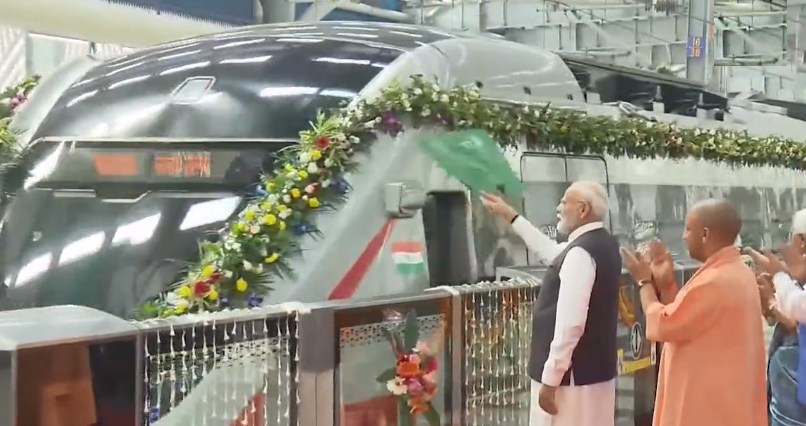
Since 2014, the BJP has set the national narrative through incessant flow of visible performance/events space missions (Chandrayaan), infrastructure (expressways, Vande Bharat trains), welfare schemes (Ujjwala, PM Awas), and decisive foreign/security moves (surgical strikes, Balakot, Op SINDOOR, Article 370 abrogation) backed by identity politics: narratives of nationalism, cultural revival, and strong leadership. These continuous achievements keep the public sphere agog with positive imagery, leaving barely any space for opposition messaging. With GST 2 unveiled, the ruling dispensation has provided massive speed to economic growth. The way the Government tackled Tariff imposition, is proof of inner strength, conviction & resilience. The US President had to literally chew his words by referring Indian PM as his friend.
Slogans with an anti-India tone but no substantive grounding will not rescue Rahul Gandhi or the Congress. A desperate opposition that relies on hollow sloganeering bereft of policy depth or constructive alternatives cannot expect to gain durable political traction. In a political climate where voters demand evidence of delivery and a credible roadmap for the future, rhetoric without substance is more likely to erode public trust than to mobilise meaningful support.
The present government is on strong feet; decisive, energetic, and nationally assertive. Unless the opposition offers a compelling counter-narrative
(economic justice, governance record, or a credible alternative leader), this comparative advantage will continue to help the ruling dispensation to translategovernance and spectacle into electoral success. Of course a flaccid opposition does not augur well for democracy. It is known fact that there are parties & sympathizers who have crucified their ideologies at the altar of lies & falsehood. Unless the opposition simultaneously repairs its organisational fabric, crafts a compelling new narrative, and strengthens its legal and institutional resilience, it will remain trapped in a self perpetuating cycle of decline.
Dr (Lt Col) Atul Tyagi, Advocate, Faculty in Practice
Atultyagi100@gmail.com, 9540652090
Author carries experience in Defence, Corporate, Education & Legal arena for
40 years.












.jpg)


Comments (1)
C
Excellent research and well written article. Rahul Gandhi and his followers should read every day and reform themselves in the best interest of india