


From a bleeding Red Corridor to the brink of a Naxal-free Bharat, India’s internal security story has been rewritten in just a decade. Under the visionary leadership of Prime Minister Narendra Modi and the strong, committed guidance of Home Minister Amit Shah, India has moved from hesitation to clarity—shrinking insurgency, restoring governance, and reclaiming regions long affected by extremist control.
Red terrorism has been a global menace, and in India, the Naxal movement turned it into a 40-year struggle that stalled progress and trapped tribal regions in fear and underdevelopment. Under the guise of ideology, it robbed generations of tribal communities of education, infrastructure, and opportunity, holding back their rightful path to growth and dignity. For years, Naxalism was framed as a natural outgrowth of poverty and exclusion—a “people’s movement” that demanded empathy more than enforcement. That narrative, often amplified in policy and academic circles, blurred a critical distinction: between addressing deprivation and justifying armed insurgency. Naxal groups thrived not by empowering communities but by controlling them—through violence, coercion, and systematic disruption of development. Schools were destroyed, roads blocked, telecom infrastructure attacked, and welfare delivery obstructed. The regions they dominated remained locked in isolation, not because the state failed to act, but because insurgency actively resisted change.
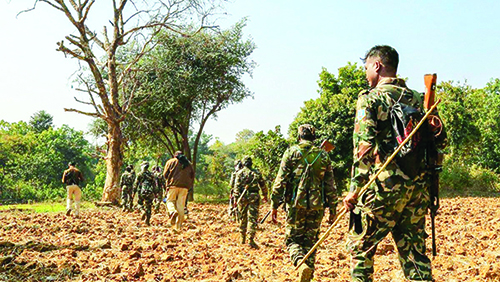
When a Naxal was killed in encounters, sections of the media often framed it as “martyrdom,” shaping a narrative of sympathy. This portrayal blurred the line between insurgency and sacrifice, reflecting a deeper bias in media storytelling of that time. Since the rise of the Naxalism in the late 1960s, Maoist violence has claimed over 12,000 lives across India. Among them, around 2,700–3,000 security personnel (police and paramilitary) have been killed in encounters and attacks. The majority victims are civilians—including 8,000+ common citizens and a large number of tribal people, who have suffered the most due to prolonged conflict in affected regions. For decades, Congress-led governments failed to decisively confront Naxalism, allowing it to spread across large parts of India due to policy paralysis and inconsistent strategy. A lack of political will, weak coordination, and delayed development efforts enabled the insurgency to persist instead of being effectively dismantled.
Before addressing armed insurgents in forests, it was equally important to dismantle the urban networks that enable them—an approach emphasized by the NaMo government. Crackdowns on illegal funding channels and suspected front organisations have been carried out through agencies like the National Investigation Agency. Strict enforcement of laws such as the Unlawful Activities (Prevention) Act has targeted both armed cadres and alleged urban support systems. At the same time, allegations regarding misuse of NGOs or networks are investigated based on evidence and due legal process. Alongside security measures, development initiatives in tribal regions aim to reduce the root causes of insurgency and ensure long-term peace.
The data now reflects the consequences of finally confronting that reality. At its peak, Left-Wing Extremism affected over 120 districts. Today that number has shrunk to around a dozen, with only a handful remaining severely affected. Civilian and security force casualties have declined significantly, breaking a cycle of violence that once seemed entrenched. This transformation is the result of a deliberate shift in strategy. The government has replaced the outdated “security versus development” debate with a coordinated approach that advances both simultaneously. Security operations are now intelligence-led, targeted, and sustained. At the same time, infrastructure and welfare delivery have expanded into areas that were once beyond administrative reach.
A defining example is Operation Black Forest which struck deep into Maoist strongholds along the Chhattisgarh–Telangana border. Security forces dismantled entrenched bases, neutralised key leaders, and recovered significant arms stockpiles. Subsequent operations in areas like Abujhmarh and Bijapur reinforce this trend. Equally telling is the surge in surrenders. With intensified operations in 2024–2025 and a broader strategy in place, over 10,000 Naxals have surrendered between 2015 and 2025, marking a significant shift in restoring security and development across the Red Corridor. This is not merely a tactical success—it is a strategic inflection point. What has changed most decisively is political clarity. The current approach leaves little room for ambiguity: violence against the state will be met firmly, even as legitimate developmental concerns are addressed with equal urgency.
At the same time, the expansion of roads, banking access, electricity, and digital connectivity has begun to transform ground realities. Welfare schemes are reaching beneficiaries directly, reducing the space for parallel power structures. A generation that once saw the state as distant is now beginning to engage with it directly. Importantly, this shift has also strengthened local governance. Panchayati institutions, grassroots administration, and last-mile service delivery are gaining ground where insurgent influence once dictated daily life. The return of the state is not just visible in security camps, but in schools reopening, markets functioning, and mobility improving.
The shrinking of the Red Corridor is not just a security achievement; it is a testament to what sustained political will, institutional coordination, and developmental focus can achieve when aligned. A decade ago, Naxalism defined India’s internal security challenge—today, decisive governance is defining its end.
(The content of this article reflects the views of writer and contributor, not necessarily those of the publisher and editor. All disputes are subject to the exclusive jurisdiction of competent courts and forums in Delhi/New Delhi only)


















Leave Your Comment