


Nana Patekar, one of Indian cinema’s most distinctive and respected performers, died on Thursday morning at the age of 75 after suffering a severe cardiac arrest at his residence in Dona Paula, Goa. He was found unconscious and rushed to Manipal Hospital, where doctors attempted to revive him through continuous CPR for nearly 45 minutes. Dr Shekhar Salkar, Chief of the Oncology Department at the hospital, said he was declared dead at around 5:20 am.
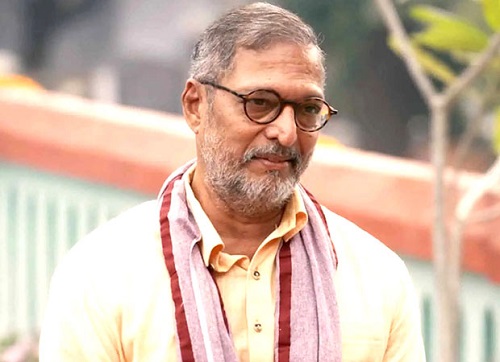
Nana Patekar's death brings to an end the journey of an actor whose presence on screen was rarely ordinary. Nana Patekar did not rely on conventional glamour or theatrical excess. His strength lay in his voice, silences, eyes and an ability to inhabit characters with remarkable emotional force. Across Hindi and Marathi cinema, he created a body of work that made him equally credible in intense dramas, socially rooted films and mainstream entertainers.
Born Vishwanath Patekar on January 1, 1951, in Murud-Janjira, Maharashtra, Nana Patekar grew up amid financial difficulties. He began working at a young age and, during his early years in Mumbai, worked as a film-poster painter. Those experiences shaped an artist who remained deeply connected with ordinary lives and their struggles.
He began his film career with Gaman in 1978 and gradually established himself through Marathi and Hindi cinema. His early journey was not an overnight success. It was marked by persistence, experimentation and a willingness to take on characters that demanded substance rather than star appeal.
The decisive breakthrough came with Parinda in 1989. His powerful performance earned him the National Film Award and a Filmfare Award, firmly establishing him as one of the country's leading actors. He subsequently delivered acclaimed performances in films including Angaar, Tirangaa, Krantiveer, Agnisakshi, Khamoshi: The Musical, Shakti, Apaharan and Raajneeti.
His performance in Krantiveer further cemented his reputation, earning him the National Film Award for Best Actor. His National Film Award-winning performances also included Parinda and Agnisakshi. He became one of the rare actors to win Filmfare recognition in the Best Actor, Best Supporting Actor and Best Villain categories.
What distinguished Nana Patekar was his range. He could portray anger, vulnerability, authority, despair and moral conflict with equal conviction. His performances often carried an unmistakable rawness, making even fictional characters appear intensely real.
His association with serious and socially relevant cinema established his credibility as an actor of depth. Yet he was never afraid to step into commercial cinema. His portrayal of Uday Shetty in Welcome revealed another side of his personality and introduced his work to a much wider popular audience. The film, along with Welcome Back, showcased his considerable comic timing and ability to make a character memorable through voice and mannerisms alone.
He also worked as a director and writer, demonstrating that his creative ambitions extended beyond acting. In Marathi cinema, particularly, his contribution reflected his continuing engagement with regional storytelling and the cultural world from which he had emerged.
His career, spanning nearly five decades, was ultimately defined by versatility rather than a single image. From intense characters in critically acclaimed films to unforgettable comic roles, Nana Patekar repeatedly demonstrated that a powerful performer could move effortlessly between artistic cinema and mainstream entertainment.
Nana Patekar's passing has left the film industry and millions of admirers mourning the loss of an actor whose individuality could not easily be replicated. His son, Malhar Patekar, confirmed his death and said the family had left for Goa. The actor had been in Goa for personal work, and his mortal remains are expected to be taken to Pune after noon.
The timing of his death has made the loss particularly poignant. Patekar had remained active in public life and cinema even in his later years. He had also made a public appearance in Goa only days before his death.
For generations of viewers, however, his legacy will remain embedded in the characters he created. Nana Patekar belonged to that rare category of performers whose voice could command a scene even before the dialogue was complete. He brought intensity without artificiality, emotion without sentimentality and humour without losing his individuality.
Indian cinema has produced many stars, but very few actors who could make audiences remember the character long after the film ended. Nana Patekar was one of them. His work will continue to live through the films he left behind—and through the distinctive cinematic language he created for himself.






















Leave Your Comment