


The World’s Largest Gathering of Devotion and Divine Feminine Power
Every year, on a radiant morning in Kerala’s capital city of Thiruvananthapuram, something extraordinary unfolds — something that defies statistics, and even imagination. Streets fall silent not because they are empty, but because they are filled with devotion. Smoke rises not from industry, but from millions of earthen hearths. The aroma of jaggery, rice, coconut, and faith fill the air.
This year, on March 3, as the sacred flame was lit at the temple hearth, I stood in the heart of the city, in Mahatma Gandhi Road, amidst an ocean of devotion and witnessed once again one of humanity’s most extraordinary spiritual spectacles — Attukal Pongala. Streets fell silent not because they were empty, but because they were filled with devotion. Smoke rose not from industry, but from millions of earthen hearths. The aroma of jaggery, rice, coconut, and faith filled the air.
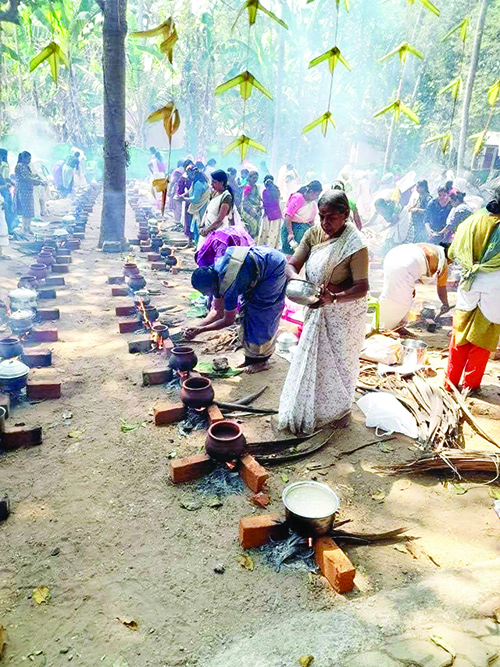
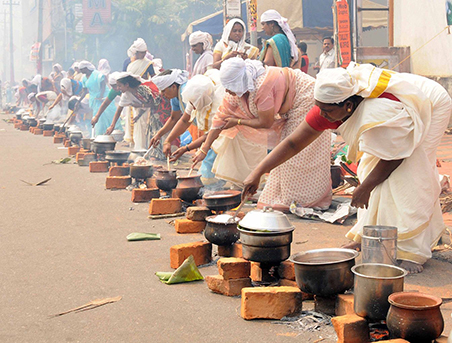
From highways and narrow lanes, from temple courtyards to government offices, women sat in long, unbroken rows, tending small fires beneath clay pots. By mid-morning today, the entire city had transformed into a vast open-air shrine — a sight both humbling and overwhelming.
This is Attukal Pongala, a festival that is not merely observed — it is experienced collectively by millions of women, making it the largest annual gathering of women anywhere in the world. Recognized by the Guinness World Records, the festival stands today as one of humanity’s most remarkable expressions of faith, feminine spirituality, and community harmony.
The Temple at the Heart of Devotion
At the centre of this immense spiritual phenomenon stands the famous Attukal Bhagavathy Temple, located barely a few kilometres from the Sree Padmanabhaswamy Temple in Thiruvananthapuram. The presiding deity, Attukal Amma, is worshipped as Bhadrakali, the fierce yet compassionate Mother Goddess, and is also associated with Kannagi, the legendary heroine of the Tamil epic Silappatikaram.
The temple’s mythology tells of Kannagi’s journey after she destroyed Madurai in righteous anger over injustice. Tradition holds that she rested at Attukal, sanctifying the place with divine presence. Over centuries, local devotion evolved into one of South India’s most powerful centres of Shakti worship.
Devotees believe Attukal Amma embodies the combined grace of Saraswati, Lakshmi, and Parvati — knowledge, prosperity, and strength united in the feminine divine.
Because of the unique prominence given to women devotees, the shrine is often lovingly called “Sabarimala for Women.”
Pongala Ritual
The word Pongala means “to boil over,” symbolizing abundance, prosperity, and the overflowing grace of the Goddess. The ritual involves cooking a sacred offering made from rice, jaggery, coconut, and plantains in earthen pots placed on temporary brick hearths.
The festival lasts ten days during the Malayalam month of Kumbham (February–March), but the ninth day — the Pongala day — is the spiritual climax.
At 9.45 AM, as the temple’s chief priest lit the Pandara Aduppu (temple hearth), a wave of anticipation passed through the waiting devotees. Within moments, the sacred flame was symbolically transmitted outward, and I watched as millions of women simultaneously lit their hearths across the city. The sight was breathtaking — a synchronized act of faith unfolding over kilometres.
For hours, they cooked in silent concentration, chanting prayers and invoking blessings for family, health, and inner peace.
By early afternoon, the rhythmic crackling of firewood, the rising columns of smoke against the bright sky, and the soft murmuring of prayers created an atmosphere that words can scarcely capture.
In an extraordinary inversion of social roles, women become the sole ritual leaders of the day. Men participate only in supportive roles such as security, administration, or priestly duties.
The World’s Largest Gathering of Women
What began centuries ago as a local temple ritual has today become a global cultural phenomenon. Attukal Pongala entered the Guinness Book of World Records in 1997 when 1.5 million women gathered for the ritual. The record was surpassed in 2009, when 2.5 million women participated, officially making it the largest congregation of women for a religious activity anywhere in the world.
In recent years, participation has crossed four million devotees according to estimates, spreading across a vast area of the city.
Today too, as I moved through different parts of the city, the scale was staggering — hearths extending across nearly every visible road, devotees occupying an area spanning more than 10–12 square kilometres. Public institutions, offices, and schools had adapted seamlessly to accommodate the massive gathering.
Unlike mass events organized through centralized planning, Pongala grows organically — powered entirely by devotion.
Thiruvananthapuram Becomes a Sacred City
Perhaps the most remarkable aspect of Attukal Pongala is not just the number of participants, but the transformation of an entire urban ecosystem.
On Pongala day, Thiruvananthapuram ceases to function as a conventional city. It becomes a living temple. Residents open their homes, courtyards, and terraces to visiting devotees. Shops distribute drinking water and food free of cost. Government departments coordinate transportation, sanitation, and healthcare on an unprecedented scale.
Authorities deploy hundreds of buses, temporary water facilities, medical teams, and safety personnel to support pilgrims arriving from across Kerala and beyond. Even traffic patterns surrender to devotion. Highways turn into prayer corridors. Office compounds become cooking spaces. Railway stations overflow with women carrying clay pots, rice, and offerings.
Seated on a wooden chair on the open terrace of a friend’s house, as I gazed upon the endless expanse of flickering hearths below, I felt deeply that the city was not simply hosting the festival — it had offered itself wholly and reverently at the feet of the Goddess.A Festival Beyond Barriers
One of the most striking features of Attukal Pongala is its inclusivity. Women from all backgrounds — rural and urban, wealthy and poor, educated professionals and homemakers — sit side by side without hierarchy. Caste, class, language, and social divisions dissolve in shared devotion.
Participants include students and corporate executives, agricultural workers and artists, as well as politicians, judges, and daily wage earners. The ritual creates a rare spiritual democracy where every woman becomes equal before the Goddess. Observers often describe the sight as a “river of humanity,” unified not by identity but by faith.
Devotion Without Borders
While deeply rooted in Kerala’s cultural soil, Attukal Pongala has transcended geography.
Women travel from across India — Tamil Nadu, Karnataka, Andhra Pradesh, Maharashtra, and even northern states — to participate. Increasingly, foreign devotees also join the ritual, drawn by curiosity, spirituality, and the festival’s reputation as a celebration of feminine energy.
Even today, I noticed women conversing in multiple languages, some visiting the city for the very first time, yet seamlessly blending into the devotional atmosphere.
Visitors from Europe, Southeast Asia, and North America have participated alongside local devotees, often guided by Kerala diaspora communities.
For many foreign participants, Pongala represents something rare in modern religious practice: a mass spiritual event led entirely by women, centered on nurturing rather than spectacle.
The festival thus becomes both pilgrimage and cultural dialogue — an encounter between tradition and global spirituality.
The Power of Collective Feminine Spirituality
Anthropologists and cultural scholars frequently cite Attukal Pongala as one of the world’s most powerful expressions of feminine sacred space. Unlike festivals where women participate within structures dominated by male priests or institutions, Pongala places women at the center of ritual authority. The act of cooking — traditionally domestic — becomes sacred and public. Everyday life transforms into worship.
For many participants, the experience is deeply personal: Mothers pray for their children. Young women seek guidance for life decisions.
Elderly devotees offer gratitude for blessings received. The Goddess, devotees believe, sits among them as one of the women — sharing their joys and struggles.
Ritual, Symbolism and Sacred Ecology
The ritual itself carries layered symbolism. The clay pot represents the human body. The fire symbolizes inner transformation. The boiling rice signifies abundance and fulfilment. When the offering overflows, it is seen as a sign of divine grace — prosperity spilling into life.
Around 2.20 PM, when the temple priests sprinkled holy water and showered flowers over the countless offerings, a profound silence descended. I witnessed millions rise together, lifting their pots in prayer. It was an intensely moving moment — a collective gesture of gratitude, surrender, and fulfillment.
An Administrative Miracle
Behind the spiritual grandeur lies an extraordinary logistical achievement. Each year, government agencies coordinate sanitation drives, food safety measures, medical services, and crowd management to ensure smooth conduct of the event. Temporary water connections, health camps, and emergency services operate continuously throughout the festival period.
The seamless coordination between citizens and administration has become a model for managing large gatherings worldwide. Yet, despite the planning, devotees often say the true organizer is the Goddess herself.
Economic and Cultural Impact
Attukal Pongala also generates significant cultural and economic activity. Local artisans produce millions of earthen pots. Vendors sell traditional ingredients, flowers, and ritual items. Tourism increases dramatically, introducing visitors to Kerala’s spiritual heritage.
Hotels, homestays, and households alike welcome pilgrims, reinforcing Kerala’s long-standing tradition of hospitality.
More importantly, the festival strengthens cultural memory — transmitting rituals, songs, and beliefs from one generation to another. Today too I saw grandmothers patiently guiding young girls on how to prepare the hearth and measure the rice — a quiet passing on of tradition.
Faith in the Modern Age
In an era dominated by technology and urban isolation, Attukal Pongala offers a powerful reminder of collective belonging. There are no giant screens or celebrity performances. No commercialization defines the core ritual. What sustains the festival is faith — quiet, personal, and deeply rooted. Women who return year after year often describe the experience not as obligation but as renewal. For them, Pongala is prayer, pilgrimage, sisterhood, and spiritual liberation.
A Living Symbol of India’s Civilizational Spirit
India’s spiritual traditions have long celebrated the divine feminine — from Durga and Kali to Meenakshi and Kamakhya. Attukal Pongala stands as one of the most vibrant contemporary expressions of that ancient reverence.
Here, spirituality is not confined to temple walls. It spills into public space, reshaping urban life and human relationships. The festival demonstrates how tradition can remain alive without losing authenticity — adapting to modern realities while preserving sacred meaning.
Today’s experience reaffirmed for me that this is not merely a regional celebration, but a living embodiment of India’s enduring civilizational ethos — where faith, community, and reverence for the feminine divine continue to shape collective life.
When Millions Become One
As the sacred fires slowly faded this evening and devotees began carrying home their blessed offerings, I watched Thiruvananthapuram gradually return to its routine rhythm. Roads reopened. Traffic resumed. Yet something intangible lingered in the air.
For one day, millions of women sat together as equals, united in prayer. A modern city surrendered to devotion. Faith transcended boundaries of nationality, language, and status.
Having personally witnessed today’s Pongala from the lighting of the flame at 9.45 AM to the sanctification at 2.20 PM, I can say without hesitation that Attukal Pongala is not merely a festival — it is a living testament to the enduring spiritual power of India’s civilizational soul.
In the rising smoke of millions of hearths, one witnesses a timeless truth of India’s civilization: when devotion overflows, it transforms not just individuals, but entire cities — and perhaps, the world itself.
1. World’s Largest Gathering of Women: Attukal Pongala holds the distinction of being the largest annual congregation of women in the world, drawing millions of devotees every year.
2. Guinness World Record Holder: The festival entered the Guinness Book of World Records in 1997 and surpassed its own record in 2009 with over 2.5 million women participants.
3. A City Turns into a Temple: On Pongala day, almost the entire city of Thiruvananthapuram transforms into a sacred space, with hearths stretching across roads, courtyards, and public institutions.
4. Women Lead the Ritual: Unlike most religious ceremonies, Pongala is performed exclusively by women, making it a unique celebration of feminine spiritual power.
5. Meaning of ‘Pongala’: The word Pongala means “to boil over,” symbolizing prosperity, abundance, and the overflowing blessings of the Goddess.
6. Sacred Offering in Clay Pots: Devotees prepare a sweet offering of rice, jaggery, coconut, and plantains in earthen pots over temporary brick stoves.
7. Linked to the Epic Silappatikaram: The presiding deity, Attukal Bhagavathy, is associated with Kannagi, the legendary heroine of the Tamil epic Silappatikaram.
8. International Participation: Women from across India and many foreign countries participate, making the festival a global spiritual gathering.
9. Massive Civic Coordination: Thousands of volunteers and government agencies work together to provide water, sanitation, medical aid, and transport for devotees.
10. Known as ‘Sabarimala for Women’: Because of its immense female participation and spiritual significance, the Attukal Temple is often called the “Sabarimala of Women.”
In a rapidly changing world marked by urban isolation, cultural fragmentation, and growing social anxieties, Attukal Pongala stands as a powerful reminder of India’s enduring civilizational strength — rooted in faith, community, and shared cultural identity.
Attukal Pongala transcends regional, linguistic, caste, and economic divisions. Women from every corner of Kerala and across India sit together in prayer, united solely by devotion to the Divine Mother. The festival demonstrates how ancient Hindu traditions continue to create collective spaces of harmony and shared spiritual experience, reinforcing a sense of cultural continuity and unity.
At a time when conversations around women’s empowerment often revolve only around modern institutional frameworks, Pongala presents a uniquely Indian model of empowerment emerging from spiritual tradition itself. For one sacred day, women become the sole custodians of ritual space and spiritual authority.
During Pongala, an extraordinary transformation occurs: within nearly a 25-kilometre radius of the Attukal Temple, the ritual space belongs entirely to women devotees. Men voluntarily step aside, participating only in supportive or administrative roles. Roads, public grounds, and neighbourhoods become a vast sacred arena governed by feminine devotion — a rare example in the world where religious space is consciously centered around women.
Millions cooking together in synchronised devotion creates a powerful psychological and spiritual solidarity. The ritual transforms an everyday domestic act into a sacred public expression, affirming dignity, resilience, and shared purpose among women.
Rather than fading under modernity, Pongala demonstrates how ancient practices can adapt and flourish in contemporary urban life. Technology, governance, and tradition coexist seamlessly, proving that spiritual heritage remains relevant to
modern society.
Perhaps the festival’s greatest significance lies in its message: unity can arise not from uniformity but from shared reverence. In the rising flames of countless hearths, Attukal Pongala reflects a cultural renaissance — one where devotion, identity, and empowerment merge into a living expression of India’s timeless spiritual ethos
.
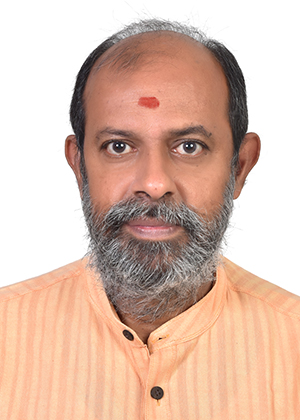
Pradeep Krishnan
(The content of this article reflects the views of writer and contributor, not necessarily those of the publisher and editor. All disputes are subject to the exclusive jurisdiction of competent courts and forums in Delhi/New Delhi only)


















Leave Your Comment