


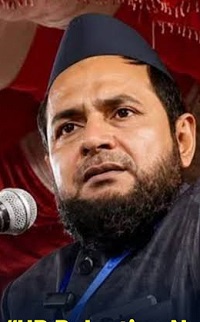
A statement attributed to Maulana Jarjis at a public gathering in Uttar Pradesh's Auraiya district has triggered a political controversy, bringing religious rhetoric and electoral politics into sharp focus. His reported appeal to unite the community to prevent the return of the Yogi Adityanath-led government, accompanied by a warning that Uttar Pradesh could become like Palestine, has drawn attention to the language being used in the state's political discourse.
The political atmosphere in Uttar Pradesh has witnessed a fresh flashpoint following remarks attributed to Maulana Jarjis, which have reportedly gone viral on social media. Speaking at an event in Auraiya on October 29, he allegedly called upon members of his community to unite and work towards preventing the Yogi Adityanath government from returning to power. What has particularly intensified the controversy is his reported warning that Uttar Pradesh could become like Palestine if the community failed to come together.
The statement has attracted attention because it goes beyond a conventional appeal for political participation and invokes one of the world's most sensitive and prolonged geopolitical conflicts. By drawing a comparison between Uttar Pradesh and Palestine, Maulana Jarjis has reportedly sought to underline what he described as the need for community solidarity. However, the choice of comparison has raised questions about the appropriateness of invoking an international conflict in the context of state-level electoral politics.
The remarks also underline the increasingly visible role of identity-based mobilisation in India's political landscape. Appeals made by religious and community leaders can influence public conversations, particularly when they are linked directly to electoral outcomes. While every citizen and community has the democratic right to express political preferences, the nature of the language employed by influential public figures becomes equally important. Political disagreement is an integral part of democracy, but invoking fear, insecurity or international conflicts can potentially deepen social divisions rather than encourage constructive political debate.
The timing of the remarks is another significant aspect. With political parties gradually preparing for the next electoral battle in Uttar Pradesh, statements that combine religious identity with direct appeals against an incumbent government are likely to attract considerable political attention. The Yogi Adityanath government has remained a central figure in the state's political discourse, with supporters highlighting its governance and law-and-order record, while critics continue to question various aspects of its administration. In such an environment, statements perceived as attempts at community-based political mobilisation can quickly become contentious.
















Leave Your Comment