


उस गली ने ये सुन के सब्र किया, जाने वाले यहाँ के थे ही नहीं - this couplet by famous Urdu poet Jaun Elia perhaps perfectly describes the current sombre mood in the Congress as it watches its loyalists leave the big old party one after another while the logging outs does not seem to stop anytime soon.
The hand (party sign) of Congress that once was considered a support (Congress ka Haath, Aapke Saath), is off-late suggesting a different meaning - Tata Bye Bye, as a large number prominent and known faces have decided to dump the party citing various reasons including ‘Lack of Democracy’, non-inclusive Centralised Decision making where not many have the freedom to air their opinion.
Thanks to the absence of internal democracy in the Congress, the grand old party is caught in a vicious cycle where its prominent leaders are leaving the ship even as the party gears up to put up a brave front in the Lok Sabha elections, while there seems no enthusiasm left in the intellectual class to represent the Nehru-Gandhi family controlled political party. Though political landscapes are dynamic, and such shifts are not uncommon in the life cycle of any political organisation, this process seems to have stayed with the Congress for little too long.

The perception or reality of a lack of internal democracy within the Congress perhaps is a significant factor driving leaders to leave. What internal democracy means is the healthy environment where the party members, including leaders, have a meaningful say in decision-making processes, candidate selection, policy formulation, and overall party direction.
The Congress has faced criticism for its leadership crisis, with some arguing that the party lacks strong and decisive leadership. There have been debates about the effectiveness of the leadership in terms of strategy, communication, and addressing internal party issues. Factionalism within the party has been a longstanding issue, with different groups vying for power and influence. This internal discord is hindering the party's cohesion and effectiveness in presenting a unified front. As it prepares for elections many within the party are questioning its electoral strategy, campaign effectiveness, and ability to connect with voters, especially younger demographics and those in urban areas.
There have been criticisms about the lack of a clear ideological direction in the Congress party, with some perceiving it as wavering on key issues and failing to offer a distinct alternative vision to voters. The prominence of certain political families within the Congress, such as the Gandhis, has led to accusations of dynastic politics. Critics argue that this can stifle internal democracy and hinder the rise of new leadership talent within the party.
When leaders perceive that their voices are not heard, their contributions are undervalued, or the party lacks mechanisms for meaningful participation and accountability, they may choose to leave in search of a more democratic and inclusive political environment. In such cases, the absence of internal democracy can indeed be a driving force behind their decision to seek alternatives outside the party.

The latest to be expelled or leave the bandwagon is Sanjay Nirupam, who was expelled from the Congress for a period of six years after he questioned the top leadership over seat-sharing talks with Shiv Sena (UBT). Nirupam attacked the state Congress leadership after the Uddhav Thackeray-led party declared its candidates for 4 out of 6 Lok Sabha seats in Mumbai, including the Mumbai North West seat, perhaps he was contemplating to fight from the seat.
Gourav Vallabh, a prominent Congress spokesperson known for his expertise in finance and economy, resigned from the party citing its perceived lack of direction and failure to effectively communicate its policies and manifesto. In his resignation letter addressed to Congress chief Mallikarjun Kharge, Vallabh highlighted concerns about the party’s stance on issues such as caste census and its perceived bias against the Hindu community, stating that the party seemed to be moving away from its foundational principles and losing touch with the expectations of ‘New India’.
Similar sentiments were echoed by Boxer Vijender Singh, who quit Congress ahead of the Lok Sabha election, stated that he switched sides noting that the Congress leadership is “not able to work properly and they (Congress) do not understand what the people want, and the message the common people want to convey.” The Olympic medalist said, “We would like to do a lot of things for the nation that we cannot do, remaining within the Congress.”
In another setback, the party's former Bihar state president Anil Sharma quit the party, claiming that it was stuck in a "disastrous" partnership with the RJD. He also voiced disgust over the recent induction, "with much fanfare", of controversial former MP Rajesh Ranjan alias Pappu Yadav. Sharma also accused the party of double standards.
Sharma alleged that Congress was claiming that democracy was in danger but there was no democracy in the party itself. “Even Congress's duly elected national president cannot take any decision without the consent of Rahul Gandhi or his close aide KC Venugopal.” Sharma is the fourth former Bihar Congress president to have quit the party in nearly a decade.
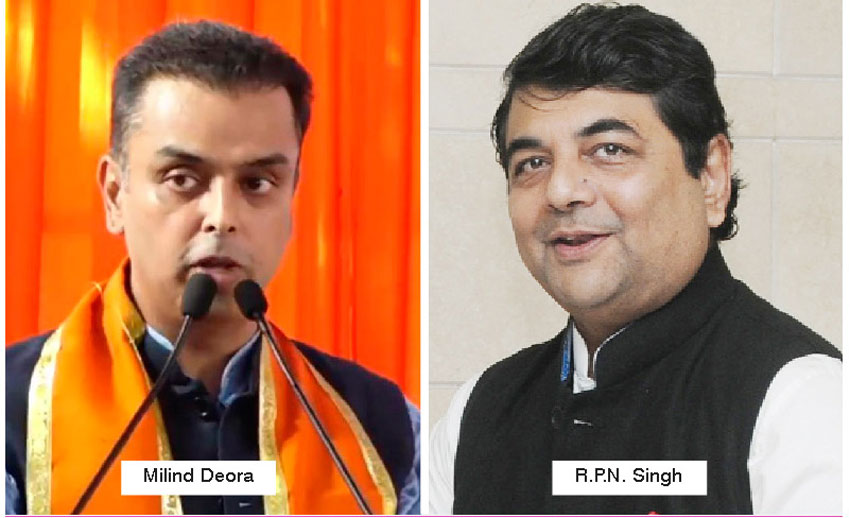
However, these are not isolated incidents when prominent leaders have decided to raise their voice following which they were either shown the door or they felt it was not worth staying back in the party they had served and seen it growing in the past. The trend, however, should not come as a surprise for Congress, which has see a series of exits including that of Milind Deora, Hardik Patel, Ashwani Kumar, Sunil Jakhar, RPN Singh, Jyotiraditya Scindia, Jitin Prasada, Alpesh Thakor, Anil Antony among others.
Milind Deora
Former Union Minister Milind Deora, son of Congress veteran Murli Deora, resigned from the Congress.
Hardik Patel
Gujarat Patidar leader Hardik Patel quit the Congress in May 2022.
Ashwani Kumar
Ashwani Kumar, a former Union minister, resigned from the Congress in February 2022, just days before Punjab went to polls.
Sunil Jakhar
Sunil Jakhar, who had headed the Punjab Congress unit, quit the party in 2022 after the leadership show caused him for criticising then chief minister Charanjit Singh Channi.
RPN Singh
Former Union minister RPN Singh quit the Congress in January 2022.
Jyotiraditya Scindia
Jyotiraditya Scindia quit the Congress and joined the BJP in 2020.
Jitin Prasada
Jitin Prasada, a former Union minister who was once close to Rahul Gandhi, crossed over to the BJP in 2021.
Alpesh Thakor
Alpesh Thakor, a former Congress MLA, quit the party in July 2019.
Anil Antony
Anil Antony, son of Congress veteran AK Antony, quit the party in January last year.
Interestingly the sentiment is not a phenomenon among senior party leaders, similar suffocation is felt by even lower-ranking leaders, where they feel that they have limited opportunities to participate in party activities, debates, or policy discussions, it can create a sense of alienation and disconnect.
The country prepares for its mega political event - the Lok Sabha polls - it is expected from a matured party as Congress that the process of seat allocation and seat sharing be a transparent process or at least follow a standard operating procedure. However, when the process is perceived as opaque or biased, with decisions made based on factors other than merit or popular support among party members, it leads to resentment and internal strife. Which is exactly what is happening inside the boundaries of Indian National Congress’ - Indira House.
People in the know of things say that the party leadership has consistently failed to address grievances or concerns raised by members in a transparent and fair manner, and this attitude is now eroding trust and confidence in the party's internal mechanisms. The party still believes in archaic dynastic politics where leadership positions are dominated by individuals from a particular family or lineage. Which is acting contrary to strengthen the party and in fact creating barriers to entry for other members.
In most of the states where the party clearly dominated state and lok sabha elections such as Uttar Pradesh, Maharashtra, Madhya Pradesh, Karnataka, Rajasthan and others, the party is not even at the second place and has slipped so low that it is now struggling to build cadre and gasping for existence. Weak party structures, dysfunctional local units, actually hinders the development of grassroots democracy and accountability within the party.
The Congress does not seem to learn from its mistakes and continues to extend party positions or resources based on loyalty to individuals rather than merit or democratic principles, it is undermining internal cohesion and incentivises sycophancy over genuine participation.
Just after the general election in 2019, thinkers within the Congress got together and formed a group that was termed G23. The group wrote a letter to the central leadership asking for stronger leadership and giving responsibility to strong leaders in the party. The self-proclaimed reformists within the Congress stepped up their demands and questioned the leadership as the grand old party is struggling with high-profile exits and crises in State units.
Instead of listening and paying heed to what senior leaders within the party were wanting to contribute in strengthening the party, the G-23 members were lampooned by the party loyalists after their letter became public, which resulted in disintegration and resignations of Azad and Kapil Sibal. However, Shashi Tharoor, M Veerappa Moily and Mukul Wasnik made peace with the high-command.
Interestingly it is not the opposition which is vocal about the rational thinking within the party, even its party workers are disgruntled with the functioning of the party. Some of the key points that members cite are - ever increasing disagreements within the party over leadership style, decision-making processes, and poor electoral performance in elections is instilling frustration among party members, prompting some to seek alternative political avenues.
Many insiders The Congress follows a ‘Centralised Decision Making Pattern’, where the decision-making power is concentrated in the hands of a few top leaders without extending much scope for the party members to share their input in key policies and decision concerning the party, which has the potential to create an atmosphere of authoritarianism and disenfranchisement. People criticise it for its organisational weaknesses at the grassroots level, with concerns about the party's ability to mobilise support, conduct effective ground campaigns, and maintain a presence in rural and semi-urban areas.
The party is perceived to be declining in popularity and losing relevance, while some leaders feel sidelined or overlooked within the party hierarchy. Then there is no clear ideology within the party and there are frequent shifts in personal ideology or perception of the party's ideology.
These are just a few potential reasons, and often, a combination of factors contributes to leaders' decisions to leave a political party. It is yet to be seen as to when the Central Leadership will apply itself and invite thinkers to advise them on the way forward - even as they fight for a lost cause in 2024.

By Alok Sharma
(The content of this article reflects the views of writers and contributors, not necessarily those of the publisher and editor. All disputes are subject to the exclusive jurisdiction of competent courts and forums in Delhi/New Delhi only)




















Leave Your Comment