


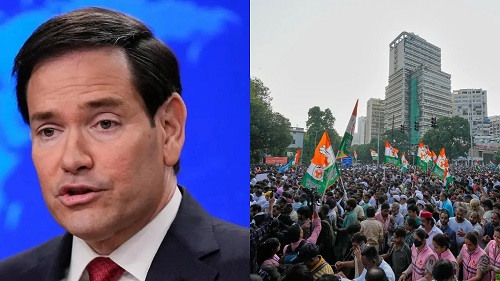
US Secretary of State Marco Rubio’s decision to describe the protests led by the Cockroach Janta Party (CJP) against Chief Election Commissioner Gyanesh Kumar as India’s domestic political matter has added a diplomatic dimension to the controversy. His sharp dismissal of UN experts criticising the police response has also highlighted a larger debate: where should international human rights scrutiny end, and where should respect for national sovereignty begin? India’s response reflects its objection to what it considers selective targeting.
The remarks by Marco Rubio offer an important perspective on the international debate surrounding domestic political disputes. By declining to comment on the CJP-led demonstrations against Chief Election Commissioner Gyanesh Kumar, the US secretary of state avoided taking sides in a politically sensitive Indian controversy. His description of UN experts as an “oxymoron”, however, went beyond diplomatic restraint and expressed scepticism about the authority and credibility of international human rights commentary.
Rubio’s central argument was straightforward: India is a democracy with an electoral system and its own political processes, and its internal political disagreements should not automatically become subjects of foreign commentary. Referring to protests in the United States, he suggested that demonstrations are a normal feature of democratic life rather than grounds for external intervention.
His position is significant because it comes from the administration of a country that frequently comments on democratic practices and human rights around the world. It raises a question relevant to international diplomacy: should governments distinguish between legitimate international scrutiny and commentary that risks oversimplifying complicated domestic political situations?
For India, the answer has consistently rested on sovereignty, constitutional institutions and the principle of equal treatment among nations. New Delhi has maintained that international human rights mechanisms should operate through credible evidence, constructive engagement and established procedures rather than public accusations that may carry political implications.
The immediate controversy arose after more than 20 UN human rights experts expressed concern over what they described as a repeatedly heavy-handed police response to youth-led demonstrations in Delhi. They urged Indian authorities to protect peaceful protest and ensure accountability for alleged human rights violations during the demonstrations and earlier incidents.
Such criticism places the conduct of the police at the centre of the debate. The experts’ concerns relate not merely to the political identity of the protesters but to the broader principles of freedom of expression, peaceful assembly and accountability in law enforcement.
India, however, has objected to what it views as selective scrutiny of its domestic affairs.
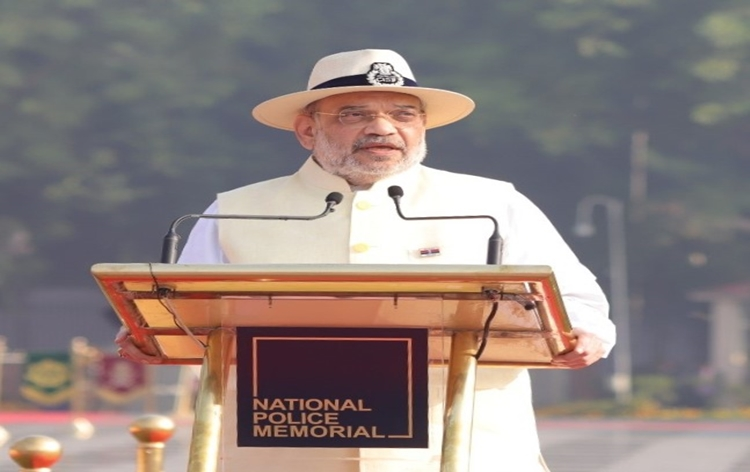
Speaking in Geneva during a discussion concerning the Working Group on Enforced Disappearances, Barkha Tamrakar, deputy secretary in the Ministry of External Affairs, defended India's constitutional and institutional safeguards for addressing allegations of human rights violations. She argued that human rights should not become instruments of political pressure or selective country targeting.
Tamrakar also emphasised India's willingness to examine specific cases supported by proper documentation through established channels. At the same time, she rejected the use of unverified allegations, incomplete statistics or material that did not contain a country-specific observation on India to create a negative portrayal of the country.
India's objection raises a legitimate question about consistency in international human rights advocacy. If international mechanisms are to command the confidence of states, their assessments must be evidence-based, transparent and guided by uniform standards. Countries should not be singled out merely because their political systems, policies or geopolitical positions differ from those favoured by influential international actors.
Nevertheless, the argument against selective scrutiny does not, by itself, settle the merits of the specific allegations raised by UN experts. Those allegations must be evaluated on their evidence, just as India's institutional safeguards must be assessed on their effectiveness in practice.





















Leave Your Comment