


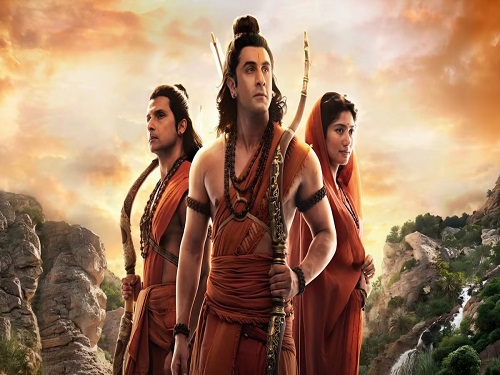
The Supreme Court has declined to entertain a request for an urgent hearing on a petition questioning the portrayal of facts in the film Ramayana, making it clear that judicial time should not be consumed by disagreements over cinematic interpretations of an epic. When the petitioner's counsel pressed for an early hearing, the Chief Justice of India observed that the film had already been released and audiences interested in watching it had already had the opportunity.
The Supreme Court has refused to grant an urgent hearing to a petition challenging the film Ramayana over its alleged misrepresentation of facts from the epic. The matter came before the court after the petitioner's lawyer pointed out that the plea, although registered on November 23, had not yet been listed for hearing.
Seeking the court's early intervention, the lawyer argued that the film contained several factual inaccuracies and did not present the epic in the manner it should have been portrayed. The petitioner apparently wanted the court to examine the objections without further delay.
However, the Chief Justice of India questioned the urgency of the matter, observing that the film had already been released and those who wished to watch it had already done so. The observation indicated the court's reluctance to treat the petition as a matter requiring immediate judicial attention.
During the exchange, Justice Bagchi offered a broader perspective on the issue of artistic interpretation. He remarked that the filmmakers had created the film according to their own understanding of the epic. If the petitioner held a different view of the Ramayana, there was nothing to prevent them from producing a film based on their interpretation.
The observation underlined the space available for different perspectives when ancient epics and cultural narratives are adapted for contemporary audiences. A cinematic representation may not necessarily satisfy every section of viewers, particularly when the subject involves religious traditions, historical interpretations and deeply rooted cultural beliefs.
Justice Bagchi also questioned the need to consume the court's valuable time over a disagreement of this nature. His remarks suggested that differences over how an epic is interpreted or presented should not automatically become grounds for urgent judicial intervention.
The exchange highlights a larger debate surrounding the adaptation of India's literary and religious heritage for cinema. The Ramayana, with its numerous versions and interpretations across regions and traditions, has inspired generations of writers, artists and filmmakers. Different creative approaches have often generated discussion over the manner in which its characters, events and central messages are portrayed.
While viewers and individuals remain entitled to express disagreement with a film's content, the court's observations indicate that creative differences alone do not necessarily justify an urgent hearing.
The Supreme Court's refusal to prioritise the petition therefore sends a message about the limits of judicial intervention in matters involving artistic expression and competing interpretations of cultural narratives.





















Leave Your Comment