


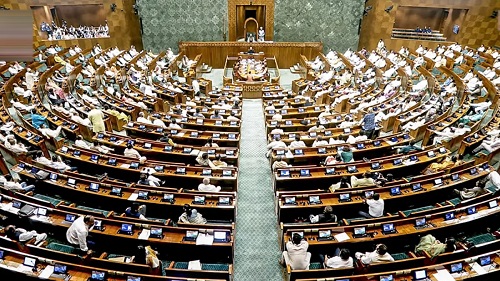
The Lok Sabha on Wednesday passed the Public Examination (Prevention of Unfair Means) Amendment Bill, 2026 amid repeated disruptions over Leader of Opposition Rahul Gandhi's allegations against Union Home Minister Amit Shah regarding the police action during the July 20 "Sansad Chalo" protest by students. The contentious debate saw sharp exchanges between the ruling NDA and the Opposition, with the government rejecting Gandhi's claims as "factually incorrect" while defending the proposed legislation aimed at cracking down on examination paper leaks.
The amendment bill was introduced by the Centre on Monday, days after nationwide protests over the NEET controversy culminated in the resignation of former Union Education Minister Dharmendra Pradhan. The legislation seeks to strengthen the existing Public Examination (Prevention of Unfair Means) Act by imposing stricter punishments on individuals involved in examination paper leaks and organised cheating. Under the amended law, offenders could face imprisonment of up to 10 years and fines of up to Rs 50 lakh.
The government has maintained that the tougher law is necessary to restore public confidence in competitive examinations and deter organised examination fraud. The Opposition, while supporting stronger measures against paper leaks, continued to target the government over its handling of the NEET controversy, alleging systemic failures that led to the crisis.
The Monsoon Session has witnessed repeated disruptions since July 20, with Opposition parties demanding accountability over the NEET paper leak and pressing the government on issues related to student protests. Legislative business during the session has largely been confined to the introduction and passage of a limited number of bills due to frequent adjournments.
The political temperature escalated further during the debate when Rahul Gandhi accused Amit Shah of authorising the use of force against students participating in the Cockroach Janta Party's (CJP) protest at Delhi's Jantar Mantar. Referring to the police action during the demonstration, Gandhi alleged that the Home Minister had ordered the firing of pellet guns on the protesters.
"The Home Minister ordered the shooting of our students. He put pellets into the blood of our students. He ordered the students of India to be shot," Gandhi said in the Lok Sabha. He further argued that the use of force against demonstrators could only be authorised by a minister or the Prime Minister.
The allegations triggered immediate protests from the Treasury benches. Parliamentary Affairs Minister Kiren Rijiju demanded that Gandhi substantiate his claims with evidence, while BJP and NDA members accused the Congress leader of making baseless and misleading allegations against the Home Minister. The uproar led to sloganeering and brief disruptions in the House.
Lok Sabha Speaker Om Birla intervened during the exchange, reminding members that serious allegations made on the floor of Parliament must be supported by evidence. Treasury bench members also demanded that Gandhi apologise for his remarks against the Home Minister.
Replying to the debate, Union Minister Jitendra Singh categorically rejected the allegations, stating that no bullets had been fired during the student protest and that no order to open fire had been issued. He asserted that only tear gas had been used to disperse demonstrators and clarified that, under established procedures, any decision regarding the use of force rests with the district magistrate and not with a Union minister.




















Leave Your Comment