


The author is no expert on defence matters and has no technical know-how to analyse the power of the Air Force. Yet being an Indian citizen, whose pride is hurt, and who is aggrieved by the decisions of political leadership in 1962, I am writing about what an ordinary Indian feels about 1962 as well as today and how the two feelings differ.
China's push to expand its global military footprint is poking India now and then but has never allowed it to heal its wound. 1962 was followed by clashes at Nathula in 1967 and not a single year passes when India is not being challenged. the most recent is the issue of a new Chinese map claiming Arunachal Pradesh as Chinese territory.
One may ask,” Why does an article on the Indian Air Force discuss a war fought by the army”. To answer this question a story needs to be shared.
A rich man’s house was plundered by the robbers, and every villager was pouring sympathy but a small child asked the rich man, “Uncle, but you have a gun also” The rich man answered with pride, “Luckily they could not get it as it was safe in our basement”. Here I am the child and the ‘Indian Air Force’ is the gun which was not used by the then Prime Minister.
Indian political leadership left its soldiers and Assam at the mercy of God. The most painful was the non-remorseful leadership which said in parliament, “It is a territory where not even a blade of grass grows, about 17,000 feet high. Ladakh is a useless uninhabitable land. Not a blade of grass grows there. We did not even know where it was”, Prime Minister Nehru had said. To which Mahavir Tyagi in Rajya Sabha while angrily pointing to his bald head had quipped “I am bald, does that mean I will abandon my head?”
(December 5, 1961, during the debate on Aksai Chin in Rajya Sabha.)
An investigative commission set up by General JN Chaudhary, which conducted an Operations Review of the Indian Army's operation during the Sino-Indian War of 1962. Two senior Lieutenant-General T.B Henderson brooks and Brigadier Premendra Singh Bhagat, a Victoria cross recipient and a former Director of Military Intelligence investigated and submitted the report. It was never published, however, some part of it was released by Australian journalist and India correspondent of the London Times, Neville Maxwell on his website.
This commission had two handicaps
• It has no power to review the actions of political leadership.
• The report was never made public for debate.
The worst part is that the person chosen to have the confidential report used it to project India as the aggressor in his book ‘India’s China War’ and no authentic documented effort has been made to refute it. As a result, the nation despite feeling wounded and hurt is not able to do much to recover the lost area. The most painful is seeking a visa to visit Man Sarovar abode of lord Shiva which was freely visited by Indian pilgrims for thousands of years. Enough details are available in the memoirs of many saints including that of Guru Nanak Dev Ji who visited the place during his famous Udasi pilgrimage. Gurudwara Nanak Lama in Sikkim is a standing monument to this visit.
The weak leadership did not allow the Indian Air Force to participate in the 1962 war.
The Indian Airforce has a glorious past and Indian pilots trained by the British Airforce were far superior. Even though the Chinese Airforce had numbers on its side but its infrastructure was poor in Tibet and they were too occupied with the Taiwan and Korea border at that time. Airforce leadership has never forgotten this pain and its top brass had written enough to make their point clear. An elaborate article written by Air Vice Marshal AK Tiwary in Indian Defence Journal Issue Vol 21.3 Jul-Sep 2006 is an eye-opener. A layman like this author could make out how frustrating it had been for them to sit helplessly despite having the strength to fight. The gist of this article is:
• The prime minister selected the wrong advisers which included, Prof PMS Blacket, Director Intelligence Bureau BN Mullick, and American Ambassador John K Galbraith these people had little knowledge about Chinese strength and overestimated the capability and advised against the use of air force in 1962 war claiming that China will bomb cities like Chennai Kanpur and Calcutta. Can any sane person make these assumptions without consulting the chief of air staff, Indian leadership did the same as a result they wrongly knew what China could do but did not have an iota of information about what their own Indian Airforce could have done, it would have destroyed supply lines, airstrips and would have turned the tables on Chinese making it a great Chinese debacle which is now a matter of assumption only.
• It quotes Air Marshal Raghavendran “The debacle, partly due to the non-use of air power but more so due to our foreign policy blindness as well as emasculation of the Army by playing `favourites’ by Krishna Menon, interfering with the promotion and posting of senior officers in the Army, ordering a totally unprepared army to `throw out the Chinese’ and above all insisting on giving the command of the operations to a totally unqualified and inexperienced `favourite’ General were all the work of the political leaders and the blame must go to them only. Most important is the conclusion
• IAF could carry far more bomb load than the Chinese air force over targets on the battlefield.
• Could have attacked the city of Lhasa, Kunming and Chengdu.
• had more modern and capable aircraft compared to the Chinese.
• infrastructure, though not optimum, was far better than the Chinese Air Force.
• could have attacked the Chinese airfields and rendered them unusable. Thus, winning the command of the air over the contested area.
• The Chinese Air Force was deployed in east China to counter the major threat from Taiwan and the USAF, was in Japan, Korea, the Philippines etc.
• IAF leadership was quite confident about using combat air to its advantage and advised the political leadership at every possible opportunity. It is a fact that Canberra flew 22 photographic reconnaissance missions between Oct 13 and Nov 11, 1962, during the conflict period, over Aksai Chin, Towang, Se la and Walong areas. Some of the sorties were at 300 feet above Chinese concentrations. No damage to the Canberras from Chinese anti-aircraft artillery was proof showing the poor level of Chinese capabilities.
Present leadership and Indian Air Force performance today
The change in attitude of leadership towards Airforce preparedness is a pleasant surprise. A.K Anthony the defence minister during UPA said,” No money this fiscal for Rafale jets”. This was not only abandoning the responsibility of defending India but It was a U-turn from the ideology propagated by late PM Lal Bahadur Shastri who called upon the people of India to fast once a week but not to compromise their self-respect. Such utterances embolden our neighbours to play havoc on national security. The author wants to ask a few questions to expose the decision.
• What has changed because of the change of government, how has India purchased Rafale fighters now?
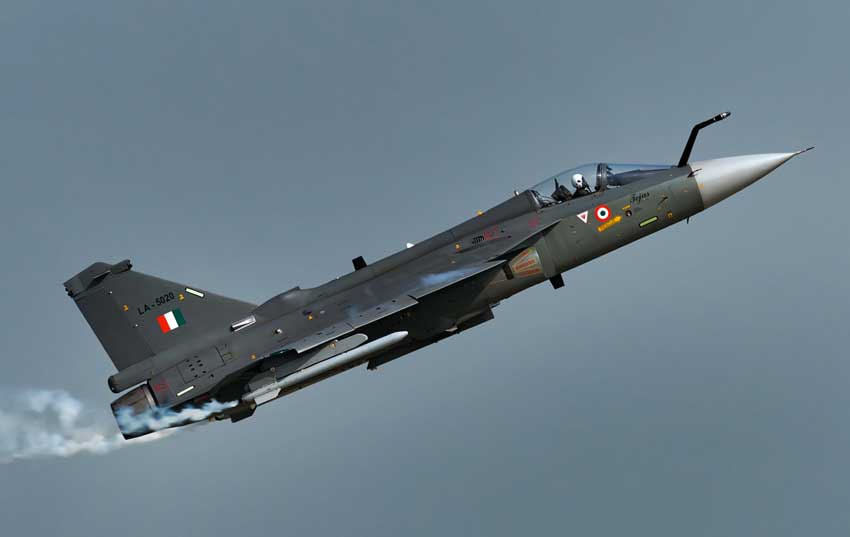
• How HAL is able to deliver TEJAS the light fighter aircraft now?
• How HAL has been turned profitable?
• Why countries are enquiring about purchasing Tejas or Indian missiles.
The answer to all these questions is one- TRUST. the present government has trust in the Airforce, and it has trust in make in India. The defence minister Raj Nath Singh has boldly faced the shameless attack by the people who delayed purchases. The results are justifying the efforts:
• Long Range Stand-Off Weapon for the Indian Air Force gets the nod; To be integrated on SU-30 MKI aircraft155mm/52 Caliber ATAGS,
• Indian Coast Guard to get Advance Light Helicopters MK-III from HAL
• India drops defence imports by 11 per cent between 2013-17 and 2018-22.
Change in Political stance has led to better coordination and the posting of the Chief of Defence Staff
Long overdue change has been implemented which will not allow a situation similar to 1962. Air power has established itself as a key determinant of modern war adoption, joint command will adequately leverage its unique advantages.
China has a strategy to push India until hits steel, but India refrained from showing the desired will of steel till recently. However, in the Doklam conflict, both the prime minister and the defence minister stood firm allowing Indian forces to respond with full might to the Chinese bluff and force the PLA to scale down. for expansionist China it is a small setback and a superior Indian air power is the only answer.
Infrastructure upgradation with airports and helipads on LAC
The LAC which was ignored for developing infrastructure, has got its due recognition with four new airports and 37 helipads being planned across the Union Territory of Ladakh. Similarly, Arunachal Pradesh now has 11 airports including 3 commercial airports and 4th coming shortly.
The world has recognised the potential of India to contain Chinese expansionist ambition
The recent skirmishes have made the world realise that India has the will to walk the talk. Most of the countries that are victims of Chinese aggression are looking to leadership at Delhi. US President Biden’s declaration of rail and shipping corridor to link India with the Middle East and Europe is evidence. While it will empower India but it will not, please China. With huge investments in One Belt One Road, Djibouti port in west Asia and similar ports in Pakistan, Sri Lanka and Maldives China will not like competition. Indian Navy and Air Force have enough on their plate to restrain China from any misadventure. The country cannot ignore upgrading the forces.
China's high decibel on Taiwan may lead to a full-fledged war
An American Air Force general has fired an internal memo, “Air Force general predicts war with China in 2025” NBC Jan. 28 2023.
Whatever the result, India has to be on guard and the Indian Airforce has the capability but the scope of operations may expand.
Conclusion
Lack of coordination between the three forces has led to underutilisation of the Air Force. The change in focus has initiated an integrated approach to defence theatre where the Air Force will play a major role. The world saw the might of the Indian Airforce when its operation in the Kargil conflict inflicted heavy damage to enemy positions to support army operations despite not having the mandate to cross LOC. India had an opportunity to claim its lost territory about which the present home minister has taken a pledge.
The surgical air strike at Balakot on 26th Feb 2019 avenged the death of Indian soldiers caused by a Pakistan-trained terrorist. Balakot delivered a lesson that within the limited conflict boundary the Air Force can be used for targeting enemy assets and yet it can have escalation under control. Destroying the Pakistani F-16 and getting Abhinandan released in no time is the proof that air strike worked. Had this wisdom been there in 1962 the result would have been different. With stand-off weapons and precise targeting capability, the use of airpower could be a more attractive and less risky option in the future compared to sending soldiers across LoC, as was done in September 2016. Needless to add if failure is blamed on the prime minister and defence minister then they deserve the full credit as well.
By Rakesh kumar
(The content of this article reflects the views of writers and contributors, not necessarily those of the publisher and editor. All disputes are subject to the exclusive jurisdiction of competent courts and forums in Delhi/New Delhi only)

















FFF.jpg)



Leave Your Comment