


In a historic turn of events, the United Kingdom's opposition Labour Party has secured a resounding victory in the country's general election, unseating the Conservative Party after a 14-year reign. The outcome, announced early Friday morning, marks a significant shift in British politics, with Labour surpassing the necessary threshold to govern independently as outgoing Prime Minister Rishi Sunak conceded defeat. The Labour Party got 412 seats and the Conservative 120 won seats in the 650-seat house.
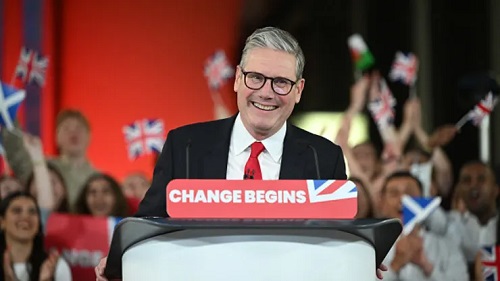
Keir Starmer, the leader of the center-left Labour Party, is set to assume the role of the UK's next Prime Minister, declaring victory in the early hours amidst cheers from his party members. "We did it," Starmer proclaimed, addressing jubilant supporters. "You campaigned for it, you fought for it — and now it has arrived ... change begins now."
Initial projections indicate that Labour is poised to achieve its second-largest parliamentary majority since Tony Blair's landslide victory in 1997, with widespread support across England, Scotland, Wales, and Northern Ireland. Millions of voters cast their ballots on Thursday to elect representatives for the 650-member House of Commons, the lower house of the UK Parliament. As counting continues, constituencies are progressively announcing their elected candidates.
The election results signal a decisive mandate for Labour, reflecting voter dissatisfaction with the incumbent government's policies and leadership. The transition of power from the Conservatives to Labour sets the stage for potential shifts in domestic and international policies, as the new government prepares to take office amid high expectations and challenges.
The Labour Party's victory represents a significant moment in British political history, with implications that extend beyond national borders. As Keir Starmer prepares to assume leadership, all eyes are on Labour's agenda and its plans for governing the United Kingdom in the coming years.






















Leave Your Comment