


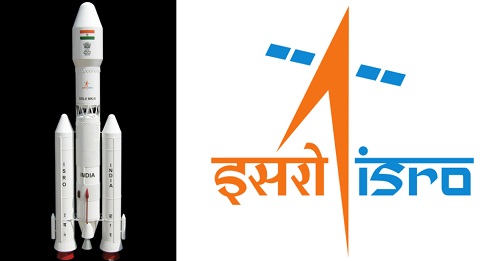
The Indian Space Research Organisation (ISRO) has taken a significant stride in refining its small satellite launch infrastructure. On Tuesday, at the Solid Motor Static Test Facility within the Satish Dhawan Space Centre (SDSC) in Sriharikota, the agency successfully conducted a static firing test of an enhanced third stage for the Small Satellite Launch Vehicle (SSLV).
This test marks a critical step in qualifying an upgraded component that promises to directly increase the rocket’s performance and reliability.
The SSLV: Designed for Agility and Demand
The SSLV is ISRO’s three-stage, all-solid workhorse, explicitly designed for the burgeoning small satellite market. Built with compatibility for large-scale industrial production in mind, its core philosophy is to meet "launch-on-demand" requirements with a rapid turnaround time between missions. The vehicle provides a cost-effective and responsive launch solution for placing satellites into Low Earth Orbit.
Technical Leap: Lighter, Stronger, More Capable
The focus of the recent test was the SS3—the vehicle’s crucial upper stage. ISRO confirmed that the test validated an upgraded version of this solid motor, which is responsible for delivering a high-velocity increment of approximately 4 km/s to the payload.
The key enhancement is the adoption of a monolithic carbon-epoxy composite motor case, developed at the Vikram Sarabhai Space Centre (VSSC). This high-strength, carbon filament-wound structure replaces a heavier metallic design, significantly reducing the stage's inert mass. This mass optimisation has a direct and substantial payoff: an increase in the SSLV’s payload capacity by 90 kilograms.
Beyond the weight savings, the stage incorporates an improved igniter and nozzle system for greater efficiency and robustness. Notably, the nozzle steering is controlled by a fault-tolerant electro-mechanical actuation system powered by low-power control electronics, enhancing the stage's reliability during flight.
A Resounding Success
The static firing lasted for the full planned duration of 108 seconds. According to ISRO’s official statement, "All the measured parameters are observed close to predictions over the test duration." With these results, the improved SS3 motor is now qualified for induction into flight, paving the way for its use on upcoming SSLV missions.
Building a Foundation for Scale
The successful test coincides with a year of strategic expansion in India’s solid propulsion infrastructure, aimed at supporting both national and nascent commercial space activities:
July 2025: New Solid Motor production facilities were inaugurated at Sriharikota.
September 2025: A second production line for Ammonium Perchlorate (a key propellant ingredient) was commissioned in Alwaye, doubling output capacity.
Propellant Processing: An indigenous 10-tonne vertical mixer—reportedly the world’s largest solid propellant mixing equipment—was commissioned at SDSC.
Signaling the growing synergy between ISRO and India’s private space sector, the SDSC facilities recently also completed the realisation and testing of a solid motor destined for the first orbital launch attempt by a private Indian space start-up.
Conclusion
The successful qualification of the enhanced SSLV third stage underscores ISRO’s continuous drive for technological refinement and performance maximisation. By simultaneously boosting payload capacity and investing in scalable production infrastructure, ISRO is not only strengthening its own launch portfolio but also laying a robust industrial foundation to support India’s broader ambitions as a competitive and reliable hub for global space logistics.



















Leave Your Comment