


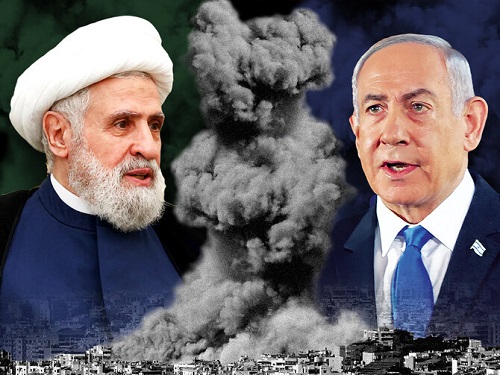
In a significant diplomatic breakthrough, Israel and Iran-backed Hezbollah have agreed to a ceasefire, ending two months of intense conflict that had escalated tensions across the Middle East. The agreement, brokered by the United States, aims to facilitate the peaceful withdrawal of Israeli troops from southern Lebanon over a 60-day period.
Under the terms of the ceasefire, Israeli forces will maintain their current positions while Lebanese military and security forces deploy to southern Lebanon. This phased approach, outlined by a senior US official involved in the negotiations, is intended to prevent a power vacuum that could be exploited by Hezbollah or other groups.
The withdrawal is expected to be completed within the stipulated 60 days, following the deployment of Lebanese forces to areas currently occupied by Israeli troops. Hezbollah, which has faced significant losses in recent months, has also agreed to pull back from the southern border with Israel and relocate further north, beyond the Litani River.
This redeployment aligns with United Nations Security Council Resolution 1701, originally adopted in 2006, which calls for the cessation of hostilities and the strengthening of Lebanese state authority in the region.
US President Joe Biden, addressing the agreement, emphasized that Hezbollah’s terrorist infrastructure in southern Lebanon will not be allowed to rebuild under the terms of the ceasefire.
“The United States, alongside France and other allies, will provide the necessary support to ensure the deal is fully and effectively implemented,” Biden stated. He clarified that while the US would not deploy troops on the ground, it would assist in monitoring compliance and ensuring stability in the region.
Biden also affirmed Israel’s right to defend itself in case of any violations of the agreement. “If Hezbollah or anyone else breaks the deal and poses a direct threat to Israel, then Israel retains the right to self-defense consistent with international law,” he said.
The ceasefire comes at a time when Hezbollah has been significantly weakened, with analysts attributing its retreat to heavy losses and international pressure. However, the situation remains fragile, with the potential for renewed violence if any party fails to adhere to the agreement.
The success of the ceasefire will largely depend on the effective deployment of Lebanese forces to the south and the international community’s commitment to ensuring that neither Hezbollah nor other groups exploit the situation.
The agreement is seen as a step toward stabilizing a region long marred by violence and political instability. By addressing immediate security concerns and adhering to international resolutions, the deal holds the promise of reducing hostilities and fostering a more sustainable peace in the Middle East.
While challenges remain, the ceasefire underscores the potential of diplomatic efforts to resolve even the most entrenched conflicts, offering a glimmer of hope for a region that has endured decades of turmoil.






















Leave Your Comment