


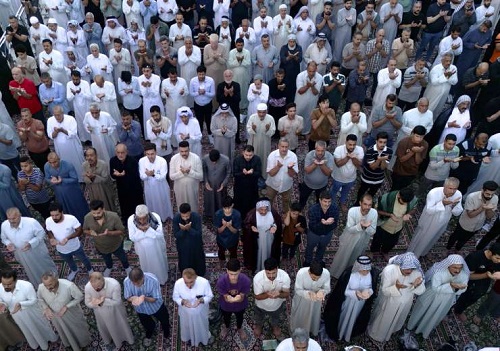
The Muslim population worldwide experienced substantial growth from 2010 to 2020, outpacing the global average and solidifying Islam as the fastest-growing major religion during the decade. According to the latest findings from the Pew Research Center’s report titled “How the Global Religious Landscape Changed From 2010 to 2020,” Muslims numbered 2 billion globally by 2020, up from 1.7 billion in 2010, marking a significant 21% increase. In contrast, the overall global population grew by only 10% over the same period.
Muslims witnessed growth in every region, with notable increases in North America and sub-Saharan Africa leading the charge. In North America, the Muslim population surged by 52%, reaching 5.9 million by 2020. Sub-Saharan Africa followed closely with a 34% rise, bringing its Muslim population to 369 million. The Asia-Pacific region retained its position as the largest home for Muslims, comprising 59% of the global Muslim population, despite a slight decrease in its proportional share.
High fertility rates among Muslim women played a pivotal role in this demographic shift. Across various regions, Muslim women consistently recorded higher average fertility rates compared to other religious groups. For instance, in Tanzania, Muslim women had an average of 4.6 children per woman between 2010 and 2015, significantly higher than the national average.
Additionally, the younger age distribution within Muslim communities contributed to faster natural population growth. A larger proportion of Muslims are in or entering childbearing age, further bolstering population expansion.
The report highlighted subtle changes in the geographic concentration of Muslims. Sub-Saharan Africa saw its share of the global Muslim population increase by two percentage points, reaching 18%, while the Asia-Pacific region experienced a corresponding two-point decrease.
Notably, a significant portion of the global Muslim population resides in a handful of countries. Indonesia, Pakistan, and India alone accounted for approximately one-third of all Muslims worldwide in 2020. Indonesia led with an estimated 240 million Muslims, constituting about 12% of the global Muslim population.
Several countries saw notable shifts in the Muslim share of their populations, influenced by factors such as migration and varying fertility rates. Kazakhstan and Benin recorded substantial increases, while Lebanon experienced a rise attributed to the influx of Syrian Muslim refugees. Conversely, Oman and Tanzania witnessed declines due to demographic changes and fertility rate disparities.
In Europe, moderate increases in the Muslim population were observed in countries like Sweden, Austria, and Germany, primarily driven by immigration from Muslim-majority nations and higher-than-average fertility rates among Muslim families. While no European country saw a dramatic five-point shift in the Muslim share of the population, these incremental changes underscored the ongoing demographic dynamics shaping the continent.





















Leave Your Comment