


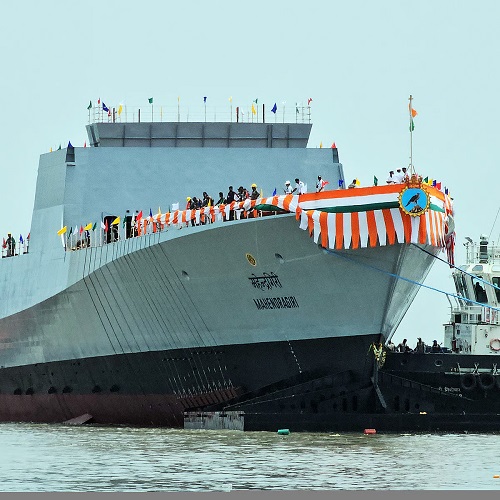
The Indian Navy is set to achieve another landmark in its journey towards becoming a modern, self-reliant maritime force with the commissioning of INS Mahendragiri (F38), the sixth indigenous stealth frigate under the prestigious Project 17A, into the Eastern Fleet at Visakhapatnam, Andhra Pradesh, on Saturday. The commissioning ceremony, to be presided over by Defence Minister Rajnath Singh, marks a significant milestone in India's indigenous warship-building programme and underscores the nation's growing naval capabilities in the strategically vital Indian Ocean Region.
On the eve of the commissioning ceremony, Rajnath Singh addressed naval personnel during the traditional Barakhana in Visakhapatnam, reiterating India's commitment to ensuring peace, stability and security across the Indian Ocean Region. He emphasized that India remains the primary guarantor of regional peace and is committed to strengthening maritime cooperation with friendly nations while safeguarding national interests.
Designed by the Indian Navy's Warship Design Bureau and constructed by Mazagon Dock Shipbuilders Limited in Mumbai, INS Mahendragiri represents the latest generation of indigenous stealth frigates. The vessel incorporates cutting-edge technologies, advanced stealth features and sophisticated combat systems that significantly enhance the Navy's operational readiness.
Equipped with advanced weapons, sensors and electronic warfare systems, the frigate is capable of executing a wide range of missions across the maritime domain. It can undertake anti-air, anti-surface and anti-submarine warfare operations, making it a versatile frontline combat platform. In addition to combat roles, INS Mahendragiri is designed to conduct maritime security patrols, search-and-rescue missions, humanitarian assistance and disaster relief operations, as well as sustained deployments across the Indian Ocean Region.
One of the defining features of INS Mahendragiri is its high level of indigenous content. More than 75 per cent of the warship's components have been sourced domestically, reflecting the government's strong emphasis on the Aatmanirbhar Bharat initiative in the defence sector. The project has witnessed extensive participation from Indian industries, including numerous Micro, Small and Medium Enterprises (MSMEs), thereby strengthening the country's defence manufacturing ecosystem while generating employment and fostering technological innovation.
Named after the Mahendragiri mountain range in the Eastern Ghats, the warship symbolizes strength, endurance and resilience. Its induction into the Eastern Fleet is expected to substantially enhance the Indian Navy's combat capability and operational flexibility in one of the world's most strategically significant maritime regions.
Project 17A represents the next generation of indigenous stealth frigates, featuring improved survivability, enhanced automation and reduced radar signatures compared to earlier classes of warships. The successful construction and induction of these vessels reflect India's growing expertise in complex naval shipbuilding and its ability to design and manufacture advanced combat platforms domestically.
With the commissioning of INS Mahendragiri, India reinforces its position as one of the world's leading indigenous warship-building nations. The addition of this advanced stealth frigate will not only strengthen the Indian Navy's ability to protect national maritime interests but also enhance India's role as a preferred security partner in the Indo-Pacific and the wider Indian Ocean Region. The induction stands as yet another testament to the country's steady progress towards defence self-reliance and maritime security under the vision of a stronger and more capable Indian Navy.





















Leave Your Comment