


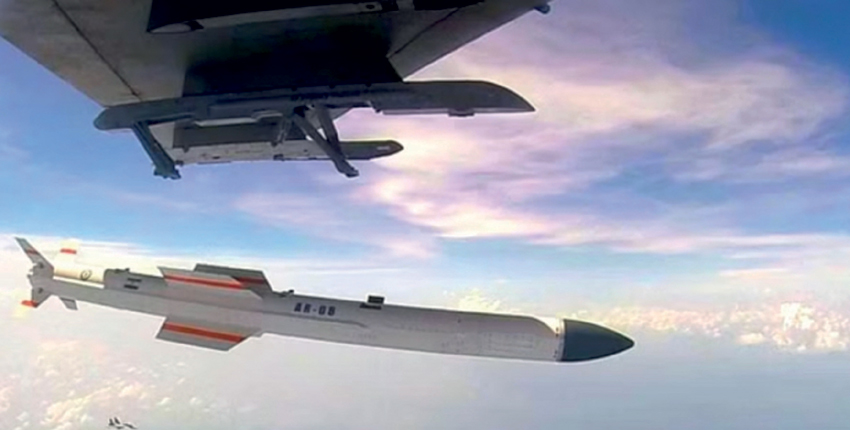
India has taken a significant step forward in its defence capabilities with the successful test-firing of the RudraM-II, an indigenously developed anti-radiation air-to-surface missile. This achievement marks the advent of the second generation of the RudraM missile series, which represents a critical component of India's strategic arsenal. DRDO successfully flight tested anti-radiation indigenously developed Air to Surface RudraM-II missile from Su-30 MK-I off the Odisha coast. The flight test met all the trial objectives, validating the propulsion system, control and guidance algorithm, DRDO said in a post on social media platform X. The missile, having a speed of Mach two or twice the speed of sound, is capable of bringing down a wide-range of enemy radar systems, communication networks and air defence systems.
The test has established India's capability to develop long range air-launched anti-radiation missiles.
The first generation RudraM-I was successfully tested three years ago, and the development of RudraM-II underscores the continuous progress made by the Defence Research and Development Organisation (DRDO) in enhancing India’s defence technology.
RudraM-II: A Technological Marvel
The RudraM-II missile is designed to suppress enemy air defences (SEAD). Its primary function is to detect, track, and neutralize enemy radar, communication sites, and other radiation-emitting targets, thereby crippling the adversary’s ability to monitor and control the battlefield. This capability is crucial for gaining air superiority and providing safe passage for friendly aircraft.
Key Features of RudraM-II:
1. Advanced Seeker Technology: The RudraM-II is equipped with a state-of-the-art passive homing head (PHH) which can detect and lock onto a wide range of frequencies used by enemy radars. This seeker technology ensures that the missile can accurately home in on the source of the radiation emissions.
2. Versatile Platform: The missile can be launched from various platforms, including fighter jets like the Sukhoi Su-30MKI, Mirage 2000, and potentially the indigenous HAL Tejas. This versatility enhances its operational flexibility, allowing it to be deployed in multiple combat scenarios.
3. Extended Range: The RudraM-II boasts an impressive range, allowing it to engage targets at substantial distances. This extended range provides a strategic advantage, enabling preemptive strikes on enemy air defences before they can pose a threat to friendly forces.
4. High-Speed Maneuverability: With advanced propulsion systems, the RudraM-II can reach supersonic speeds. This high-speed capability ensures that the missile can evade enemy countermeasures and interceptors, increasing the likelihood of mission success.
5. Precision and Lethality: The missile’s guidance system is designed for pinpoint accuracy, minimizing collateral damage and ensuring the effective neutralization of the intended targets. Its warhead is optimized for maximum impact on radiation-emitting sources.
Strategic Benefits of RudraM-II
The successful testing of RudraM-II brings numerous strategic advantages to India’s defence posture:
1. Enhanced Air Superiority: By targeting and destroying enemy radars and communication systems, RudraM-II plays a pivotal role in achieving air superiority. It creates a safer operational environment for friendly aircraft and allows for more effective air operations.
2. Deterrence Capability: The existence of such advanced weaponry serves as a deterrent against potential adversaries. Knowing that their air defences can be neutralized efficiently, adversaries may think twice before engaging in hostile actions.
3. Indigenous Development: The development of RudraM-II is a testament to India’s growing self-reliance in defence technology. By reducing dependency on foreign arms, India can maintain strategic autonomy and ensure uninterrupted supply chains for critical defence equipment.
4. Cost-Effective Solution: Indigenous production of advanced missiles like RudraM-II is more cost-effective in the long run compared to importing similar technologies. This not only saves foreign exchange but also boosts the domestic defence industry.
DRDO: Pioneering India's Defence Innovations
The DRDO has been at the forefront of India’s defence research and development, consistently delivering cutting-edge technologies that bolster national security. The success of RudraM-II is a part of a broader narrative of DRDO’s achievements.
Other Recent Accomplishments by DRDO:
1. Agni-P Missile: The DRDO successfully tested the Agni-P (Prime), a new generation nuclear-capable ballistic missile. Agni-P is a canisterized missile with a range capability between 1,000 and 2,000 kilometers. Its advanced navigation and guidance systems ensure high accuracy and reliability.
2. Advanced Towed Artillery Gun System (ATAGS): This indigenously developed howitzer has demonstrated superior performance during trials. With a range of up to 48 kilometers, ATAGS is expected to enhance the firepower and operational flexibility of the Indian Army.
3. Quick Reaction Surface-to-Air Missile (QRSAM): Designed to provide quick reaction capabilities, this missile system can engage aerial targets at a range of 25-30 kilometers. It is highly mobile and can be deployed rapidly to protect sensitive locations.
4. Hypersonic Technology Demonstrator Vehicle (HSTDV): The DRDO achieved a major milestone with the successful flight test of the HSTDV, paving the way for the development of hypersonic cruise missiles and other high-speed platforms.
5. Light Combat Aircraft (LCA) Tejas: The development and induction of the Tejas Mk1 and its variants into the Indian Air Force mark a significant step towards self-reliance in fighter aircraft production. The Tejas is a versatile, multi-role aircraft equipped with advanced avionics and weapon systems.
Making India Proud: The DRDO's Role
The DRDO’s relentless pursuit of innovation and excellence has significantly contributed to India’s stature as a formidable defence power. Its achievements not only enhance the country’s defence capabilities but also instill a sense of national pride. Here’s how the DRDO is making India proud:
1.Indigenization of Defence Technology: By developing advanced weapon systems like the RudraM-II indigenously, the DRDO reduces India’s dependence on foreign suppliers. This promotes technological sovereignty and strengthens national security.
2. Boosting the Economy: The DRDO’s projects create high-tech jobs and stimulate the domestic defence industry. The ripple effect of such advancements is felt across various sectors of the economy, contributing to overall growth and development.
3.Global Recognition: Successful testings and technological breakthroughs garner international recognition for India’s scientific and technological prowess. This enhances India’s standing in the global community and opens up opportunities for defence exports.
4.Innovative Solutions: The DRDO’s research extends beyond military applications. Technologies developed for defence often find applications in civilian sectors, leading to innovations that benefit society at large.
5. Educational and Research Opportunities: The DRDO collaborates with academic institutions, fostering a culture of research and development. These partnerships create opportunities for young scientists and engineers to work on cutting-edge projects, driving the next generation of innovators.
Future Prospects and Conclusion
The successful test-firing of the RudraM-II marks a significant milestone in India’s defence journey. It reflects the DRDO’s commitment to pushing the boundaries of technology and ensuring the nation’s security. Looking ahead, the continued development of advanced missile systems and other defence technologies will be crucial for maintaining strategic deterrence and safeguarding India’s interests.
As India celebrates this achievement, it is also a moment to acknowledge the dedicated efforts of the scientists, engineers, and defence personnel who work tirelessly behind the scenes. Their contributions are a testament to the spirit of innovation and resilience that defines India’s defence sector.
In conclusion, the RudraM-II is not just a missile; it is a symbol of India’s technological advancement and strategic foresight. The DRDO’s role in this success story underscores the importance of indigenous research and development in building a self-reliant and secure nation. With each milestone, India moves closer to realizing its vision of a robust and self-sufficient defence ecosystem, making every Indian proud.
Uday India Bureau
















Leave Your Comment