


Russia has declined to divulge the exact volume of energy India is currently importing, but the Kremlin says its volume is continuing to expand, with monthly trade reaching new records. Moscow has also sharply criticised proposed US penalties targeting countries that buy Russian oil and gas, calling such measures illegal and unacceptable. The remarks come ahead of President Vladimir Putin’s visit to New Delhi for the BRICS summit and talks with Prime Minister Narendra Modi, underlining the depth of the strategic partnership.
Kremlin spokesman Dmitry Peskov said Russia was deliberately avoiding putting a figure on India’s energy purchases, citing what he described as “understandable reasons”. However, he indicated that the trend remained strongly upward.
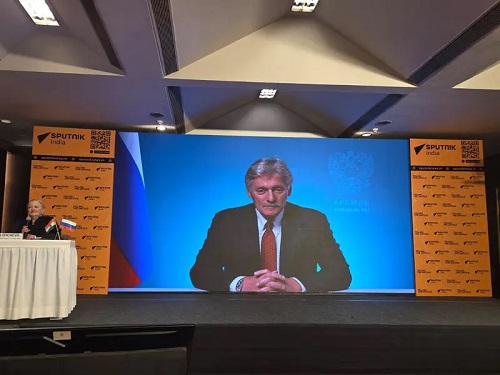
“Every month we have a new record,” Peskov said during a virtual briefing with Indian journalists on Tuesday. The interaction was organised by Sputnik media ahead of Putin’s visit to India.
India emerged as one of the largest buyers of Russian crude after Western nations reduced energy purchases from Moscow following the outbreak of the Ukraine conflict in 2022. Russian oil, offered at attractive prices, became an important component of India’s energy supply strategy.
New Delhi has consistently defended its purchases, maintaining that securing affordable and reliable energy is a matter of national interest. India has also stressed that it does not recognise unilateral sanctions imposed outside the United Nations framework.
Peskov was particularly critical of proposed US legislation that could impose tariffs of up to 100 per cent on countries buying significant quantities of Russian oil and gas. He described efforts by Washington to restrict Russia’s trade with third countries as “illegal, unfair and unacceptable”.
The Kremlin official also highlighted the changing nature of financial transactions between Russia and its BRICS partners. According to Peskov, around 90 per cent of Russia’s trade with BRICS countries is now settled in national currencies.
He clarified, however, that Moscow does not regard “de-dollarisation” as an objective in itself. Instead, he argued that some countries had increasingly used their currencies as instruments of political pressure, prompting partners to seek alternative payment mechanisms.
Peskov confirmed that Putin will attend the BRICS summit in New Delhi on September 12–13 and will meet Modi on September 11. The two leaders have maintained close personal contact, with their discussions expected to span trade, energy, defence and technology.
Some areas of cooperation, Peskov suggested, are being discussed discreetly because of pressure from what Moscow calls “unfriendly countries”.
Calling India a “strategic partner”, Peskov said Russia welcomed growing interest among Indian companies in Russian investment projects. His comments point to an effort by both sides to sustain economic engagement despite geopolitical pressure and Western sanctions.
The Ukraine conflict is also expected to feature in discussions. Peskov said Moscow was aware of India’s position and claimed that it broadly corresponded with Russia’s own stance. He welcomed New Delhi’s willingness to contribute towards finding a solution.
Defence cooperation remains another major pillar of bilateral ties. Peskov pointed to the BrahMos supersonic cruise missile as evidence that Russia-India relations have moved beyond a conventional buyer-seller arrangement.
He suggested that the jointly produced missile could be further upgraded with additional capabilities to make it more effective and competitive in international markets. The comments indicate Moscow’s interest in expanding joint development and production rather than limiting defence cooperation to equipment sales.
On BRICS itself, Peskov rejected portrayals of the grouping as an anti-Western alliance. He said BRICS was focused on its own members and countries that shared its principles, rather than being directed against any third party.
The Kremlin’s latest remarks underscore the increasingly strategic character of India-Russia ties, with energy, defence, finance, technology and diplomacy all becoming interconnected. As Western pressure over Russian energy continues, New Delhi and Moscow appear determined to preserve their long-standing partnership while expanding cooperation through BRICS and bilateral channels.




















Leave Your Comment